 Pocket Botanist
Pflanzenratgeber
Lady's slipper orchid.
Cypripedium calceolus
Aussprache sip-ri-PEE-dee-um kal-SEE-oh-lus
Auch bekannt als Lady's slipper orchid, Lady's-Slipper, Lady's-slipper orchid, Lady’s slipper orchid


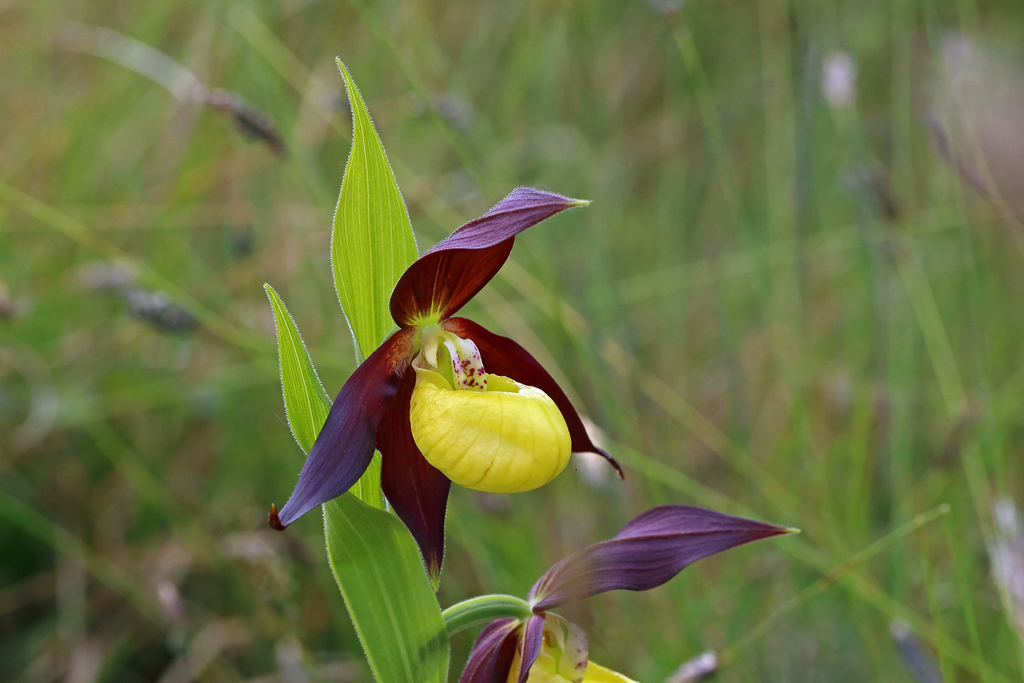
This beautiful orchid is a rare woodland treasure known for its unique, pouch shaped flowers. It thrives in cool, shaded environments with rich, well draining soil. You'll find it's quite a challenge to grow outside of its natural habitat.

Auf einen Blick
- Pflegestufe
- Schwierig
- Pflanzenart
- Perennial orchid
- Licht
- Partial shade
- Licht im Innenraum
- Hell, indirekt
- Gießen
- Alle 5 bis 10 Tage
- Endgröße
- 1 to 2 feet
- Wachstum
- Langsam
- Winterhärte
- USDA 3 bis 7
- Blütezeit
- Late spring to early summer
Pflege
Keep the soil consistently moist but never waterlogged to mimic its forest floor home. Watch for yellowing leaves, which often signal that the soil is too wet or lacks proper drainage. It prefers cool temperatures and high humidity to stay happy.
- Gießen
- Keep the substrate damp to the touch without letting it sit in standing water.
- Düngen
- Use a very diluted, balanced orchid fertilizer during the active growing season.
- Schneiden
- Remove dead foliage only after the plant has fully entered dormancy in late autumn.
- Umtopfen
- Repot only when the plant has clearly outgrown its container or the medium has broken down.
- Boden
- Rich, calcareous, well draining woodland soil
- Boden-pH
- Neutral to slightly alkaline
- Temperatur
- -30 bis 25°C
- Luftfeuchtigkeit
- 50 bis 70%
Sicherheit
- Menschen
- The plant contains irritant compounds that can cause dermatitis in sensitive individuals.
- Kinder
- Keep children away from the plant as ingestion can cause gastrointestinal distress.
- Kontaktallergene
- Handling the foliage can cause skin irritation or rashes due to glandular hairs.
- Allergene in der Luft
- There is no significant evidence of respiratory allergies associated with this species.
- Essbarkeit
- This plant is not edible and may cause stomach upset if ingested.
So erkennst du die Pflanze
- Large, inflated, slipper shaped yellow lip
- Dark purple or brown twisted petals
- Broad, pleated, alternate green leaves
- Grows from a creeping rhizome
- Höhe
- 0,2 bis 0,6m
- Breite
- 0,15 bis 0,3m
- Blätter
- green, deciduous
- Blüten
- yellow, brown, 5 bis 8cm
Häufige Probleme
- Slugs and snails — These pests can quickly devour the tender new shoots in spring.
- Root rot — Poorly drained soil often leads to fungal decay of the root system.
Standort und Pflege
- Vermehrung
- division, seed
- Pflanzzeit
- spring, autumn
Plant in groups with other woodland perennials that appreciate cool, moist, and alkaline soil.
Gute Pflanzpartner
- Dryopteris — They provide the dappled shade and moisture levels this orchid prefers.
- Helleborus orientalis — They share similar woodland soil and light requirements.
Ähnliche Arten
- Cypripedium reginae — It is a related North American species with similar growth habits.
Botanisches
- Familie
- Orchidaceae
- Gattung
- Cypripedium
- Ordnung
- Asparagales
- Klasse
- Liliopsida
- Ursprüngliche Heimat
- Temperate regions of Europe and Asia.
- Artenschutz
- This species is protected in many parts of its range and should never be collected from the wild.
It thrives in calcareous woodlands where it forms symbiotic relationships with soil fungi.
- Nutzen für Wildtiere
- nectar source
- Bestäuber
- Bienen
- Verwendung
- ornamental garden plant, botanical collection
Im Jahresverlauf
Ökologische Zeigerwerte
- Salzgehalt
- 0/9
- Bodenreaktion
- 8/9
- Licht
- 3/9
- Temperatur
- 3/9
- Feuchtigkeit
- 6/9
- Nährstoffe
- 4/9
Taxonomie abgeglichen mit GBIF.
Häufige Fragen
- Can I grow this in a regular garden bed?
- It requires specialized soil conditions, usually a woodland setting with high organic matter.
- How often should I water it?
- Keep the soil consistently moist but never waterlogged.
Woher der Name kommt
The name Cypripedium comes from Greek words meaning Venus and shoe, referring to the slipper shape.
Gut zu wissen
- It is the largest orchid species native to Europe.
- The flower uses a trap mechanism to ensure bees pollinate it.
- It requires a specific mycorrhizal fungus in the soil to germinate from seed.
- The name refers to the slipper shaped labellum of the flower.
Auch in
Probleme mit Lady's slipper orchid?
Diese Seite bietet allgemeine Infos. Pocket Botanist erkennt Probleme anhand eines Fotos deiner echten Pflanze, passt das Gießen an dein Licht und deinen Standort an und erinnert dich an die Pflege.
Dieser Ratgeber wurde mit KI erstellt und mit der GBIF-Taxonomie abgeglichen. Er dient zur allgemeinen Information und ersetzt keine gärtnerische oder tierärztliche Beratung. Hier erfährst du, wie wir diese Ratgeber erstellen.