 Pocket Botanist
Guía de plantas
Cola de burro.
Sedum morganianum
Pronunciación SEE-dum mor-gan-ee-AH-num
También se conoce como Cola de burro, Cola de burro, Cola de burro


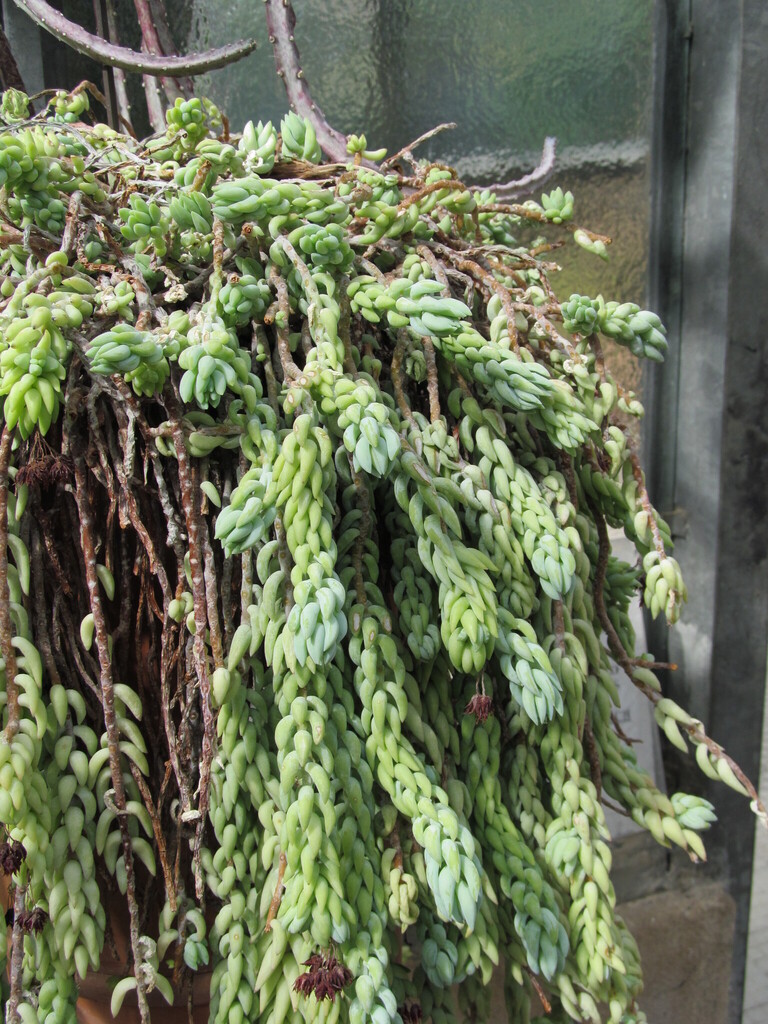
La cola de burro es una hermosa suculenta colgante conocida por sus largos y carnosos tallos cubiertos de hojas regordetas de color verde azulado. Es una adición impresionante a las cestas colgantes donde su peso puede ser plenamente apreciado. Esta planta es bastante frágil, por lo que es mejor mantenerla en un lugar donde no reciba golpes ni roces.
De un vistazo
- Nivel de cuidados
- Media
- Tipo de planta
- Suculenta
- Luz
- Luz brillante e indirecta con algo de sol directo por la mañana.
- Luz en interior
- Luz indirecta brillante
- Riego
- Cada 14 a 21 días
- Tamaño adulto
- 60 cm de longitud
- Ritmo de crecimiento
- Lento
- Rusticidad
- USDA 10 a 11
- Floración
- Finales de primavera hasta verano
Cuidados
Proporciona mucha luz brillante para evitar que los tallos se estiren. Deja que la tierra se seque completamente entre riegos para prevenir la pudrición de las raíces. Si las hojas comienzan a marchitarse, probablemente tenga sed, pero ten cuidado de no regar en exceso.
- Riego
- Riega a fondo solo cuando la tierra se haya secado por completo.
- Abonado
- Usa un fertilizante líquido equilibrado diluido a la mitad de su fuerza durante la temporada de crecimiento.
- Poda
- Poda solo para eliminar tallos muertos o para dar forma a la planta después de que haya terminado de florecer.
- Trasplante
- Trasplanta solo cuando la planta haya superado claramente su contenedor, teniendo mucho cuidado con los tallos frágiles.
- Suelo
- Mezcla bien drenada para cactus o suculentas.
- pH del suelo
- 6.0 a 7.0
- Temperatura
- 4 a 30°C
- Humedad
- 20 a 50%
- Tolerancia a la sequía
- Alta
- Longevidad
- Perenne, típicamente de 5 a 10 años.
- Resistencia a ciervos y conejos
- Moderada
Señales de que necesita trasplante
- Raíces que crecen fuera de los agujeros de drenaje.
- La planta ha dejado de crecer a pesar del cuidado adecuado.
- La tierra se seca mucho más rápido de lo que solía hacerlo.
Seguridad
- Personas
- La planta es ligeramente tóxica si se ingiere y la savia puede causar irritación en la piel en personas sensibles.
- Mascotas
- Esta planta generalmente se considera no tóxica para gatos y perros.
- Niños
- Mantén esta planta fuera del alcance de los niños pequeños porque las hojas se desprenden fácilmente y podrían suponer un peligro de asfixia.
- Alérgenos por contacto
- La savia puede causar dermatitis de contacto leve en personas sensibles.
- Alérgenos en el aire
- No se conocen alérgenos respiratorios significativos asociados con esta planta.
- Comestibilidad
- Esta planta no se considera comestible y puede causar malestar estomacal si se ingiere.
Cómo identificarla
- Tallos colgantes de hasta 60 cm de largo
- Hojas regordetas, superpuestas y con forma de lágrima
- Color de hoja glauco, verde azulado
- Hojas frágiles que se desprenden fácilmente
- Altura
- 0,15 a 0,6m
- Anchura
- 0,3 a 0,9m
- Hojas
- verde azulado, verde grisáceo, perenne
- Flores
- rosa, rojo, 1 a 2cm
Problemas a vigilar
- Cochinillas algodonosasComún
- Podredumbre radicularComún
- Caída de hojasPoco común
- Moscas del mantilloPoco común
- Pudrición de raíces — Ocurre cuando la tierra permanece demasiado húmeda durante mucho tiempo, lo que hace que las raíces y los tallos se vuelvan blandos.
Por síntoma
Revisa tu cola de burro con una foto
Pocket Botanist mira una foto de tu planta y te dice qué le pasa y qué probar primero.
Cómo cultivarla
- Propagación
- esquejes, esquejes de hoja
- Cuándo plantar
- primavera, verano
- Cuidados en invierno
- Lleva la planta al interior antes de la primera helada, ya que no tolera las temperaturas de congelación. Mantenla en un lugar luminoso y fresco y reduce significativamente el riego durante los meses de invierno.
- En maceta
- Es una planta de maceta excelente, especialmente en cestas colgantes que permiten que los tallos cuelguen libremente, y requiere una maceta con agujeros de drenaje.
Esquejes de hoja
- 1. Gira suavemente una hoja sana del tallo.
- 2. Deja que la hoja se seque en un lugar seco durante 2 a 3 días.
- 3. Coloca la hoja sobre tierra para suculentas bien drenada.
- 4. Rocía ligeramente solo cuando la tierra esté completamente seca.
- 5. Espera a que emerjan pequeñas raíces y una nueva plantita.
Agrupa suculentas con necesidades de agua similares para evitar el riego excesivo de las especies más sensibles.
Buenas compañeras
- Echeveria — Comparten requisitos similares de luz y agua.
- Planta de jade — Ambas son suculentas tolerantes a la sequía que prosperan en condiciones similares.
Especies parecidas
- Sedum burrito — Tiene hojas más pequeñas y redondeadas y a menudo se confunde con la especie estándar.
Ciencia
- Familia
- Crassulaceae
- Género
- Sedum
- Orden
- Saxifragales
- Clase
- Magnoliopsida
- Distribución natural
- Sur de México y Honduras.
- Conservación
- Esta especie no está actualmente catalogada como en peligro o amenazada.
Crece en acantilados rocosos donde puede colgar hacia abajo, permitiendo que sus hojas drenen el exceso de agua rápidamente.
- Valor para la fauna
- fuente de néctar
- Polinizadores
- abejas, mariposas
- Usos
- macetas colgantes, planta de interior en maceta, espécimen de jardín de rocas
A lo largo del año
Indicadores ecológicos
- Reacción del suelo
- 6/9
- Luz
- 7/9
- Temperatura
- 7/9
- Humedad
- 2/9
- Nutrientes
- 3/9
- Salinidad
- 2/9
Taxonomía cotejada con GBIF.
Lo que más preguntan
- ¿Por qué se caen las hojas?
- Las hojas son muy delicadas y se caen fácilmente al golpearlas o moverlas.
- ¿Con qué frecuencia debo regarla?
- Riega solo cuando la tierra se haya secado por completo, generalmente cada 2 a 3 semanas.
De dónde viene el nombre
El nombre del género Sedum proviene de la palabra latina sedere, que significa sentarse, refiriéndose a cómo estas plantas se asientan sobre las rocas. El nombre de la especie morganianum honra al Dr. W.D. Morgan, un entusiasta de las plantas mexicano.
Bueno saberlo
- Comúnmente se le conoce como Cola de Burro.
- Las hojas están cubiertas por una capa cerosa llamada cera epicuticular que ayuda a prevenir la pérdida de agua.
- Es una suculenta que almacena agua en sus hojas regordetas y carnosas.
- Los tallos colgantes pueden crecer hasta 60 cm de largo en condiciones ideales.
También en
Que tu cola de burro siga creciendo
Esta página es una guía general. Guarda tu planta en Pocket Botanist y tendrás recordatorios de cuidado pensados para esta planta, además de un historial de cuidados que muestra qué ha funcionado.
Esta guía se ha generado con IA y se ha cotejado con la taxonomía de GBIF. Es información general, no asesoramiento botánico ni veterinario. Descubre cómo elaboramos estas guías.