 Pocket Botanist
Guía de plantas
Common mallow.
Malva sylvestris
Pronunciación MAL-vuh sil-VES-tris
También se conoce como Common Mallow, Common mallow, Mallow flowers, Tree mallow, High Malva, High mallow, Large flowered mallow


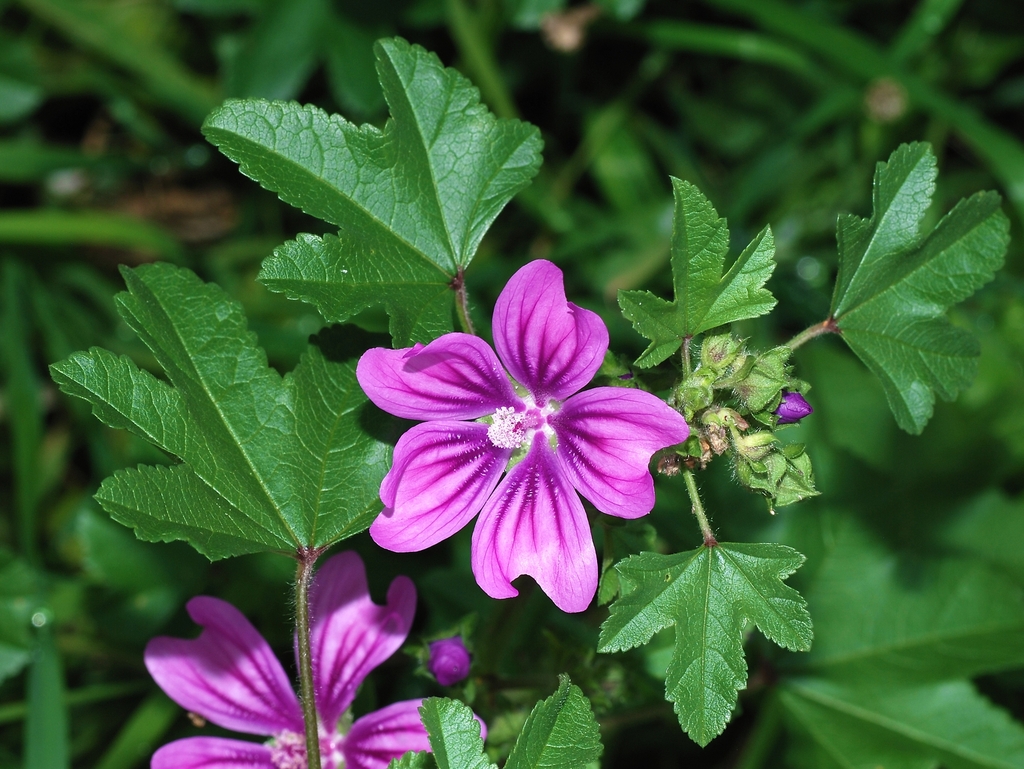
The common mallow is a charming, hardy plant that produces lovely purple, veined flowers. It is quite adaptable and often found growing in meadows or along roadsides. You will find it brings a nice, cottage garden feel to any outdoor space.

De un vistazo
- Nivel de cuidados
- Fácil
- Tipo de planta
- Perennial herb
- Luz
- Full sun to partial shade
- Luz en interior
- Sol directo
- Riego
- Cada 3 a 7 días
- Tamaño adulto
- 3 to 4 feet
- Ritmo de crecimiento
- Rápido
- Rusticidad
- USDA 4 a 8
- Floración
- Late spring to early autumn
Cuidados
Plant this in a spot that gets plenty of sunshine and keep the soil consistently moist but not soggy. Keep an eye out for rust on the leaves, which can happen if the air circulation is poor. Deadheading spent blooms will encourage the plant to keep producing flowers throughout the season.
- Riego
- Water when the top inch of soil feels dry to the touch.
- Abonado
- Apply a balanced liquid fertilizer once a month during the active growing season.
- Poda
- Trim back faded flowers regularly to promote continuous blooming.
- Trasplante
- Repot if the plant becomes root bound or if you notice growth slowing down significantly.
- Suelo
- Well draining, fertile soil
- pH del suelo
- 6.0 to 7.5
- Temperatura
- -15 a 35°C
- Humedad
- 40 a 70%
- Tolerancia a la sequía
- Moderada
- Longevidad
- Short lived perennial, typically 2 to 4 years.
- Resistencia a ciervos y conejos
- Moderada
Señales de que necesita trasplante
- Roots growing out of the drainage holes.
- Stunted growth during the active season.
- Soil drying out very quickly.
Seguridad
- Personas
- This plant is generally considered non toxic to humans.
- Niños
- The plant is not considered dangerous, but children should be supervised to prevent ingestion of seeds or foliage.
- Alérgenos por contacto
- Handling the foliage may cause mild skin irritation in sensitive individuals.
- Alérgenos en el aire
- Pollen may trigger mild allergic reactions in those sensitive to mallow family plants.
- Comestibilidad
- While leaves and flowers are edible, avoid consuming plant material that has been treated with pesticides.
Cómo identificarla
- Five petaled purple flowers
- Dark purple veins on petals
- Rounded, palmately lobed leaves
- Hairy stems and foliage
- Altura
- 0,6 a 1,2m
- Anchura
- 0,45 a 0,9m
- Hojas
- green, deciduous
- Flores
- purple, pink, 3 a 5cm
- Frutos
- brown, Late summer
Problemas frecuentes
- Rust — Fungal infection causing orange pustules on the undersides of leaves.
- Mallow flea beetle — Small beetles that chew tiny holes in the leaves.
Cómo cultivarla
- Propagación
- seed, cuttings
- Cuándo plantar
- spring, autumn
- Cuidados en invierno
- Cut back dead stems in late autumn. Provide a light mulch if you live in a region with very cold winters.
- En maceta
- It grows well in large containers of at least 30 centimeters in diameter.
Seed Sowing
- 1. Collect seeds in late summer.
- 2. Sow seeds in pots in autumn or spring.
- 3. Keep soil moist until germination occurs.
Plant mallow in sunny spots with good air circulation to reduce the risk of rust disease.
Buenas compañeras
- Lavanda inglesa — They share similar sun and drainage requirements.
- Sage — Both plants benefit from well drained soil and full sun.
Especies parecidas
- Malva moschata — It has a similar growth habit but with more deeply dissected foliage.
- Hollyhock — It is a taller relative with a similar flower structure.
Ciencia
- Familia
- Malvaceae
- Género
- Malva
- Orden
- Malvales
- Clase
- Magnoliopsida
- Distribución natural
- Europe, North Africa, and parts of Asia.
- Conservación
- This species is widespread and not of conservation concern.
It thrives in disturbed soils and hedgerows where it can easily colonize open spaces.
- Valor para la fauna
- nectar source, larval host plant
- Polinizadores
- abejas, mariposas
- Usos
- ornamental border, edible flowers, herbal tea, pollinator garden
A lo largo del año
Indicadores ecológicos
- Salinidad
- 2/9
- Reacción del suelo
- 6/9
- Luz
- 7/9
- Temperatura
- 5/9
- Humedad
- 5/9
- Nutrientes
- 6/9
Taxonomía cotejada con GBIF.
Lo que más preguntan
- Is common mallow a perennial?
- It is typically grown as a short lived perennial or biennial.
- Does it self seed?
- Yes, it often spreads readily by dropping seeds in the garden.
De dónde viene el nombre
The name Malva comes from the Greek word malakos, meaning soft, referring to its soothing properties. Sylvestris means of the woods or wild.
Bueno saberlo
- The seeds are often called cheeses due to their round, flat shape.
- It is a close relative of the hibiscus and hollyhock.
- The plant has been used as a food source during times of famine.
¿Tu common mallow tiene mal aspecto?
Esta página es una guía general. Pocket Botanist diagnostica problemas a partir de una foto de tu propia planta, calcula el riego según tu luz y tus condiciones, y te avisa cuando toca cuidarla.
Esta guía se ha generado con IA y se ha cotejado con la taxonomía de GBIF. Es información general, no asesoramiento botánico ni veterinario. Descubre cómo elaboramos estas guías.