 Pocket Botanist
Guía de plantas
Red valerian.
Centranthus ruber
Pronunciación sen-TRAN-thus ROO-ber
También se conoce como Bovisand-sailor, Jupiter's beard, Jupiter's-beard, Pretty Betsy, Red Valerian, Spur valerian


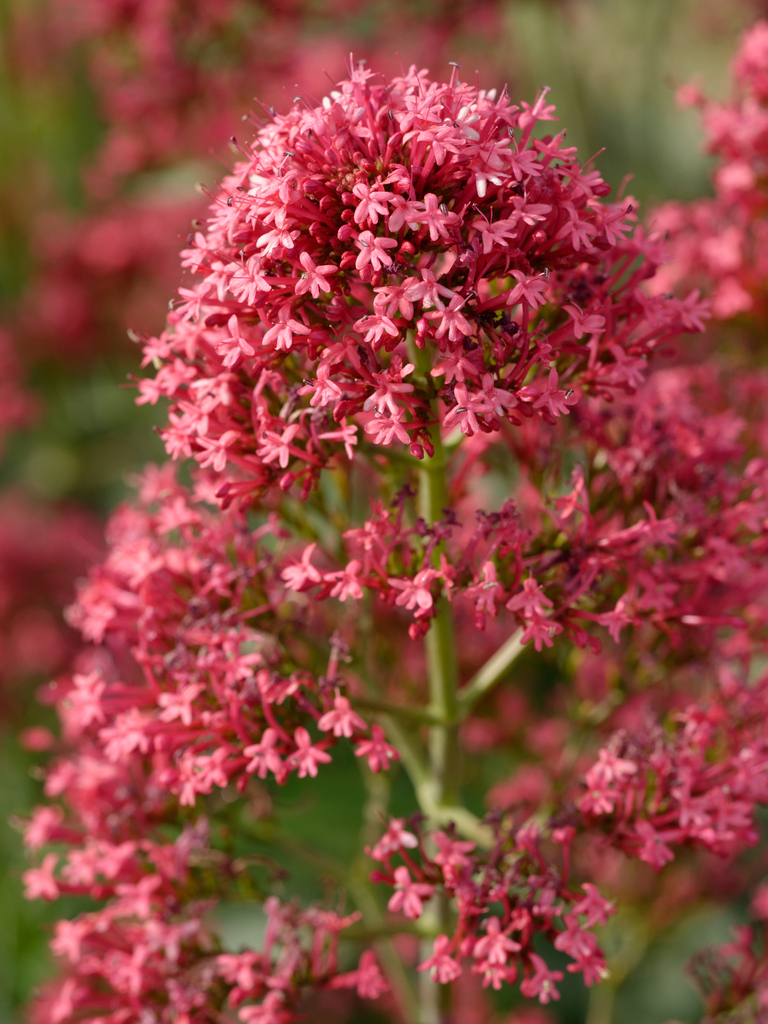
Red valerian is a charming, hardy perennial that brings a splash of color to sunny spots. It is famous for its long blooming season and ability to thrive in rocky, poor soil. You will love how it attracts butterflies to your garden.

De un vistazo
- Nivel de cuidados
- Fácil
- Tipo de planta
- Perennial
- Luz
- Full sun
- Luz en interior
- Sol directo
- Riego
- Cada 7 a 14 días
- Tamaño adulto
- 3 feet
- Ritmo de crecimiento
- Rápido
- Rusticidad
- USDA 5 a 9
- Floración
- Late spring to late summer
Cuidados
Plant this in a spot with full sun and well draining soil to keep it happy. Watch for wilting if the soil stays too wet, as it prefers to dry out between drinks. Deadhead the spent blooms to encourage a second flush of flowers later in the season.
- Riego
- Water deeply once established, but allow the soil to dry out significantly between waterings.
- Abonado
- A light application of compost in the spring is usually plenty for this vigorous grower.
- Poda
- Trim back spent flower stalks throughout the summer to promote continuous blooming.
- Trasplante
- These plants prefer to stay in the ground, but if kept in containers, refresh the soil every few years.
- Suelo
- Well draining, rocky, or sandy soil
- pH del suelo
- Neutral to alkaline
- Temperatura
- -15 a 35°C
- Humedad
- 30 a 70%
- Tolerancia a la sequía
- Alta
- Longevidad
- Short-lived perennial, typically 3 to 5 years.
- Fragancia
- Suave
- Resistencia a ciervos y conejos
- Alta
Señales de que necesita trasplante
- Roots growing out of the drainage holes.
- Water sitting on the surface for too long.
- Plant growth slowing significantly.
Seguridad
- Personas
- The plant is not documented as toxic, but it is not intended for human consumption.
- Niños
- The plant is not inherently dangerous, but children should be discouraged from eating any part of it.
- Alérgenos por contacto
- The sap may cause mild skin irritation in sensitive individuals.
- Alérgenos en el aire
- The pollen can trigger mild reactions in those with seasonal allergies.
- Comestibilidad
- This plant is not considered edible and should be avoided for consumption.
Cómo identificarla
- Clusters of small star shaped flowers
- Blue green succulent like foliage
- Opposite leaves on upright stems
- Spur at base of flower
- Altura
- 0,6 a 0,9m
- Anchura
- 0,3 a 0,6m
- Hojas
- blue-green, grey-green, semi-evergreen
- Flores
- red, pink, white, 0,5 a 1cm
Problemas frecuentes
- Aphids — Small insects that cluster on new growth and flower buds.
- Powdery mildew — A fungal growth that appears as white dust on the foliage during humid weather.
Cómo cultivarla
- Propagación
- seed, division, cuttings
- Cuándo plantar
- spring, autumn
- Cuidados en invierno
- Cut back the foliage after the first frost to keep the plant tidy. Ensure the crown stays dry during winter to prevent rot.
- En maceta
- It grows well in containers at least 30 centimeters wide, provided the potting mix is gritty and drains very quickly.
Seed
- Sow seeds in trays in early spring.
- Cover lightly with soil.
- Keep moist until germination occurs.
Division
- Dig up the clump in early spring.
- Carefully pull the root mass apart.
- Replant immediately into prepared soil.
Pair this plant with other drought-tolerant species to ensure they all thrive under similar watering schedules.
Buenas compañeras
- Lavanda inglesa — They share similar requirements for sun and well-drained soil.
- Nepeta faassenii — The blue tones of catmint contrast beautifully with the red flowers of the valerian.
Especies parecidas
- Valeriana común — It shares a similar common name but has different medicinal uses and growth habits.
Ciencia
- Familia
- Caprifoliaceae
- Género
- Centranthus
- Orden
- Dipsacales
- Clase
- Magnoliopsida
- Distribución natural
- Mediterranean region
- Conservación
- It is considered an invasive species in some regions like California and should be managed accordingly.
It thrives in rocky, well-drained soils where it can easily colonize disturbed sites.
- Valor para la fauna
- nectar source
- Polinizadores
- abejas, mariposas, polillas
- Usos
- cottage gardens, rock gardens, pollinator borders, dry stone walls
A lo largo del año
Indicadores ecológicos
- Salinidad
- 4/9
- Reacción del suelo
- 7/9
- Luz
- 8/9
- Temperatura
- 6/9
- Humedad
- 3/9
- Nutrientes
- 3/9
Taxonomía cotejada con GBIF.
Lo que más preguntan
- Does it need a lot of water?
- No, it is quite drought tolerant once established.
- Can I grow it in a pot?
- Yes, it grows well in containers if they have excellent drainage.
De dónde viene el nombre
The genus name comes from the Greek words kentron for spur and anthos for flower, referring to the spurred base of the corolla.
Bueno saberlo
- It is commonly called Jupiter's beard.
- The plant thrives in poor, alkaline soils.
- It is highly tolerant of salt spray in coastal areas.
- Deadheading spent blooms can encourage a second flush of flowers.
También en
¿Tu red valerian tiene mal aspecto?
Esta página es una guía general. Pocket Botanist diagnostica problemas a partir de una foto de tu propia planta, calcula el riego según tu luz y tus condiciones, y te avisa cuando toca cuidarla.
Esta guía se ha generado con IA y se ha cotejado con la taxonomía de GBIF. Es información general, no asesoramiento botánico ni veterinario. Descubre cómo elaboramos estas guías.