 Pocket Botanist
Pflanzenratgeber
Wineberry.
Rubus phoenicolasius
Aussprache ROO-bus fee-nik-oh-LAY-see-us
Auch bekannt als Hairy Bramble, Japanese Wineberry, Purple-leaf Blackberry, Wine Raspberry, Wine Raspberry, Wineberry, Wineberry


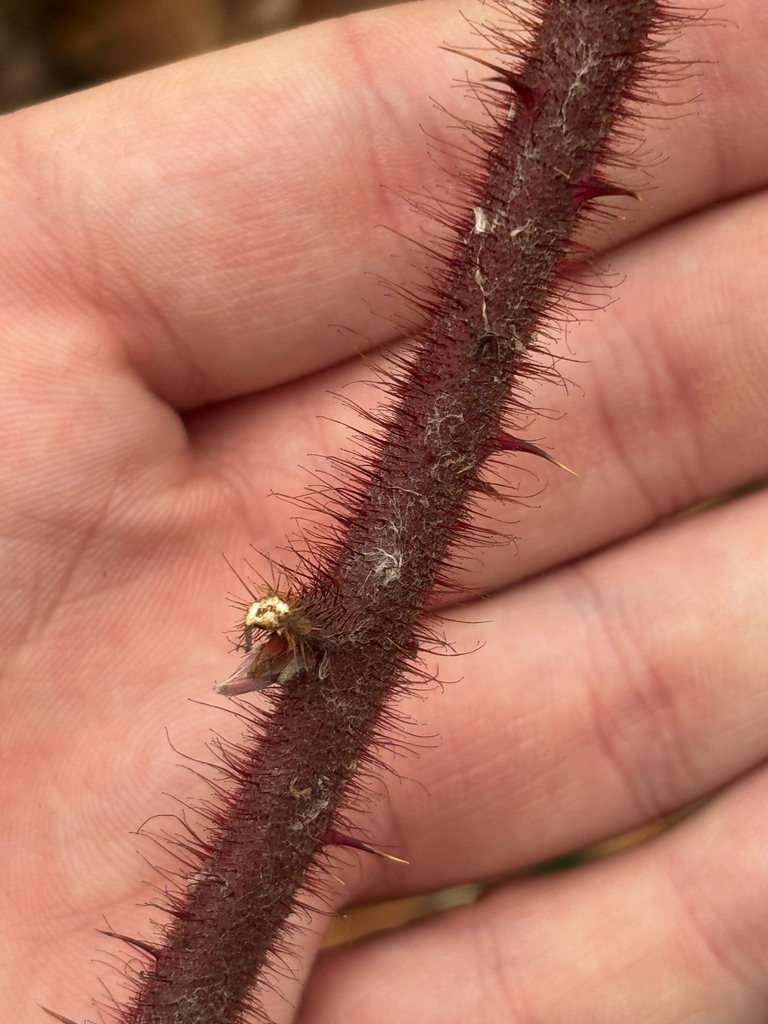
The wineberry is a charming bramble that produces delicious, tart red fruits in the summer. It is known for its distinctive reddish, hairy canes that add a unique texture to the garden. You will love how easily it spreads, though it can be quite vigorous if left unchecked.

Auf einen Blick
- Pflegestufe
- Einfach
- Pflanzenart
- Deciduous shrub
- Licht
- Full sun
- Licht im Innenraum
- Direkte Sonne
- Gießen
- Alle 5 bis 10 Tage
- Endgröße
- 6 to 9 feet tall
- Wachstum
- Schnell
- Winterhärte
- USDA 5 bis 9
- Blütezeit
- Late spring to early summer
Pflege
Plant this shrub in a sunny spot with well draining soil to encourage the best fruit production. Keep an eye on the canes, as they can root wherever they touch the ground. Prune away old canes that have already fruited to keep the plant tidy.
- Gießen
- Keep the soil consistently moist but never soggy during the growing season.
- Düngen
- Apply a balanced organic fertilizer in early spring as new growth begins.
- Schneiden
- Cut back canes that have finished fruiting in late summer or autumn.
- Umtopfen
- If growing in a container, move to a larger pot every few years to accommodate the root system.
- Boden
- Loamy, moist, well drained
- Boden-pH
- 6.0 to 7.0
- Temperatur
- -25 bis 35°C
- Luftfeuchtigkeit
- 40 bis 70%
- Trockenheitstoleranz
- Mittel
- Lebensdauer
- Perennial, typically 5 to 10 years
- Wildverbiss-Resistenz
- Mittel
Anzeichen fürs Umtopfen
- Roots growing out of drainage holes.
- Stunted growth despite regular feeding.
- Soil drying out very quickly.
Sicherheit
- Menschen
- The plant is not toxic, but the stems are covered in sharp, glandular prickles that can cause skin irritation.
- Kinder
- The stems are covered in sharp prickles that can scratch children, so keep them away from play areas.
- Kontaktallergene
- The glandular hairs on the stems can cause mechanical irritation to sensitive skin.
- Allergene in der Luft
- Pollen may cause mild reactions in sensitive individuals during the flowering season.
- Essbarkeit
- Wash fruit thoroughly to remove any debris or potential contaminants from the sticky hairs.
So erkennst du die Pflanze
- Reddish stems covered in fine hairs
- Compound leaves with three leaflets
- Bright red, edible berry clusters
- White flowers with reddish sepals
- Höhe
- 1,5 bis 3m
- Breite
- 1,5 bis 3m
- Blätter
- green, deciduous
- Blüten
- white, pink, 1 bis 2cm
- Früchte
- red, Summer
Häufige Probleme
- Raspberry cane blight — A fungal infection that causes lesions on the canes and can kill fruit-bearing branches.
- Aphids — Small insects that suck sap from new growth and can spread viral diseases.
Standort und Pflege
- Vermehrung
- seed, cuttings, division
- Pflanzzeit
- spring, autumn
- Überwinterung
- Cut back old fruiting canes to the ground in late autumn. Mulch around the base to protect roots from extreme temperature fluctuations.
- Im Kübel
- It is not recommended for containers due to its vigorous, sprawling nature and sharp prickles.
Tip Layering
- 1. Bend a healthy cane tip to the ground in late summer.
- 2. Bury the tip in a few inches of soil.
- 3. Wait for roots to form at the tip.
- 4. Sever the new plant from the parent in spring.
- 5. Transplant to a new location.
Plant in areas where you can easily contain its spread, as it roots wherever canes touch the ground.
Gute Pflanzpartner
- Amelanchier — They share similar soil requirements and provide layered habitat.
- Wild Bergamot — It attracts pollinators that help with fruit set.
Ähnliche Arten
- Rubus occidentalis — It has a similar growth habit but produces black fruit.
- Raspberry — It is a close relative with similar cultural needs.
Botanisches
- Familie
- Rosaceae
- Gattung
- Rubus
- Ordnung
- Rosales
- Klasse
- Magnoliopsida
- Ursprüngliche Heimat
- Eastern Asia
- Artenschutz
- This species is considered invasive in many parts of North America and should be managed carefully.
It thrives in forest edges and disturbed areas where it can climb over other vegetation to reach sunlight.
- Nutzen für Wildtiere
- nectar source, provides shelter for birds
- Bestäuber
- Bienen, Schmetterlinge
- Verwendung
- culinary fruit, wildlife habitat, hedgerows
Im Jahresverlauf
Ökologische Zeigerwerte
- Salzgehalt
- 2/9
- Bodenreaktion
- 5/9
- Licht
- 6/9
- Temperatur
- 5/9
- Feuchtigkeit
- 5/9
- Nährstoffe
- 5/9
Taxonomie abgeglichen mit GBIF.
Häufige Fragen
- Is wineberry invasive?
- Yes, it is considered invasive in many regions because it outcompetes native plants.
- How do I prune it?
- Remove the canes that have already fruited in late summer to encourage new growth.
Woher der Name kommt
The species name phoenicolasius comes from Greek words meaning purple-red and hairy, referring to the stems.
Gut zu wissen
- The fruit is often called wineberry because of its deep red color.
- The stems are covered in reddish, glandular hairs that give the plant a fuzzy appearance.
- It is a member of the rose family.
- The fruit is softer and more delicate than standard raspberries.
- It spreads by rooting at the tips of the canes.
Probleme mit Wineberry?
Diese Seite bietet allgemeine Infos. Pocket Botanist erkennt Probleme anhand eines Fotos deiner echten Pflanze, passt das Gießen an dein Licht und deinen Standort an und erinnert dich an die Pflege.
Dieser Ratgeber wurde mit KI erstellt und mit der GBIF-Taxonomie abgeglichen. Er dient zur allgemeinen Information und ersetzt keine gärtnerische oder tierärztliche Beratung. Hier erfährst du, wie wir diese Ratgeber erstellen.