 Pocket Botanist
Pflanzenratgeber
Black sapote.
Diospyros nigra
Aussprache dy-OS-pi-ros NY-gra


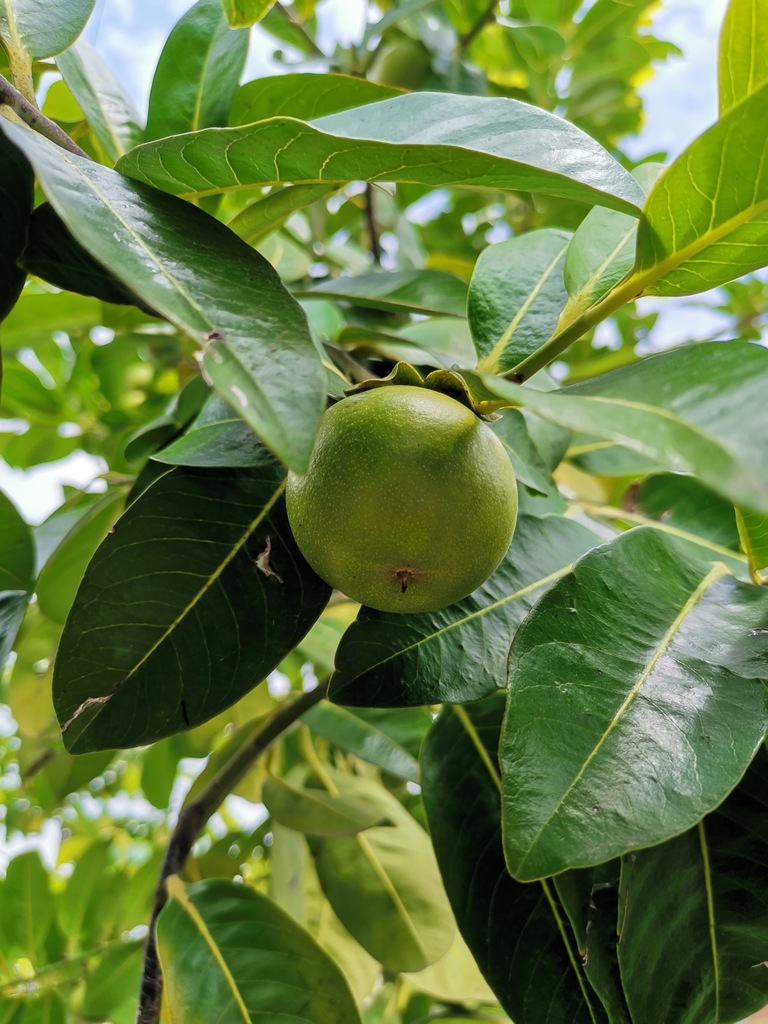
The black sapote is a tropical fruit tree known for its unique, custard like flesh that tastes remarkably like chocolate. It is a member of the ebony family and thrives in warm, humid climates. You will love how its glossy, dark green foliage adds a lush look to your garden.

Auf einen Blick
- Pflegestufe
- Mittel
- Pflanzenart
- Tropical fruit tree
- Licht
- Full sun
- Licht im Innenraum
- Direkte Sonne
- Gießen
- Alle 3 bis 7 Tage
- Endgröße
- 25 to 50 feet
- Wachstum
- Mittel
- Winterhärte
- USDA 10 bis 12
- Blütezeit
- Late spring to early summer
Pflege
Keep the soil consistently moist but ensure it drains well to prevent root issues. Watch for yellowing leaves, which often signal that the tree needs more nutrients or better drainage. Protect the plant from frost, as it is quite sensitive to cold temperatures.
- Gießen
- Water deeply whenever the top inch of soil feels dry to the touch.
- Düngen
- Apply a balanced fertilizer during the active growing season to support fruit production.
- Schneiden
- Prune lightly once a year to maintain shape and encourage better airflow through the canopy.
- Umtopfen
- Move to a larger container only when the roots begin to circle the bottom of the pot.
- Boden
- Rich, loamy, well draining soil
- Boden-pH
- 6.0 to 7.0
- Temperatur
- 5 bis 35°C
- Luftfeuchtigkeit
- 60 bis 90%
- Trockenheitstoleranz
- Mittel
- Lebensdauer
- Perennial, typically 30 to 50 years
- Duft
- Leicht
- Wildverbiss-Resistenz
- Mittel
Anzeichen fürs Umtopfen
- Roots growing out of the drainage holes
- Water running straight through the pot without soaking in
Sicherheit
- Menschen
- The plant is generally non-toxic, but the unripe fruit is astringent and can irritate the mouth.
- Kinder
- The large seeds pose a choking hazard to small children if ingested.
- Kontaktallergene
- The sap can cause mild skin irritation in sensitive individuals.
- Allergene in der Luft
- Pollen may cause mild seasonal allergies for some people.
- Essbarkeit
- The fruit is only safe to eat when fully ripe and soft, as unripe fruit contains high levels of tannins that can cause digestive distress.
So erkennst du die Pflanze
- Glossy, dark green evergreen leaves
- Small, white, bell shaped flowers
- Round, olive green fruit skin
- Dark brown to black edible pulp
- Höhe
- 6 bis 15m
- Breite
- 4 bis 10m
- Blätter
- dark green, glossy, evergreen
- Blüten
- white, cream, 1 bis 2cm
- Früchte
- green, black, Autumn to winter
Häufige Probleme
- Mealybugs — Small sap-sucking insects that cluster on stems and leaf undersides.
- Leaf spot — Fungal infection causing dark spots on foliage during humid periods.
Standort und Pflege
- Vermehrung
- seed, grafting
- Pflanzzeit
- spring, early summer
- Überwinterung
- Keep the plant in a frost-free environment if temperatures drop below freezing. Reduce watering during the cooler months.
- Im Kübel
- It can be grown in a large container when young, but eventually requires a very large pot or planting in the ground.
Seed
- 1. Clean the seeds thoroughly to remove all pulp.
- 2. Plant seeds in a well-draining potting mix.
- 3. Keep the soil consistently moist and warm.
- 4. Transplant seedlings once they have two sets of true leaves.
Plant in a sheltered area protected from strong winds to prevent branch breakage.
Gute Pflanzpartner
- Kaffeepflanze — They share similar tropical requirements and can be grown together in shaded orchard settings.
- Papaya — These plants occupy different vertical layers in a food forest.
Ähnliche Arten
- Japanese Persimmon — A related species grown for its orange, sweet fruit.
Botanisches
- Familie
- Ebenaceae
- Gattung
- Diospyros
- Ordnung
- Ericales
- Klasse
- Magnoliopsida
- Ursprüngliche Heimat
- Mexico and Central America.
- Artenschutz
- Not currently considered threatened in its native range.
It thrives in tropical lowland forests where it benefits from consistent moisture and warm temperatures.
- Nutzen für Wildtiere
- nectar source, provides shelter for birds
- Bestäuber
- Bienen, Käfer
- Verwendung
- ornamental shade tree, culinary fruit, pudding ingredient
Im Jahresverlauf
Ökologische Zeigerwerte
- Salzgehalt
- 2/9
- Bodenreaktion
- 6/9
- Licht
- 8/9
- Temperatur
- 9/9
- Feuchtigkeit
- 6/9
- Nährstoffe
- 6/9
Taxonomie abgeglichen mit GBIF.
Häufige Fragen
- How do I know when the fruit is ripe?
- The skin turns from a shiny green to a dull, olive green, and the fruit becomes very soft to the touch.
- Does it need full sun?
- Yes, it produces the best fruit when grown in full sun.
Woher der Name kommt
Diospyros comes from Greek words meaning divine fruit, while nigra refers to the dark color of the ripe fruit pulp.
Gut zu wissen
- The fruit is commonly known as black sapote or chocolate pudding fruit.
- It belongs to the same genus as the common persimmon.
- The wood is extremely dense and related to ebony.
- It can produce hundreds of fruits on a single mature tree.
Probleme mit Black sapote?
Diese Seite bietet allgemeine Infos. Pocket Botanist erkennt Probleme anhand eines Fotos deiner echten Pflanze, passt das Gießen an dein Licht und deinen Standort an und erinnert dich an die Pflege.
Dieser Ratgeber wurde mit KI erstellt und mit der GBIF-Taxonomie abgeglichen. Er dient zur allgemeinen Information und ersetzt keine gärtnerische oder tierärztliche Beratung. Hier erfährst du, wie wir diese Ratgeber erstellen.