 Pocket Botanist
Pflanzenratgeber
Job's tears.
Coix lacryma-jobi
Aussprache KO-iks lak-RY-muh JO-bee
Auch bekannt als Jacob's Tears, Job's Tear, Job's Tears, Job's-tears, adlay, adlay millet


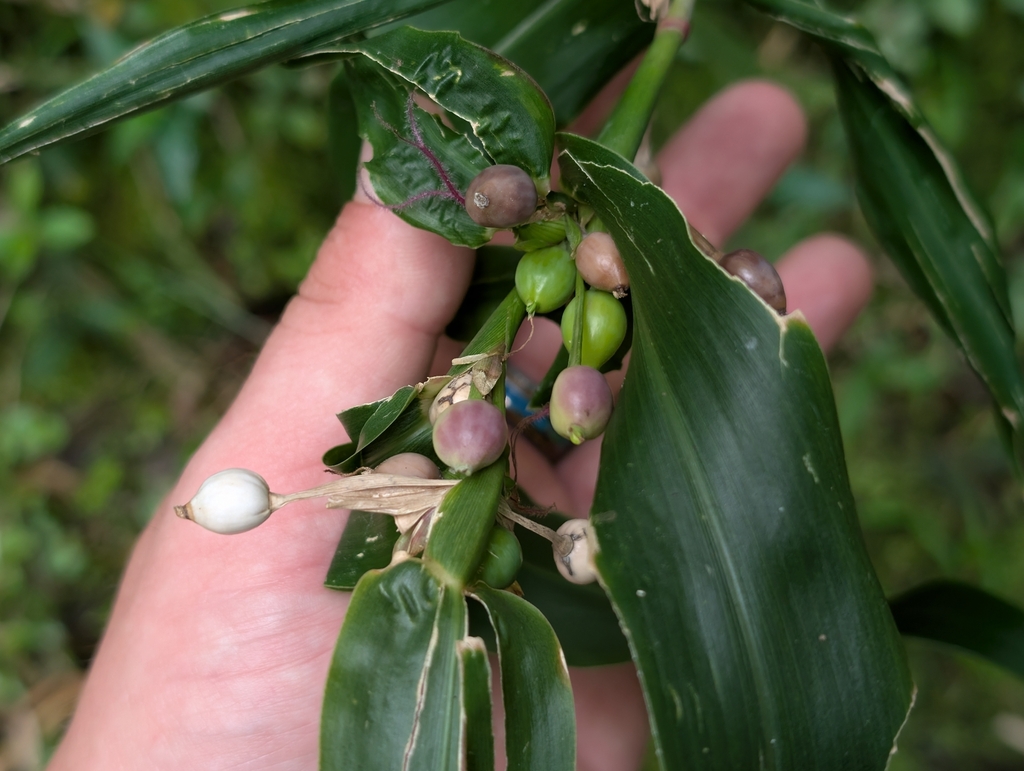
Job's tears is a unique tropical grass known for its hard, bead like seeds. It grows quickly and adds a lovely texture to gardens or containers. You will love how the pearl like grains develop as the plant matures.
Auf einen Blick
- Pflegestufe
- Einfach
- Pflanzenart
- Annual grass
- Licht
- Full sun to partial shade
- Licht im Innenraum
- Hell, indirekt
- Gießen
- Alle 2 bis 4 Tage
- Endgröße
- 3 to 6 feet
- Wachstum
- Schnell
- Winterhärte
- USDA 9 bis 11
- Blütezeit
- Mid to late summer
Pflege
Keep the soil consistently moist because this plant loves water. Watch for yellowing leaves which often signal that the soil has dried out too much. Ensure it gets plenty of warmth to thrive.
- Gießen
- Keep the soil damp at all times as this plant is semi aquatic.
- Düngen
- Feed with a balanced liquid fertilizer once a month during the growing season.
- Schneiden
- Trim back dead or damaged foliage to keep the plant looking tidy.
- Umtopfen
- Since it is typically grown as an annual, you usually do not need to repot it.
- Boden
- Rich, loamy, moisture retentive soil
- Boden-pH
- 6.0 to 7.5
- Temperatur
- 10 bis 35°C
- Luftfeuchtigkeit
- 60 bis 90%
- Trockenheitstoleranz
- Gering
- Lebensdauer
- Tender perennial, typically 1 to 3 years
- Wildverbiss-Resistenz
- Mittel
Anzeichen fürs Umtopfen
- Roots growing out of the drainage holes
- Water running straight through the pot without soaking in
Sicherheit
- Menschen
- The plant is generally considered non-toxic, but the seeds are extremely hard and pose a choking hazard.
- Kinder
- The hard, bead-like seeds are a significant choking hazard for small children.
- Kontaktallergene
- The leaves have sharp, serrated edges that can cause minor skin abrasions.
- Allergene in der Luft
- The pollen may cause mild seasonal allergies in sensitive individuals.
- Essbarkeit
- The hard outer shell of the seed must be removed before consumption to avoid dental damage.
So erkennst du die Pflanze
- Broad, lance shaped green leaves
- Hard, shiny, tear shaped seeds
- Tall, clumping grass habit
- Sturdy, bamboo like stems
- Höhe
- 1 bis 2m
- Breite
- 0,6 bis 1m
- Blätter
- green, deciduous
- Blüten
- white, green, 0,5 bis 1cm
- Früchte
- white, grey, blue, Autumn
Häufige Probleme
- Aphids — Small insects that cluster on new growth and suck plant sap.
- Rust — Fungal infection causing orange or brown spots on the foliage.
Standort und Pflege
- Vermehrung
- seed
- Pflanzzeit
- Spring
- Überwinterung
- In cold climates, treat as an annual and compost after the first frost. If in a pot, move to a frost-free area and keep the soil barely moist.
- Im Kübel
- It grows well in large pots of at least 30 centimeters in diameter, provided you keep the soil very wet.
Seed
- Soak seeds in warm water for 24 hours to soften the hard shell.
- Plant seeds 1 centimeter deep in moist, rich potting soil.
- Maintain a temperature of 20 to 25 Celsius until germination occurs.
- Transplant outdoors once all danger of frost has passed.
Group this grass with other moisture-loving plants to maintain a consistent microclimate.
Gute Pflanzpartner
- Indisches Blumenrohr — They share similar moisture requirements and create a lush tropical look.
- Taro — Both plants thrive in wet, high-humidity environments.
Ähnliche Arten
- Mais — They are both members of the grass family with similar growth habits.
Botanisches
- Familie
- Poaceae
- Gattung
- Coix
- Ordnung
- Poales
- Klasse
- Liliopsida
- Ursprüngliche Heimat
- Tropical Asia
- Artenschutz
- This species is widely naturalized and not of conservation concern.
It naturally inhabits marshy areas and stream banks where it can access constant moisture.
- Nutzen für Wildtiere
- seeds provide food for birds
- Bestäuber
- Bienen, Schmetterlinge
- Verwendung
- ornamental grass, jewelry making, culinary grain, traditional medicine
Im Jahresverlauf
Ökologische Zeigerwerte
- Salzgehalt
- 2/9
- Bodenreaktion
- 6/9
- Licht
- 7/9
- Temperatur
- 8/9
- Feuchtigkeit
- 8/9
- Nährstoffe
- 6/9
Taxonomie abgeglichen mit GBIF.
Häufige Fragen
- Can I grow this in a pot?
- Yes, it grows well in large containers if kept consistently moist.
- Is it an annual or perennial?
- It is a tender perennial often grown as an annual in cooler climates.
Woher der Name kommt
The genus name Coix is an ancient Greek term for a type of palm, while the specific epithet lacryma-jobi translates to Job's tears.
Gut zu wissen
- It is often called Job's Tears because the seeds resemble teardrops.
- The seeds are used in some cultures to make tea or porridge.
- It thrives in wet, boggy soil where other grasses might struggle.
Probleme mit Job's tears?
Diese Seite bietet allgemeine Infos. Pocket Botanist erkennt Probleme anhand eines Fotos deiner echten Pflanze, passt das Gießen an dein Licht und deinen Standort an und erinnert dich an die Pflege.
Dieser Ratgeber wurde mit KI erstellt und mit der GBIF-Taxonomie abgeglichen. Er dient zur allgemeinen Information und ersetzt keine gärtnerische oder tierärztliche Beratung. Hier erfährst du, wie wir diese Ratgeber erstellen.