 Pocket Botanist
Plant guide
Japanese wisteria.
Wisteria floribunda
Pronounced wis-TEER-ee-uh flor-ih-BUN-duh
Also known as Common Wisteria, Japanese Wisteria, Japanese Wisteria



Scan with your phone's camera to get the app
Or go to pocketbotanist.app/get on your phone
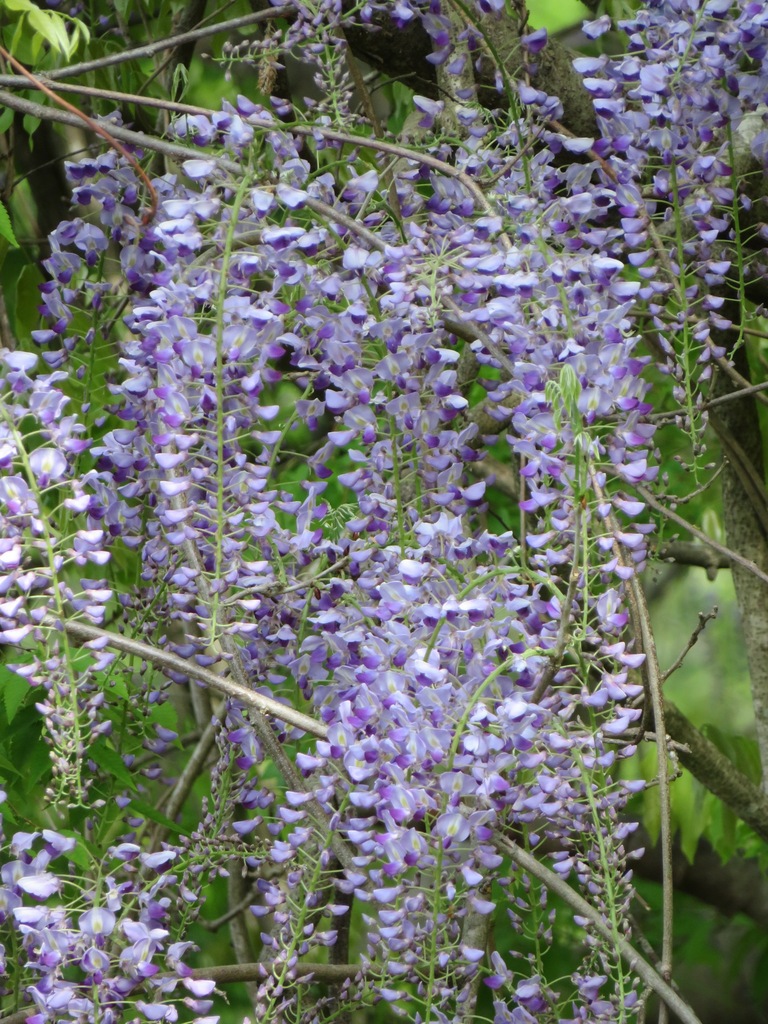
This stunning woody vine is famous for its long, cascading racemes of fragrant flowers. It makes a dramatic statement when trained over pergolas or sturdy arbors. You'll love how it transforms a garden space in the spring.

At a glance
- Care level
- Moderate
- Plant type
- Deciduous woody vine
- Light
- Full sun
- Indoor light
- Direct sun
- Water
- Every 3 to 7 days
- Mature size
- 30 feet
- Growth rate
- Fast
- Hardiness
- USDA 5 to 9
- Bloom time
- Mid to late spring
Care
Provide a very sturdy support structure because this vine gets quite heavy as it matures. Prune back long shoots twice a year to encourage more flower production. Watch for yellowing leaves which can signal poor drainage or nutrient issues.
- Watering
- Keep the soil consistently moist but never waterlogged.
- Feeding
- Apply a balanced fertilizer once in early spring before new growth starts.
- Pruning
- Prune in summer and again in winter to manage size and promote blooms.
- Repotting
- Repot only if necessary, as these vines prefer to be established in the ground.
- Soil
- Moist, fertile, well-draining soil
- Soil pH
- 6.0 to 7.0
- Temperature
- -20 to 35°C
- Humidity
- 40 to 70%
- Drought tolerance
- Moderate
- Lifespan
- Perennial, can live over 100 years.
- Fragrance
- Strong
- Deer and rabbits
- Moderate
Signs it needs repotting
- Roots growing out of drainage holes.
- Water running straight through the pot.
- Stunted growth despite feeding.
Safety
- People
- Ingestion of any part of the plant causes severe abdominal pain, nausea, and vomiting.
- Pets
- All parts of this plant are toxic to cats and dogs if ingested.
- Children
- Keep children away from the seed pods, as they look like edible beans but are highly toxic.
- Contact allergens
- The sap can cause mild skin irritation in sensitive individuals.
- Airborne allergens
- The pollen may trigger seasonal allergies in some people.
- Edibility
- All parts of this plant are toxic if ingested, especially the seeds and pods.
How to identify it
- Long, pendulous flower clusters
- Twining woody stems
- Compound, alternate, pinnate leaves
- Flowers open gradually from the base of the cluster as the leaves emerge
- Height
- 3 to 9m
- Spread
- 3 to 6m
- Leaves
- green, deciduous
- Flowers
- purple, blue, white, pink, 1 to 2cm
- Fruit
- brown, Autumn
Problems to watch for
- Wisteria scale · Small insects that suck sap from stems, causing stunted growth.
- Leaf spot · Fungal infection causing brown or black spots on foliage.
Check your japanese wisteria from a photo
Pocket Botanist looks at a photo of your plant and tells you what's wrong and what to try first.
Scan with your phone's camera to get the app
Or go to pocketbotanist.app/get on your phone
Growing it
- Propagation
- cuttings, layering, grafting
- When to plant
- spring, autumn
- Overwintering
- Mulch the base to protect roots from extreme cold. Ensure the structure is strong enough to hold the weight of snow and ice.
- In containers
- It is generally too large for containers unless kept as a bonsai or heavily pruned.
Softwood cuttings
- 1. Take 15cm cuttings in early summer.
- 2. Remove lower leaves.
- 3. Dip in rooting hormone.
- 4. Place in moist, well-draining soil.
- 5. Keep in a humid environment until rooted.
Pair with sturdy, large structures because this vine is heavy and can crush weaker supports.
Grows well with
Similar species
- Chinese wisteria · It is very similar but twines counter-clockwise and blooms before leaves emerge.
Science
- Family
- Fabaceae
- Genus
- Wisteria
- Order
- Fabales
- Class
- Magnoliopsida
- Native range
- Japan
- Conservation
- Not currently of conservation concern.
It thrives by climbing over trees and structures to reach sunlight in forest edges.
- Value to wildlife
- nectar source
- Pollinators
- bees, butterflies
- Uses
- ornamental climber, pergola cover, trellis plant
Through the year
Ecological indicators
- Salinity
- 2/9
- Soil reaction
- 6/9
- Light
- 8/9
- Temperature
- 6/9
- Moisture
- 6/9
- Nutrients
- 5/9
Taxonomy resolved against GBIF.
Questions people ask
- Why is my wisteria not blooming?
- It may be too young, or it needs more sunlight and specific pruning to encourage flower buds.
- How often should I prune it?
- Prune twice a year, once in summer to control size and once in winter to shape the structure.
Where the name comes from
The genus is named after Caspar Wistar, an American physician, while the species name floribunda means many-flowered.
Good to know
- Japanese wisteria twines in a clockwise direction.
- It is a popular subject in traditional Japanese art and bonsai.
- The flowers are often fragrant and attract many pollinators.
- It can live for over 100 years if given proper support.
Also in
Keep your japanese wisteria growing
This page is a general guide. Save your plant in Pocket Botanist and you get care reminders timed for this plant, plus a care history that shows what worked.
Scan with your phone's camera to get the app
Or go to pocketbotanist.app/get on your phone
This guide was generated with AI on and checked against GBIF taxonomy. It is general information, not horticultural or veterinary advice. Read about how we build these guides.