 Pocket Botanist
Plant guide
Chinese tallow.
Triadica sebifera
Pronounced try-uh-DEE-kuh seh-BIH-fer-uh
Also known as Chinese tallow, Chinese tallowtree, candleberry-tree



Scan with your phone's camera to get the app
Or go to pocketbotanist.app/get on your phone
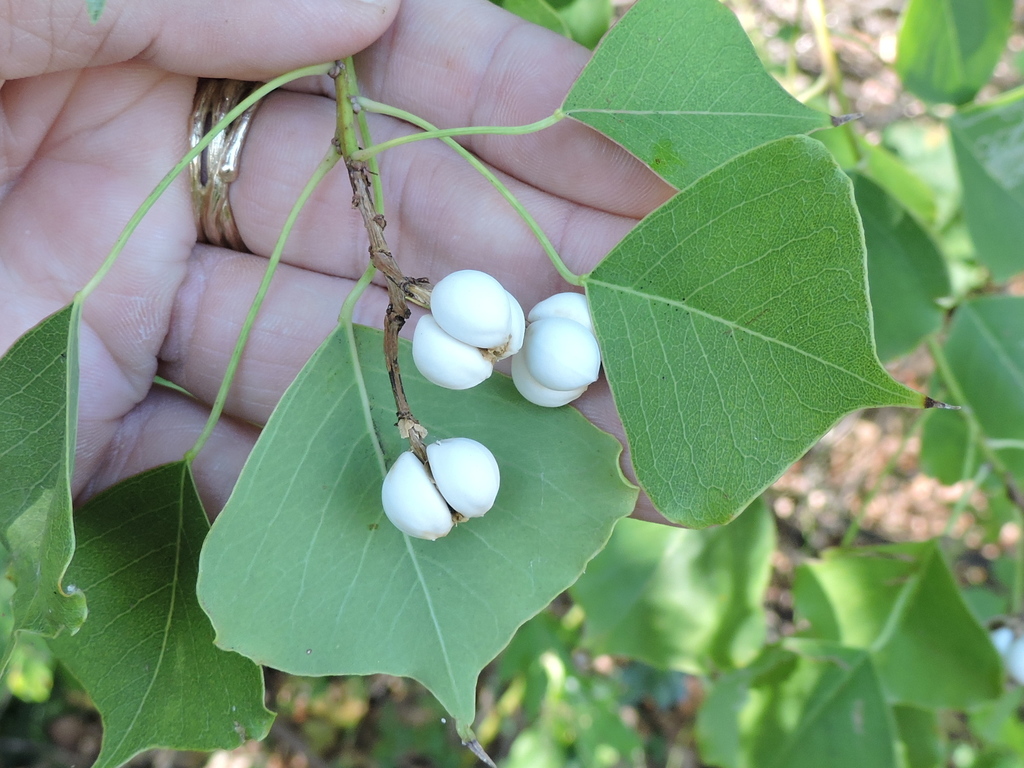
The Chinese tallow is a deciduous tree known for its striking heart shaped leaves that turn brilliant shades of red and yellow in the fall. It produces small white waxy seeds that resemble popcorn. While beautiful, it is considered highly invasive in many parts of the United States.
At a glance
- Care level
- Easy
- Plant type
- Deciduous tree
- Light
- Full sun
- Indoor light
- Direct sun
- Water
- Every 7 to 14 days
- Mature size
- 30 to 50 feet
- Growth rate
- Fast
- Hardiness
- USDA 8 to 11
- Bloom time
- Late spring to early summer
Care
This tree is incredibly adaptable and thrives in most soil conditions once established. Watch for rapid spread in your garden as it self seeds very easily. It prefers plenty of sun to maintain its vibrant fall color.
- Watering
- Keep the soil consistently moist while the tree is young.
- Feeding
- A balanced fertilizer applied in early spring is sufficient.
- Pruning
- Prune during the dormant winter season to maintain shape.
- Repotting
- Only necessary if grown in a container for bonsai purposes.
- Soil
- Tolerates various soils including wet sites
- Soil pH
- Acidic to neutral
- Temperature
- -12 to 38°C
- Humidity
- 40 to 80%
Safety
- People
- All parts of the plant are considered toxic to humans if ingested, causing severe gastrointestinal distress.
- Pets
- The leaves and fruit are toxic to dogs and cats if ingested.
- Children
- Keep children away from the white, waxy seeds as they are attractive but highly toxic if swallowed.
- Contact allergens
- The milky sap can cause skin irritation or contact dermatitis in sensitive individuals.
- Airborne allergens
- The pollen can trigger allergic reactions in some people during the flowering season.
- Edibility
- The seeds and leaves are toxic if ingested and should never be consumed.
How to identify it
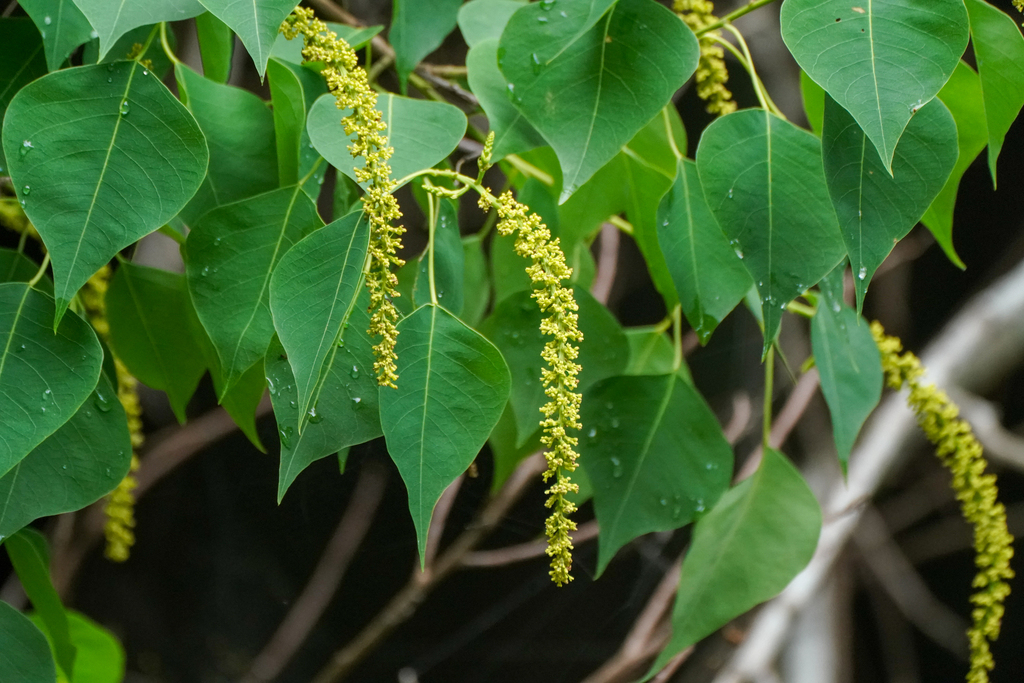
- Heart shaped leaves with pointed tips
- Small white waxy fruit clusters
- Smooth gray bark on mature trunks
- Yellow to red autumn foliage
- Height
- 6 to 15m
- Spread
- 4 to 10m
- Leaves
- green, yellow, red, deciduous
- Flowers
- yellow, green, 0.5 to 1cm
- Fruit
- white, brown, Autumn
Problems to watch for
- Leaf spot · Fungal infections can cause spots on foliage during humid weather.
Check your chinese tallow from a photo
Pocket Botanist looks at a photo of your plant and tells you what's wrong and what to try first.
Scan with your phone's camera to get the app
Or go to pocketbotanist.app/get on your phone
Growing it
- Propagation
- seed, cuttings
- When to plant
- spring, autumn
This plant is so invasive that it is best not to include it in any garden guild.
Similar species
- Black Tupelo · It offers similar fall color and is a much better native alternative.
Science
- Family
- Euphorbiaceae
- Genus
- Triadica
- Order
- Malpighiales
- Class
- Magnoliopsida
- Native range
- East Asia, including China and Japan.
- Conservation
- This species is considered highly invasive in many parts of the United States and is often prohibited from sale or planting.
It thrives in disturbed areas and wetlands, where it forms dense thickets that displace native vegetation.
- Value to wildlife
- nectar source, bird food source
- Pollinators
- bees, butterflies
- Uses
- ornamental shade tree, historical wax production
Through the year
Ecological indicators
- Salinity
- 4/9
- Soil reaction
- 5/9
- Light
- 8/9
- Temperature
- 7/9
- Moisture
- 6/9
- Nutrients
- 5/9
Taxonomy resolved against GBIF.
Questions people ask
- Is this a good tree for my backyard?
- No, it is highly invasive and spreads aggressively, often outcompeting native plants.
- How do I get rid of it?
- You must remove the entire root system or apply herbicide to the stump to prevent resprouting.
Where the name comes from
The name Triadica refers to the three-part fruit, while sebifera means wax-bearing, referring to the waxy seed coating.
Good to know
- It is commonly known as the Chinese tallow tree.
- The leaves turn brilliant shades of red and orange in the fall.
- It was introduced to the US in the 1700s for potential oil production.
- The seeds resemble popcorn when the outer capsule splits open.
Also in
Keep your chinese tallow growing
This page is a general guide. Save your plant in Pocket Botanist and you get care reminders timed for this plant, plus a care history that shows what worked.
Scan with your phone's camera to get the app
Or go to pocketbotanist.app/get on your phone
This guide was generated with AI on and checked against GBIF taxonomy. It is general information, not horticultural or veterinary advice. Read about how we build these guides.