 Pocket Botanist
Plant guide
Blushing Bride.
Tillandsia ionantha
Pronounced til-LAND-see-uh eye-oh-NAN-thuh
Also known as Blushing Bride, Blushing Bride Airplant, Enhanced Lilac, Ionantha Lilac, Sky Plant



Scan with your phone's camera to get the app
Or go to pocketbotanist.app/get on your phone

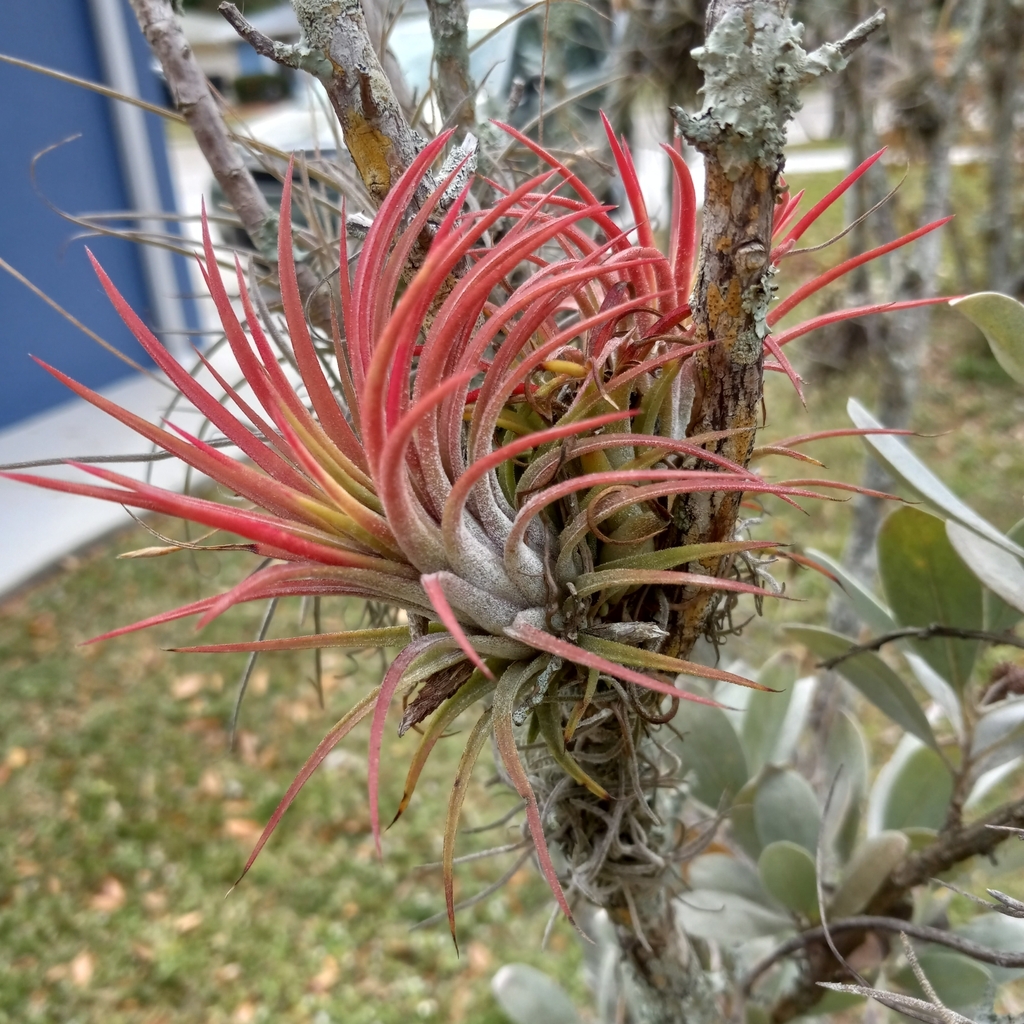
This charming air plant is a favorite for its compact size and color changing foliage. It naturally grows on trees in its native habitat and does not require soil to thrive. You will love how it blushes a deep red when it is ready to bloom.
At a glance
- Care level
- Easy
- Plant type
- Epiphyte
- Light
- Bright indirect light is best for healthy growth.
- Indoor light
- Bright indirect
- Water
- Every 5 to 7 days
- Mature size
- 3 to 4 inches tall
- Growth rate
- Slow
- Hardiness
- USDA 9 to 11
- Bloom time
- Late winter to early spring
Care
Mist your plant regularly or soak it in water for 20 to 30 minutes every week. Make sure it dries out completely within a few hours to prevent rot. Watch for shriveled leaves which indicate the plant needs more hydration.
- Watering
- Soak the plant in water once a week and shake off excess moisture.
- Feeding
- Use a specialized air plant fertilizer diluted in your soaking water once a month.
- Pruning
- Trim away any dead or brown leaf tips with clean scissors.
- Repotting
- Since these plants do not grow in soil, they never need repotting.
- Soil
- None required
- Temperature
- 10 to 30°C
- Humidity
- 50 to 80%
- Drought tolerance
- Moderate
- Lifespan
- Perennial, typically 3 to 5 years
- Deer and rabbits
- High
Signs it needs repotting
- The plant has outgrown its mount.
- The mother plant has died after blooming and you need to separate the pups.
Safety
- People
- It is generally considered non-toxic to humans.
- Pets
- This plant is considered non toxic to cats and dogs.
- Children
- The small, pointed leaves are not sharp, but keep them away from small children to prevent choking if ingested.
- Edibility
- This plant is not intended for consumption and may cause digestive upset.
How to identify it
- Compact rosette of silvery green leaves
- Leaves turn vibrant red before flowering
- Small tubular violet flowers emerge
- Covered in tiny water absorbing trichomes
- Height
- 0.05 to 0.15m
- Spread
- 0.05 to 0.15m
- Leaves
- silver, green, blush-red, evergreen
- Flowers
- violet, purple, 1 to 3cm
Problems to watch for
- Rot · Occurs when the plant stays wet for too long, especially in the center.
- Dehydration · The leaf tips will curl and turn brown if the plant is not receiving enough moisture.
Check your blushing bride from a photo
Pocket Botanist looks at a photo of your plant and tells you what's wrong and what to try first.
Scan with your phone's camera to get the app
Or go to pocketbotanist.app/get on your phone
Growing it
- Propagation
- division, seed
- When to plant
- year-round
- Overwintering
- Keep it in a warm spot away from cold drafts. Reduce watering slightly during the cooler months to prevent rot.
- In containers
- It is perfect for containers, as it does not require soil and can be mounted on wood, stone, or wire.
Division of Pups
- Wait for the mother plant to produce small offsets called pups.
- Gently pull or cut the pup away once it is about one third the size of the parent.
- Mount the new pup on a piece of wood or place it in a bright, airy spot.
Group these with other epiphytes to create a microclimate that helps maintain higher humidity levels.
Grows well with
- Bird's Nest Fern · They share similar light and humidity requirements in a tropical display.
- Orchids · Both are epiphytes that look great mounted together on driftwood.
Similar species
- Bulbous Air Plant · It has a similar epiphytic nature but features a unique bulbous base.
- Silver Vase Plant · It is another bromeliad that thrives in similar indoor conditions.
Science
- Family
- Bromeliaceae
- Genus
- Tillandsia
- Order
- Poales
- Class
- Liliopsida
- Native range
- Central America and Mexico
- Conservation
- Wild populations are protected in some areas, so always ensure your plant is nursery-grown.
It survives by clinging to tree branches and absorbing moisture from the air.
- Value to wildlife
- nectar source
- Pollinators
- hummingbirds
- Uses
- indoor decor, terrarium plant, mounted display
Through the year
Ecological indicators
- Salinity
- 1/9
- Soil reaction
- 5/9
- Light
- 6/9
- Temperature
- 7/9
- Moisture
- 4/9
- Nutrients
- 2/9
Taxonomy resolved against GBIF.
Questions people ask
- How often should I water it?
- Mist it thoroughly or soak it in water for 20 minutes once a week.
- Does it need direct sunlight?
- It prefers bright, indirect light to keep its color vibrant.
Where the name comes from
The name ionantha comes from the Greek words for violet and flower, referring to its purple blooms.
Good to know
- It is an epiphyte, meaning it grows on other plants rather than in soil.
- It absorbs water and nutrients through specialized scales on its leaves called trichomes.
- The plant is native to Mexico and Central America.
- It is often called a sky plant because it does not need soil to thrive.
Keep your blushing bride growing
This page is a general guide. Save your plant in Pocket Botanist and you get care reminders timed for this plant, plus a care history that shows what worked.
Scan with your phone's camera to get the app
Or go to pocketbotanist.app/get on your phone
This guide was generated with AI on and checked against GBIF taxonomy. It is general information, not horticultural or veterinary advice. Read about how we build these guides.