 Pocket Botanist
Plant guide
Ragged Robin.
Silene flos-cuculi
Pronounced sy-LEE-nee floss-KYOO-kyoo-lye
Also known as Meadow Campion, Ragged Robin, Ragged-Robin



Scan with your phone's camera to get the app
Or go to pocketbotanist.app/get on your phone
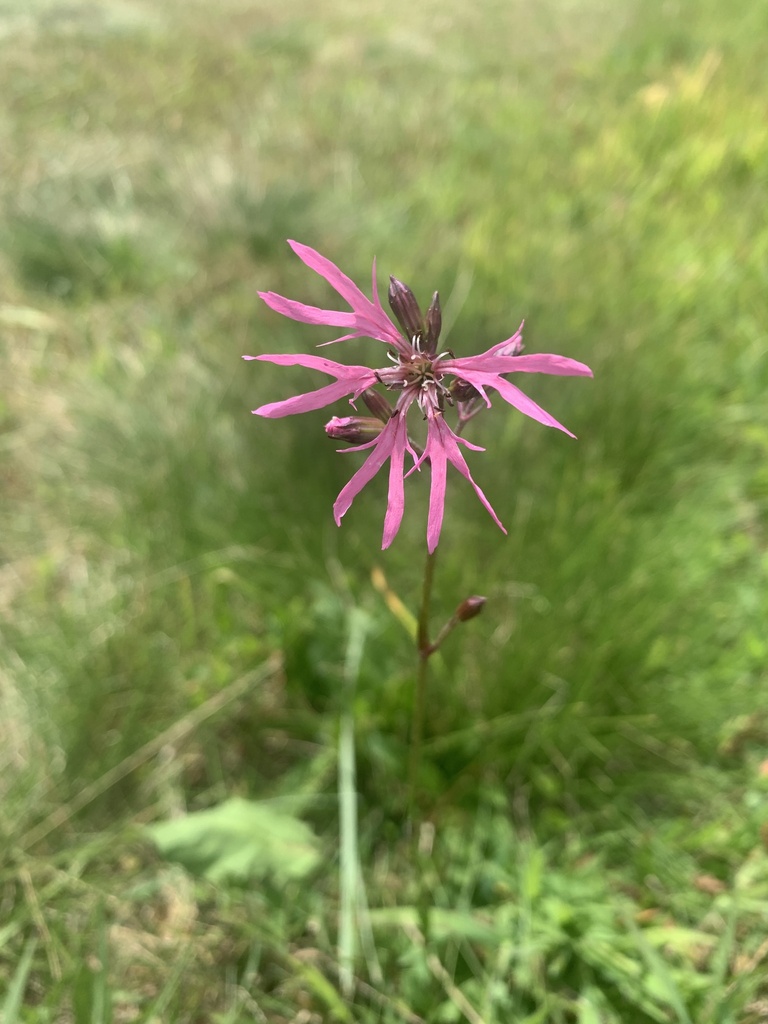
Ragged Robin is a lovely wildflower that brings a touch of the meadow to your garden. It loves damp spots and produces delicate, shredded pink petals that look like they are dancing in the breeze. It is a fantastic choice if you want to support local pollinators.

At a glance
- Care level
- Easy
- Plant type
- Perennial
- Light
- Full sun to partial shade
- Indoor light
- Bright indirect
- Water
- Every 2 to 4 days
- Mature size
- 30 to 90 centimeters
- Growth rate
- Medium
- Hardiness
- USDA 4 to 8
- Bloom time
- Late spring to early summer
Care
Keep the soil consistently moist as this plant naturally thrives in damp meadows. Watch for wilting if the ground dries out too much during the heat of summer. Deadhead the spent flowers to encourage a second flush of blooms.
- Watering
- Keep the soil damp but not waterlogged.
- Feeding
- Apply a balanced liquid fertilizer during the active growing season.
- Pruning
- Cut back faded flower stalks to keep the plant tidy.
- Repotting
- Refresh the soil every couple of years to maintain nutrient levels.
- Soil
- Moist, fertile, well-draining soil
- Soil pH
- Neutral to slightly acidic
- Temperature
- -25 to 30°C
- Humidity
- 40 to 80%
- Drought tolerance
- Low
- Lifespan
- Short-lived perennial, typically 3 to 5 years.
- Deer and rabbits
- Moderate
Signs it needs repotting
- Roots growing out of the drainage holes.
- The plant drying out much faster than usual.
- Stunted growth despite regular watering.
Safety
- People
- The plant contains saponins which can cause mild digestive upset if ingested in large quantities.
- Children
- Keep away from small children as ingestion of any part of the plant may cause stomach discomfort.
- Contact allergens
- Handling the foliage may cause mild skin irritation in sensitive individuals.
- Airborne allergens
- There are no significant reports of respiratory allergies associated with this plant.
- Edibility
- This plant is not considered edible and should not be consumed.
How to identify it
- Deeply divided, shredded pink petals
- Slender, hairy stems
- Basal rosette of lance shaped leaves
- Dark reddish purple calyx
- Height
- 0.3 to 0.9m
- Spread
- 0.2 to 0.45m
- Leaves
- green, deciduous
- Flowers
- pink, white, 3 to 4cm
Problems to watch for
- Aphids · Small insects that may cluster on new growth and flower buds.
- Rust · Fungal infection causing orange or brown spots on the undersides of leaves.
Check your ragged robin from a photo
Pocket Botanist looks at a photo of your plant and tells you what's wrong and what to try first.
Scan with your phone's camera to get the app
Or go to pocketbotanist.app/get on your phone
Growing it
- Propagation
- seed, division
- When to plant
- spring, autumn
- Overwintering
- Cut back the dead foliage in late autumn or early spring. Ensure the crown remains protected from extreme drying winds during winter.
- In containers
- It can be grown in containers if kept in a self-watering pot or a saucer filled with water to ensure constant moisture.
Seed Sowing
- Sow seeds in trays during autumn or early spring.
- Keep the soil consistently moist until germination occurs.
- Transplant seedlings into their final damp location once they are large enough to handle.
Division
- Dig up the clump in early spring as new growth begins.
- Gently pull the root mass apart into smaller sections.
- Replant the divisions immediately into moist soil and water thoroughly.
Group this plant with other moisture-loving perennials to create a self-sustaining bog garden or damp border.
Grows well with
- Marsh Marigold · They share similar requirements for consistently moist soil.
- Meadowsweet · This plant provides a beautiful textural contrast in damp meadow settings.
Similar species
- Red Campion · A close relative that prefers slightly drier woodland or hedgerow conditions.
Science
- Family
- Caryophyllaceae
- Genus
- Silene
- Order
- Caryophyllales
- Class
- Magnoliopsida
- Native range
- Europe and parts of western Asia.
- Conservation
- It is declining in some parts of its range due to the loss of traditional wet meadow habitats.
It is a wetland specialist that relies on damp meadows and fens to maintain its moisture needs throughout the growing season.
- Value to wildlife
- nectar source
- Pollinators
- bees, butterflies, moths
- Uses
- wildflower meadows, bog gardens, pollinator borders
Through the year
Ecological indicators
- Salinity
- 1/9
- Soil reaction
- 5/9
- Light
- 7/9
- Temperature
- 5/9
- Moisture
- 8/9
- Nutrients
- 5/9
Taxonomy resolved against GBIF.
Questions people ask
- Does it need a lot of water?
- Yes, it prefers consistently moist to wet soil and does not tolerate drying out.
- Will it spread on its own?
- It can self-seed readily in ideal conditions, creating lovely naturalized drifts.
Where the name comes from
The common name Ragged Robin refers to the tattered look of the petals, while the scientific name Silene flos-cuculi links it to the cuckoo, which begins calling when the plant blooms.
Good to know
- It is commonly known as Ragged Robin.
- The species name flos-cuculi translates literally to flower of the cuckoo.
- It thrives in damp, marshy ground where many other garden plants struggle.
- The flowers are perfectly adapted for long-tongued insects like butterflies and moths.
Keep your ragged robin growing
This page is a general guide. Save your plant in Pocket Botanist and you get care reminders timed for this plant, plus a care history that shows what worked.
Scan with your phone's camera to get the app
Or go to pocketbotanist.app/get on your phone
This guide was generated with AI on and checked against GBIF taxonomy. It is general information, not horticultural or veterinary advice. Read about how we build these guides.