 Pocket Botanist
Plant guide
Annual pearlwort.
Sagina apetala
Pronounced suh-JY-nuh uh-PET-uh-luh
Also known as Annual Pearlwort, Dwarf pearlwort



Scan with your phone's camera to get the app
Or go to pocketbotanist.app/get on your phone
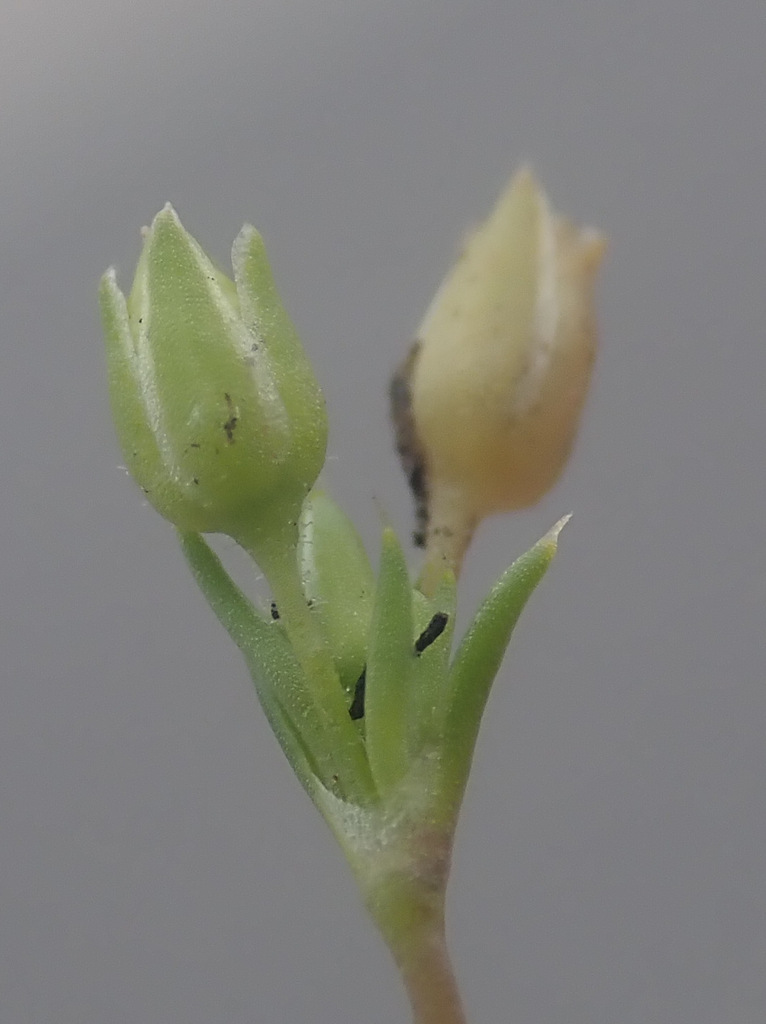
This tiny, unassuming plant is a common sight in lawns and cracks in the pavement. It forms delicate, mossy mats that thrive in cool, damp conditions. You'll often find it acting as a pioneer species in disturbed soil.
At a glance
- Care level
- Easy
- Plant type
- Annual herb
- Light
- Partial shade to full sun
- Indoor light
- Bright indirect
- Water
- Every 2 to 4 days
- Mature size
- 2 to 4 inches tall
- Growth rate
- Fast
- Hardiness
- USDA 5 to 9
- Bloom time
- Late spring to summer
Care
Keep the soil consistently moist to mimic its natural damp habitat. Watch for signs of drying out, as this plant doesn't handle drought well. It prefers cooler temperatures and will struggle in intense, scorching heat.
- Watering
- Keep the soil surface damp but not waterlogged.
- Feeding
- Use a balanced liquid fertilizer at half strength during the growing season.
- Pruning
- Trim back any straggly growth to maintain a neat, carpet like appearance.
- Repotting
- Repot only if the plant becomes root bound or the soil quality degrades.
- Soil
- Well draining sandy or loamy soil
- Soil pH
- Neutral to slightly acidic
- Temperature
- -10 to 30°C
- Humidity
- 40 to 70%
- Drought tolerance
- Moderate
- Lifespan
- Annual, often reseeding.
- Deer and rabbits
- Moderate
Signs it needs repotting
- Roots circling the bottom of the pot.
- Water running straight through without soaking in.
Safety
- People
- It is generally considered non toxic, but ingestion should be avoided.
- Children
- The small size of the plant poses a minor choking hazard if ingested by small children.
- Edibility
- This plant is not intended for consumption and may cause digestive upset.
How to identify it
- Tiny, thread like green leaves
- Forms low growing mossy mats
- Small white flowers without petals
- Grows in dense tufts
- Height
- 0.02 to 0.1m
- Spread
- 0.05 to 0.2m
- Leaves
- bright green, evergreen
- Flowers
- white, 0.2 to 0.4cm
Problems to watch for
- Root rot · Occurs when the soil stays constantly waterlogged for too long.
Check your annual pearlwort from a photo
Pocket Botanist looks at a photo of your plant and tells you what's wrong and what to try first.
Scan with your phone's camera to get the app
Or go to pocketbotanist.app/get on your phone
Growing it
- Propagation
- seed
- When to plant
- spring, autumn
- Overwintering
- It stays green through the winter in mild climates. In colder areas, it may die back slightly but usually returns from seed or roots in spring.
- In containers
- It grows well in shallow containers or troughs as long as drainage is excellent.
Seed
- 1. Collect seeds from dried capsules in late summer.
- 2. Sprinkle seeds over moist, well draining soil.
- 3. Press lightly into the surface without covering.
- 4. Keep consistently moist until germination.
Plant this in the crevices of stone paths to soften the look of hardscaping.
Grows well with
- Thyme · They share similar low growing habits and moisture needs.
- Blue Fescue · The fine texture of the pearlwort contrasts nicely with the clumping grass.
Similar species
- Irish Moss · It is a very close relative often used in similar landscaping roles.
Science
- Family
- Caryophyllaceae
- Genus
- Sagina
- Order
- Caryophyllales
- Class
- Magnoliopsida
- Native range
- Europe and parts of North Africa.
- Conservation
- It is a common, widespread species and is not of conservation concern.
It colonizes disturbed, open ground and thin soils where competition from larger plants is low.
- Value to wildlife
- ground cover
- Pollinators
- bees
- Uses
- ground cover, rock garden filler, pathway edging
Through the year
Ecological indicators
- Salinity
- 2/9
- Soil reaction
- 5/9
- Light
- 7/9
- Temperature
- 5/9
- Moisture
- 5/9
- Nutrients
- 3/9
Taxonomy resolved against GBIF.
Questions people ask
- Is this a true moss?
- No, it is a flowering plant in the carnation family.
- Can I walk on it?
- It handles light foot traffic but is not a substitute for heavy duty grass.
Where the name comes from
Sagina is the Latin word for fodder, while apetala refers to the tiny, inconspicuous flowers that lack showy petals.
Good to know
- It is often mistaken for Irish moss.
- The species name apetala means without petals.
- It thrives in compacted soil where other plants struggle.
Keep your annual pearlwort growing
This page is a general guide. Save your plant in Pocket Botanist and you get care reminders timed for this plant, plus a care history that shows what worked.
Scan with your phone's camera to get the app
Or go to pocketbotanist.app/get on your phone
This guide was generated with AI on and checked against GBIF taxonomy. It is general information, not horticultural or veterinary advice. Read about how we build these guides.