 Pocket Botanist
Plant guide
Red mangrove.
Rhizophora mangle
Pronounced ry-ZOF-or-uh MANG-gull
Also known as American Mangrove, Red Mangrove, mangrove


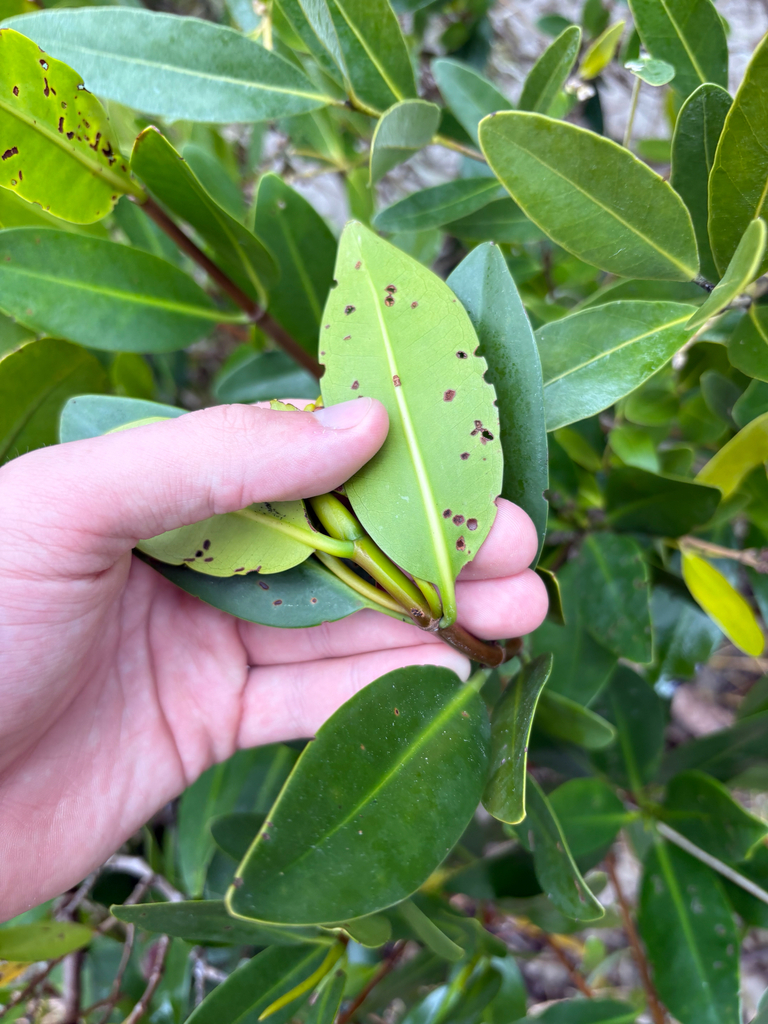
The red mangrove is a fascinating coastal tree known for its iconic prop roots that arch above the water. It plays a vital role in stabilizing shorelines and providing a nursery for marine life. You will need a specialized setup to mimic its natural brackish environment.
At a glance
- Care level
- Difficult
- Plant type
- Evergreen tree
- Light
- Full sun
- Indoor light
- Direct sun
- Water
- Every day
- Mature size
- 25 to 80 feet
- Growth rate
- Medium
- Hardiness
- USDA 10 to 12
- Bloom time
- Throughout the year
Care
Keep the roots submerged in a brackish water solution to ensure the tree stays hydrated and healthy. Watch for yellowing leaves, which often indicate a need for higher salinity or nutrient adjustments. Ensure the environment stays warm and humid to mimic its native tropical habitat.
- Watering
- The root system must remain constantly submerged in brackish water.
- Feeding
- Use a balanced aquatic plant fertilizer during the active growing season.
- Pruning
- Trim back dead or crossing branches once a year to maintain shape.
- Repotting
- Move to a larger container only when the root system becomes severely crowded.
- Soil
- Peaty or sandy saline mud
- Soil pH
- 6.0 to 8.0
- Temperature
- 15 to 35°C
- Humidity
- 70 to 100%
Safety
- People
- The bark and leaves contain high levels of tannins which can be irritating if ingested in large quantities.
- Children
- The sharp, woody propagules can be a puncture hazard if stepped on or handled roughly.
- Contact allergens
- The sap can cause mild skin irritation in sensitive individuals.
- Airborne allergens
- Pollen may trigger mild allergic reactions in sensitive individuals during peak flowering.
- Edibility
- The plant is not considered edible and contains tannins that may cause digestive distress.
How to identify it
- Arching stilt like prop roots
- Leathery dark green elliptical leaves
- Small yellow four petaled flowers
- Pencil shaped propagules hanging from branches
- Height
- 3 to 25m
- Spread
- 2 to 15m
- Leaves
- dark green, leathery, evergreen
- Flowers
- pale yellow, white, 1 to 2cm
- Fruit
- brown, Year round
Common problems
- Scale insects — Small sap sucking insects that cluster on stems.
- Root rot — Fungal decay occurring if the water becomes stagnant and oxygen depleted.
Growing it
- Propagation
- seed, cuttings
- When to plant
- spring, summer, autumn, winter
Plant in groups to mimic natural mangrove thickets for better stability and habitat creation.
Grows well with
- Black Mangrove — They naturally coexist in mangrove forest zones.
- White Mangrove — This species occupies similar coastal niches.
Similar species
- Black Mangrove — Shares the same habitat but uses pneumatophores instead of prop roots.
- White Mangrove — Often found growing slightly further inland in the same ecosystem.
Science
- Family
- Rhizophoraceae
- Genus
- Rhizophora
- Order
- Malpighiales
- Class
- Magnoliopsida
- Native range
- Tropical and subtropical coasts of the Americas and West Africa.
- Conservation
- While widespread, mangrove habitats are protected in many regions due to their critical role in coastal ecosystems.
It survives by excluding salt at the root level and excreting excess salt through its leaves.
- Value to wildlife
- nursery for fish, shoreline stabilization, bird nesting site
- Pollinators
- bees, butterflies
- Uses
- coastal protection, habitat restoration, aquarium filtration
Through the year
Ecological indicators
- Salinity
- 8/9
- Soil reaction
- 7/9
- Light
- 8/9
- Temperature
- 9/9
- Moisture
- 9/9
- Nutrients
- 5/9
Taxonomy resolved against GBIF.
Questions people ask
- Can I grow this in a regular garden?
- No, it requires a specialized brackish or saltwater environment to survive.
- How do I propagate it?
- Simply place the mature, cigar shaped propagule in a container of water until roots appear.
Where the name comes from
The name Rhizophora comes from the Greek words for root and bearing, referring to its iconic prop roots.
Good to know
- Red mangroves are viviparous, meaning their seeds germinate while still attached to the parent tree.
- They can tolerate high salinity levels that would kill most other plants.
- The tangled root systems provide essential protection for juvenile reef fish.
- They are primary colonizers of new coastal land.
Is your red mangrove looking unwell?
This page is a general guide. Pocket Botanist diagnoses problems from a photo of your actual plant, works out watering for your light and conditions, and reminds you when care is due.
This guide was generated with AI and checked against GBIF taxonomy. It is general information, not horticultural or veterinary advice. Read about how we build these guides.