 Pocket Botanist
Plant guide
Prostrate knotweed.
Polygonum aviculare
Pronounced po-LIG-o-num a-vik-yoo-LAIR-ee
Also known as English knotgrass, Knotgrass, Knotgrass agg., Knotweed, Prostrate knotweed, doorweed



Scan with your phone's camera to get the app
Or go to pocketbotanist.app/get on your phone
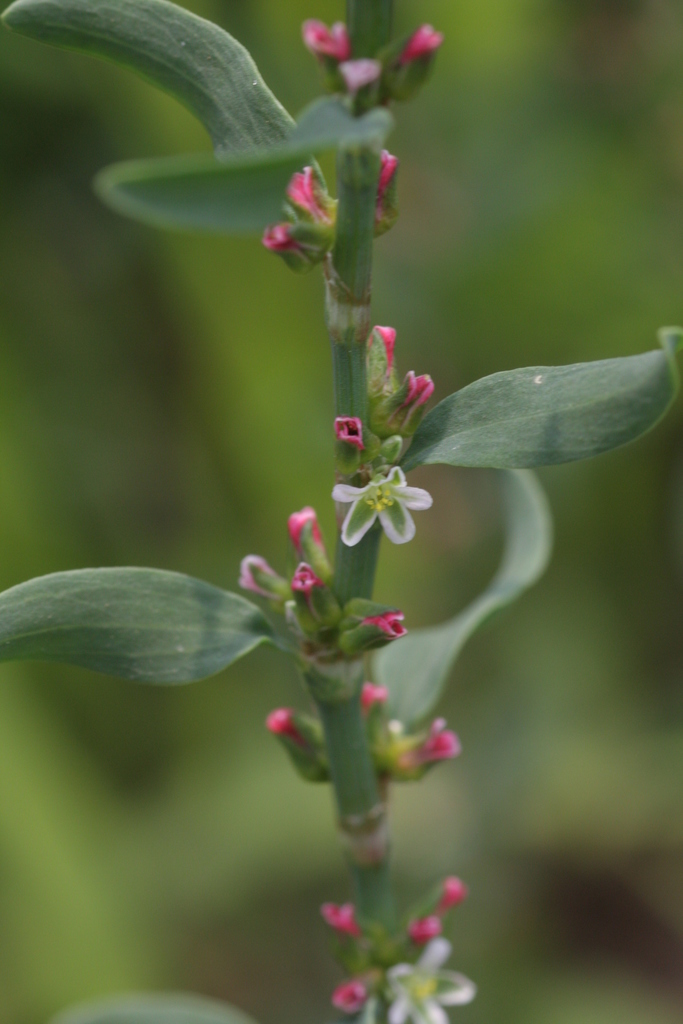
Prostrate knotweed is a tough, low growing plant that often shows up in compacted soil or along paths. It forms dense mats that can handle quite a bit of foot traffic. You will likely see it popping up in cracks in the sidewalk or in neglected garden beds.
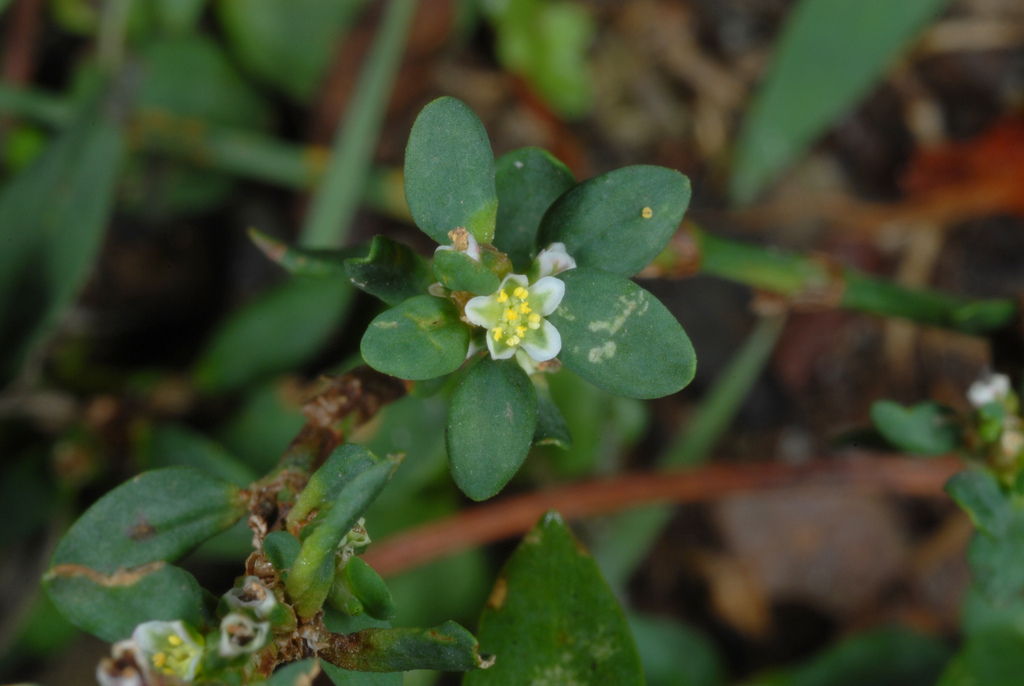
At a glance
- Care level
- Easy
- Plant type
- Annual herb
- Light
- Full sun
- Indoor light
- Direct sun
- Water
- Every 7 to 14 days
- Mature size
- Up to 20 inches tall (usually much lower when trampled)
- Growth rate
- Fast
- Hardiness
- USDA 3 to 9
- Bloom time
- Late spring to early autumn
Care
This plant is incredibly resilient and rarely needs any special attention. If you want to keep it in check, just pull it by hand before it goes to seed. Watch for it spreading into areas where you prefer a different ground cover.
- Watering
- It is quite drought tolerant once established.
- Feeding
- It does not require any supplemental fertilizer.
- Pruning
- Trim back if it starts to spread into unwanted areas.
- Repotting
- This plant is typically not grown in containers.
- Soil
- Compacted or poor soil
- Soil pH
- Neutral to alkaline
- Temperature
- -20 to 35°C
- Humidity
- 30 to 70%
Safety
- People
- The plant is generally considered safe but contains oxalic acid, which can be problematic for people with kidney issues.
- Children
- The plant is not toxic, but small children should be discouraged from eating wild plants to avoid accidental ingestion of contaminated soil.
- Contact allergens
- The stems can be slightly rough, but there is no significant contact dermatitis risk.
- Airborne allergens
- Pollen may cause mild seasonal allergies in sensitive individuals.
- Edibility
- While young leaves are sometimes eaten, they contain oxalates and should be consumed in moderation.
How to identify it
- low growing mat forming habit
- small lance shaped blue green leaves
- tiny white or pinkish flowers
- swollen stem nodes
- wiry stems branching from base
- Height
- 0.05 to 0.5m
- Spread
- 0.1 to 0.6m
- Leaves
- green, blue-green, deciduous
- Flowers
- white, pink, green, 0.2 to 0.4cm
- Fruit
- brown, black, Late summer to autumn
Problems to watch for
- Powdery mildew · A white fungal growth on leaves caused by poor air circulation.
Check your prostrate knotweed from a photo
Pocket Botanist looks at a photo of your plant and tells you what's wrong and what to try first.
Scan with your phone's camera to get the app
Or go to pocketbotanist.app/get on your phone
Growing it
- Propagation
- seed
- When to plant
- spring, autumn
This plant is best suited for wild areas where you do not mind aggressive spreaders.
Grows well with
- Common Yarrow · They share similar soil preferences and drought tolerance.
Similar species
- Prostrate Knotweed · It is very similar in appearance and often confused with common knotweed.
Science
- Family
- Polygonaceae
- Genus
- Polygonum
- Order
- Caryophyllales
- Class
- Magnoliopsida
- Native range
- Europe and Asia, though now naturalized globally.
- Conservation
- It is a common, widespread weed and is not of conservation concern.
It thrives in disturbed, compacted soils where few other plants can establish.
- Value to wildlife
- nectar source, seed source for birds
- Pollinators
- bees, butterflies
- Uses
- ground cover, forage, traditional herbal tea
Through the year
Ecological indicators
- Salinity
- 3/9
- Soil reaction
- 6/9
- Light
- 7/9
- Temperature
- 5/9
- Moisture
- 4/9
- Nutrients
- 5/9
Taxonomy resolved against GBIF.
Questions people ask
- Is it a weed?
- Yes, it is widely considered a weed because it grows aggressively in disturbed areas.
- Can I eat it?
- Young leaves are edible, but they are often bitter and contain oxalates.
Where the name comes from
The name Polygonum comes from Greek for many knees, referring to the swollen stem nodes, while aviculare means little bird, as birds love the seeds.
Good to know
- It is often called knotgrass because of the swollen joints on its stems.
- The plant has a deep taproot that helps it survive in compacted, dry soils.
- It is a cosmopolitan species found on almost every continent.
Keep your prostrate knotweed growing
This page is a general guide. Save your plant in Pocket Botanist and you get care reminders timed for this plant, plus a care history that shows what worked.
Scan with your phone's camera to get the app
Or go to pocketbotanist.app/get on your phone
This guide was generated with AI on and checked against GBIF taxonomy. It is general information, not horticultural or veterinary advice. Read about how we build these guides.