 Pocket Botanist
Plant guide
Pittosporum.
Pittosporum
Pronounced pi-TOS-por-um
Also known as Cheesewood, Cheesewoods, Hōʻawa



Scan with your phone's camera to get the app
Or go to pocketbotanist.app/get on your phone

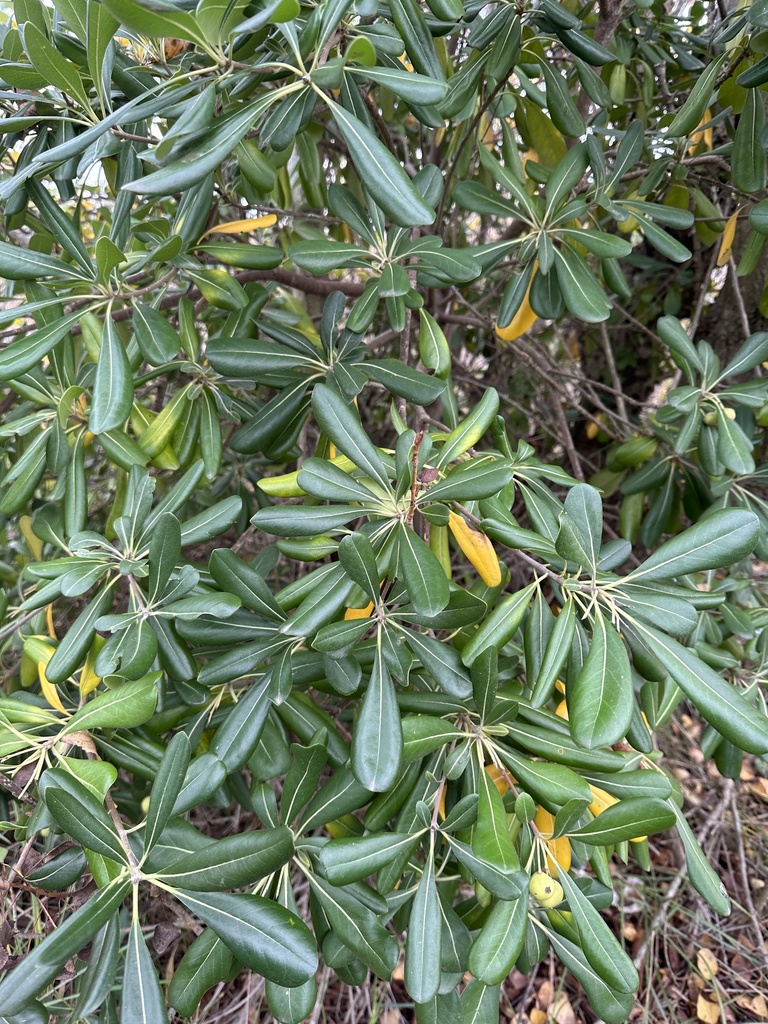
Pittosporum is a versatile genus of evergreen shrubs and small trees known for their glossy foliage. They are popular in landscapes for their dense growth and fragrant spring flowers. You will find they adapt well to various garden styles.
At a glance
- Care level
- Easy
- Plant type
- Evergreen shrub or tree
- Light
- Full sun to partial shade
- Indoor light
- Bright indirect
- Water
- Every 7 to 14 days
- Mature size
- 3 to 30 feet depending on species
- Growth rate
- Medium
Care
Keep the soil consistently moist but never soggy to prevent root issues. Watch for yellowing leaves which often signal overwatering or poor drainage. Prune lightly after flowering to maintain a tidy shape.
- Watering
- Water deeply when the top inch of soil feels dry to the touch.
- Feeding
- Apply a balanced liquid fertilizer during the active growing season.
- Pruning
- Trim back branches once a year after the flowering period ends.
- Repotting
- Move to a larger container only when the roots become crowded.
- Soil
- Well draining loamy soil
- Soil pH
- 6.0 to 7.5
Safety
- Pets
- Some species may cause mild stomach upset if ingested by pets.
How to identify it
- Glossy leathery evergreen leaves
- Fragrant small star shaped flowers
- Dense shrubby growth habit
- Sticky seeds inside fruit capsules
Problems to watch for
Check your pittosporum from a photo
Pocket Botanist looks at a photo of your plant and tells you what's wrong and what to try first.
Scan with your phone's camera to get the app
Or go to pocketbotanist.app/get on your phone
Science
- Family
- Pittosporaceae
- Genus
- Pittosporum
- Order
- Apiales
- Class
- Magnoliopsida
Taxonomy resolved against GBIF.
Also in
Keep your pittosporum growing
This page is a general guide. Save your plant in Pocket Botanist and you get care reminders timed for this plant, plus a care history that shows what worked.
Scan with your phone's camera to get the app
Or go to pocketbotanist.app/get on your phone
This guide was generated with AI on and checked against GBIF taxonomy. It is general information, not horticultural or veterinary advice. Read about how we build these guides.