 Pocket Botanist
Plant guide
Knotweed.
Persicaria
Pronounced pur-sih-KAIR-ee-uh
Also known as Knotweed, Knotweed, Smartweed, Persicarias and Waterpeppers, Smartweed, Snakeroots, bistorts, knotweeds, smartweeds



Scan with your phone's camera to get the app
Or go to pocketbotanist.app/get on your phone
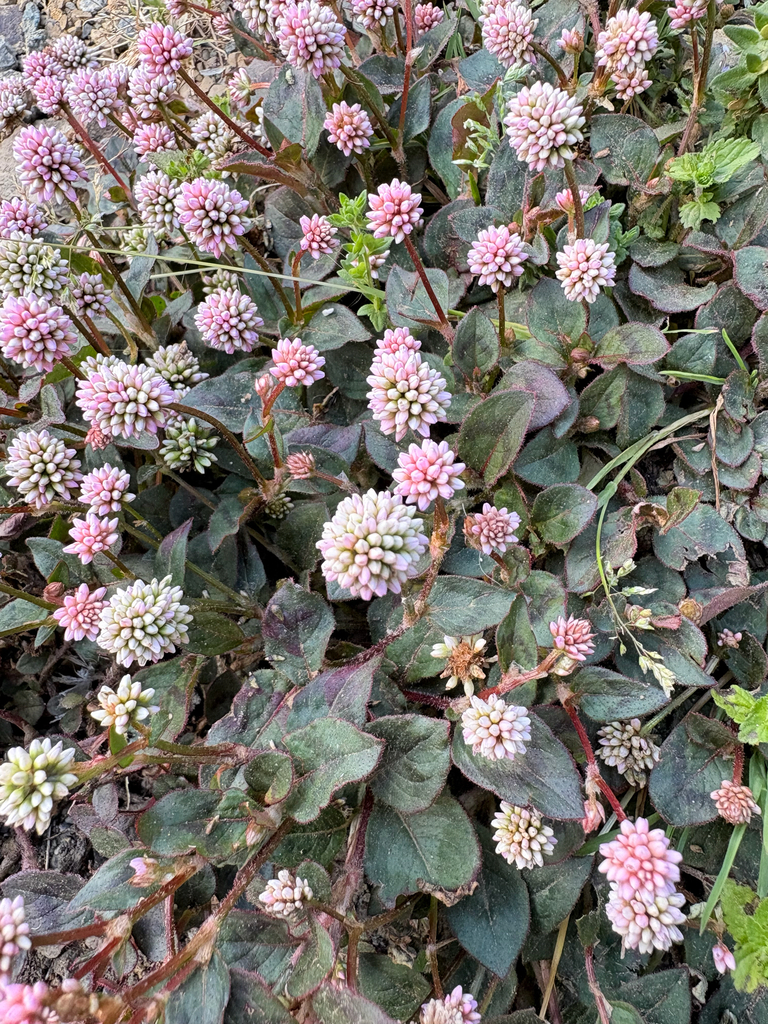
Persicaria is a diverse group of plants known for their attractive, often spike like flowers and lush foliage. They are quite adaptable and thrive in many garden settings, especially where there is consistent moisture. You will find they add a lovely, soft texture to any landscape.

At a glance
- Care level
- Easy
- Plant type
- Perennial
- Light
- Full sun to partial shade
- Indoor light
- Bright indirect
- Water
- Every 3 to 7 days
- Mature size
- 1 to 4 feet
- Growth rate
- Fast
- Hardiness
- USDA 4 to 9
- Bloom time
- Mid summer to mid autumn
Care
Keep the soil consistently moist, as these plants really dislike drying out completely. Watch for wilting leaves, which is a clear sign they need a drink. They appreciate a spot with plenty of room to spread out.
- Watering
- Keep the soil evenly moist but not waterlogged.
- Feeding
- Apply a balanced liquid fertilizer during the active growing season.
- Pruning
- Cut back dead foliage in late winter or early spring to encourage fresh growth.
- Repotting
- Repot when the roots fill the container or the plant becomes top heavy.
- Soil
- Moist, fertile, well draining soil
- Soil pH
- 6.0 to 7.5
- Temperature
- -34 to 30°C
- Humidity
- 40 to 70%
Safety
- People
- The leaves may cause mild skin irritation in sensitive individuals due to the presence of oxalates.
- Children
- The plant is not considered toxic, but it is best to keep children from eating the foliage due to potential digestive upset.
- Contact allergens
- The sap can cause contact dermatitis in some people.
- Airborne allergens
- Pollen may trigger mild allergic reactions in sensitive individuals during peak bloom.
- Edibility
- Some species are edible, but many contain oxalic acid and should be consumed in moderation or avoided if you have kidney issues.
How to identify it
- Spike like flower clusters
- Lance shaped or ovate leaves
- Swollen nodes on stems
- Ocrea sheathing the stem base
- Height
- 0.3 to 1.5m
- Spread
- 0.45 to 1.2m
- Leaves
- green, deciduous
- Flowers
- pink, white, red, 0.5 to 1cm
Problems to watch for
- Japanese beetles · These beetles can skeletonize leaves during the summer months.
- Leaf spot · Fungal spots may appear on foliage during periods of high humidity.
Check your knotweed from a photo
Pocket Botanist looks at a photo of your plant and tells you what's wrong and what to try first.
Scan with your phone's camera to get the app
Or go to pocketbotanist.app/get on your phone
Growing it
- Propagation
- division, seed, cuttings
- When to plant
- spring, autumn
Plant them near water features or in rain gardens where their moisture needs are naturally met.
Grows well with
- Hostas · They share a love for moist, shady conditions.
- Ferns · Their textures contrast beautifully with the lance shaped leaves of Persicaria.
Similar species
- Polygonum · They are closely related and share similar growth habits.
Science
- Family
- Polygonaceae
- Genus
- Persicaria
- Order
- Caryophyllales
- Class
- Magnoliopsida
- Native range
- Temperate regions of the Northern Hemisphere.
- Conservation
- Not of conservation concern.
These plants often colonize moist, disturbed areas and provide essential cover for small insects.
- Value to wildlife
- nectar source
- Pollinators
- bees, butterflies
- Uses
- ground cover, pollinator garden, border plant, wetland restoration
Through the year
Ecological indicators
- Salinity
- 2/9
- Soil reaction
- 6/9
- Light
- 5/9
- Temperature
- 5/9
- Moisture
- 7/9
- Nutrients
- 5/9
Taxonomy resolved against GBIF.
Questions people ask
- Are they invasive?
- Some species like Persicaria wallichii can be aggressive, so check your local invasive list.
- Do they need full sun?
- Most prefer partial shade, though some tolerate full sun if the soil stays moist.
Where the name comes from
The name Persicaria comes from the Latin word for peach, referring to the leaf shape, while the common name knotweed refers to the swollen nodes on the stems.
Good to know
- They are commonly called knotweeds.
- Many species thrive in damp soil where other plants struggle.
- The flowers are often described as looking like tiny bottle brushes.
Keep your knotweed growing
This page is a general guide. Save your plant in Pocket Botanist and you get care reminders timed for this plant, plus a care history that shows what worked.
Scan with your phone's camera to get the app
Or go to pocketbotanist.app/get on your phone
This guide was generated with AI on and checked against GBIF taxonomy. It is general information, not horticultural or veterinary advice. Read about how we build these guides.