 Pocket Botanist
Plant guide
Spotted bee balm.
Monarda punctata
Pronounced mo-NAR-dah punk-TAH-tah
Also known as Dotted Mint, Dotted Monarda, Horse-mint, Spotted Beebalm, dotted horsemint, spotted horsemint, Spotted Horse Mint



Scan with your phone's camera to get the app
Or go to pocketbotanist.app/get on your phone

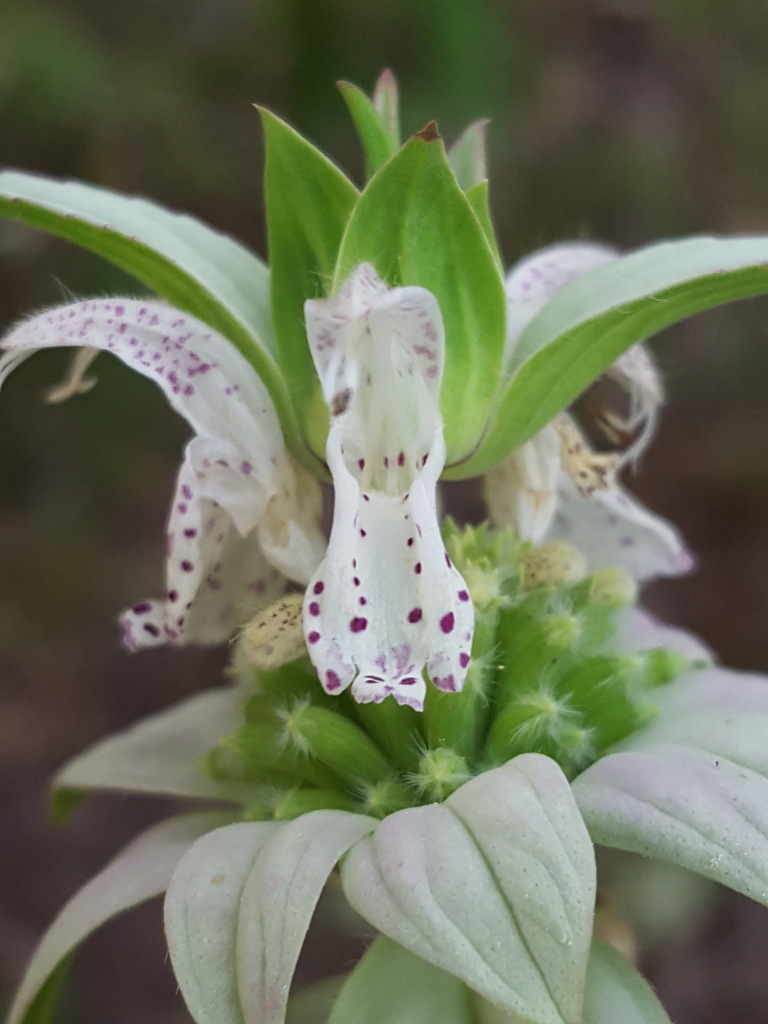
This unique perennial is a favorite for pollinators in sunny gardens. It features distinct spotted flowers and colorful bracts that add interest all summer long. It is a hardy native that thrives in dry, sandy soil.
At a glance
- Care level
- Easy
- Plant type
- Perennial
- Light
- Full sun
- Indoor light
- Direct sun
- Water
- Every 7 to 14 days
- Mature size
- 2 to 3 feet
- Growth rate
- Medium
- Hardiness
- USDA 3 to 9
- Bloom time
- Mid to late summer
Care
Plant this in a spot with plenty of sun and well draining soil. Keep an eye out for powdery mildew on the leaves if the air circulation is poor. Deadhead spent blooms to encourage a second flush of color.
- Watering
- Water deeply once established, but allow the soil to dry out between waterings.
- Feeding
- A light application of compost in the spring is usually plenty for this native plant.
- Pruning
- Cut the stems back to the ground in late winter or early spring before new growth appears.
- Repotting
- Divide the clumps every few years to keep the plant vigorous and prevent overcrowding.
- Soil
- Sandy or rocky soil
- Soil pH
- 6.0 to 7.5
- Temperature
- -40 to 35°C
- Humidity
- 30 to 60%
Safety
- People
- This plant is generally considered non toxic to humans.
- Pets
- This plant is generally considered non toxic to cats and dogs.
- Children
- The plant is not considered a significant risk to children, but always supervise them around garden plants.
- Contact allergens
- The foliage can cause mild skin irritation in sensitive individuals due to essential oils.
- Airborne allergens
- Pollen may trigger mild allergic reactions in sensitive individuals during peak bloom.
- Edibility
- While the leaves are sometimes used for tea, consult a professional before consuming as some related species can cause digestive upset.
How to identify it
- Spotted yellow tubular flowers
- Showy pink or purple bracts
- Square stems typical of mints
- Aromatic lance shaped leaves
- Whorled flower clusters on stems
- Height
- 0.3 to 0.9m
- Spread
- 0.3 to 0.6m
- Leaves
- green, deciduous
- Flowers
- yellow, purple, pink, 2 to 4cm
- Fruit
- brown, Autumn
Problems to watch for
- Powdery Mildew · A white fungal growth on leaves often caused by poor air circulation.
- Rust · Small orange spots appearing on the undersides of leaves during humid weather.
Check your spotted bee balm from a photo
Pocket Botanist looks at a photo of your plant and tells you what's wrong and what to try first.
Scan with your phone's camera to get the app
Or go to pocketbotanist.app/get on your phone
Growing it
- Propagation
- seed, division
- When to plant
- spring, autumn
Pair this plant with other drought tolerant prairie natives to create a low maintenance, high impact pollinator garden.
Grows well with
- Little Bluestem · This grass provides a beautiful structural contrast and shares similar dry soil requirements.
- Purple Coneflower · They bloom at similar times and create a classic prairie aesthetic.
Similar species
- Wild Bergamot · It is a related species with more tubular, lavender flowers.
Science
- Family
- Lamiaceae
- Genus
- Monarda
- Order
- Lamiales
- Class
- Magnoliopsida
- Native range
- Eastern and central North America.
- Conservation
- It is not currently listed as endangered or protected.
It is a pioneer species that excels in sandy, disturbed soils and open prairies.
- Value to wildlife
- nectar source, larval host plant
- Pollinators
- bees, butterflies, moths, beetles
- Uses
- pollinator gardens, prairie restoration, xeriscaping, dried flower arrangements
Through the year
Ecological indicators
- Salinity
- 2/9
- Soil reaction
- 5/9
- Light
- 8/9
- Temperature
- 5/9
- Moisture
- 3/9
- Nutrients
- 2/9
Taxonomy resolved against GBIF.
Questions people ask
- Does it need a lot of water?
- No, it actually prefers drier conditions and can suffer in constantly soggy soil.
- Will it spread?
- It can spread by rhizomes, but it is generally well behaved compared to other mint family members.
Where the name comes from
The genus honors Nicolas Monardes, a Spanish physician who wrote about medicinal plants in the New World, while the species name refers to the spotted appearance of the flowers.
Good to know
- It is commonly known as spotted bee balm.
- The plant is highly drought tolerant once established.
- It thrives in sandy, nutrient poor soils where other plants struggle.
- The scent is often described as a mix of oregano and thyme.
Keep your spotted bee balm growing
This page is a general guide. Save your plant in Pocket Botanist and you get care reminders timed for this plant, plus a care history that shows what worked.
Scan with your phone's camera to get the app
Or go to pocketbotanist.app/get on your phone
This guide was generated with AI on and checked against GBIF taxonomy. It is general information, not horticultural or veterinary advice. Read about how we build these guides.