 Pocket Botanist
Plant guide
Northern starflower.
Lysimachia borealis
Pronounced ly-si-MA-ki-a bor-eh-AH-lis
Also known as American starflower, maystar, northern starflower, Starflower



Scan with your phone's camera to get the app
Or go to pocketbotanist.app/get on your phone
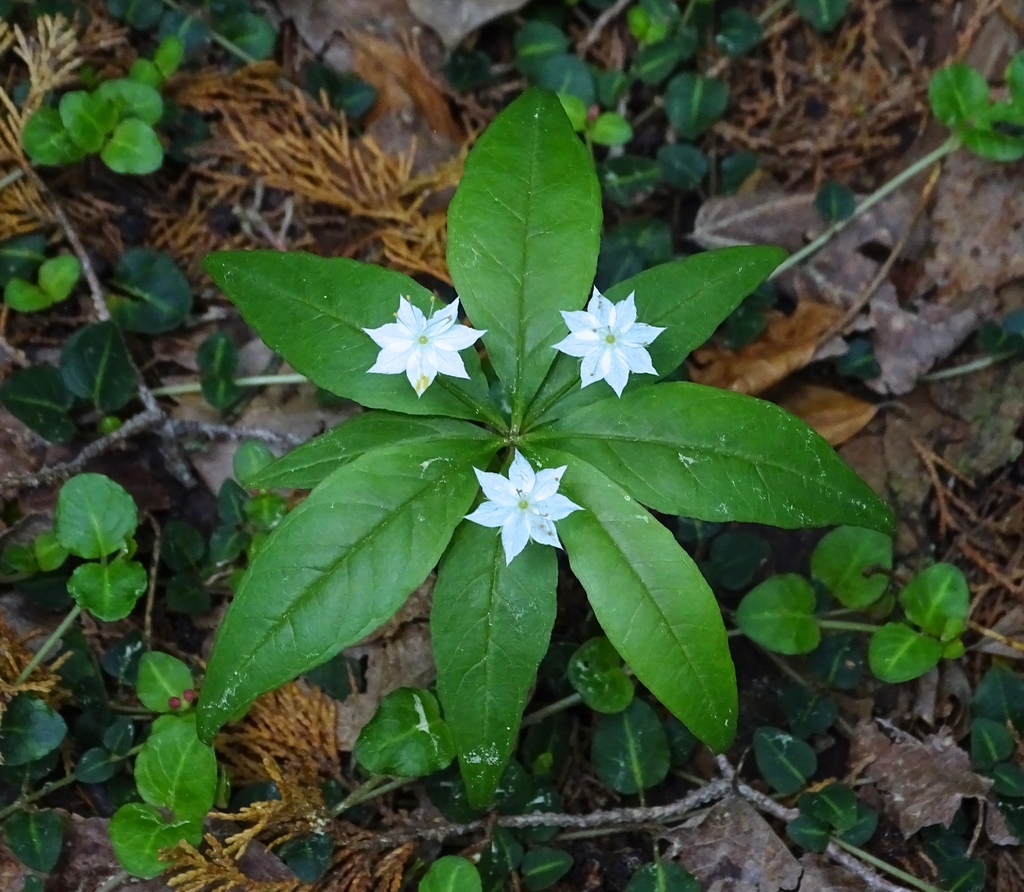
This charming woodland wildflower is a delight to find in cool, moist forests. It features a delicate whorl of leaves topped by a single, star shaped white flower. It is a lovely choice for a shaded garden spot that mimics its natural habitat.
At a glance
- Care level
- Moderate
- Plant type
- Perennial
- Light
- Partial shade to full shade
- Indoor light
- Medium light
- Water
- Every 3 to 7 days
- Mature size
- 6 to 8 inches
- Growth rate
- Slow
- Hardiness
- USDA 2 to 7
- Bloom time
- Late spring to early summer
Care
Keep the soil consistently moist and mimic a cool forest floor environment. Watch for wilting if the soil dries out too much or if the air gets too hot. Provide plenty of organic matter to keep the roots happy.
- Watering
- Keep the soil evenly moist but not waterlogged.
- Feeding
- Use a light application of balanced organic fertilizer in early spring.
- Pruning
- Remove dead foliage after the plant goes dormant in late autumn.
- Repotting
- Repot only when the rhizomes become crowded in the container.
- Soil
- Rich, acidic, moist woodland soil
- Soil pH
- Acidic
- Temperature
- -35 to 25°C
- Humidity
- 60 to 90%
- Drought tolerance
- Low
- Lifespan
- Perennial, typically 5 to 10 years
- Deer and rabbits
- Moderate
Signs it needs repotting
- Roots circling the bottom of the pot
- Growth appearing stunted despite regular care
Safety
- People
- There are no reports of significant toxicity, but it is not intended for human consumption.
- Children
- No significant hazards are known, but teach children not to eat wild plants.
- Contact allergens
- No specific skin irritants are known.
- Airborne allergens
- Pollen may cause mild reactions in sensitive individuals during the short flowering window.
- Edibility
- This plant is not considered edible and should not be consumed.
How to identify it
- Single whorl of lance shaped leaves
- Delicate white star shaped flowers
- Slender stems rising from rhizomes
- Grows in cool moist woodlands
- Height
- 0.1 to 0.2m
- Spread
- 0.15 to 0.3m
- Leaves
- green, deciduous
- Flowers
- white, 1 to 2cm
- Fruit
- red, Late summer
Problems to watch for
- Leaf spot · Fungal spots appear on foliage in overly damp or stagnant air conditions.
Check your northern starflower from a photo
Pocket Botanist looks at a photo of your plant and tells you what's wrong and what to try first.
Scan with your phone's camera to get the app
Or go to pocketbotanist.app/get on your phone
Growing it
- Propagation
- division, seed
- When to plant
- spring, autumn
- Overwintering
- The plant dies back to the ground in winter. Ensure the soil remains moist but not waterlogged during the dormant season.
- In containers
- It is difficult to maintain in containers due to its specific need for cool, constant soil moisture.
Division
- 1. Wait until early spring as new growth begins.
- 2. Carefully lift the rhizome clump from the soil.
- 3. Gently pull the rhizomes apart into smaller sections.
- 4. Replant immediately in moist, shady soil.
Group this plant with other moisture loving woodland species to maintain the high humidity it craves.
Grows well with
- Bunchberry · They share similar requirements for cool, acidic, shaded woodland soil.
- Goldthread · This companion thrives in the same moist, mossy forest environments.
Similar species
- Creeping Jenny · It is a related species that also spreads via runners but is much more aggressive.
Science
- Family
- Primulaceae
- Genus
- Lysimachia
- Order
- Ericales
- Class
- Magnoliopsida
- Native range
- Northern North America, across Canada and the northern United States.
- Conservation
- It is secure across its wide northern range and not currently of conservation concern.
It survives by forming low, spreading colonies in the cool, moist shade of boreal forests.
- Value to wildlife
- nectar source
- Pollinators
- bees, butterflies
- Uses
- woodland garden, ground cover, native plant garden
Through the year
Ecological indicators
- Salinity
- 0/9
- Soil reaction
- 3/9
- Light
- 2/9
- Temperature
- 2/9
- Moisture
- 7/9
- Nutrients
- 4/9
Taxonomy resolved against GBIF.
Questions people ask
- Does it need full sun?
- No, it prefers partial to full shade, mimicking its natural forest floor habitat.
- Can I grow it in a dry spot?
- It prefers consistently moist soil and will struggle in dry conditions.
Where the name comes from
The name Lysimachia honors King Lysimachus of Thrace, while borealis refers to its northern distribution.
Good to know
- It is commonly called the starflower because of its delicate, star shaped white blossoms.
- The plant often grows in colonies, spreading slowly through underground rhizomes.
- It thrives in the cool, acidic soils found under coniferous forests.
- The flowers are typically held on thin, wiry stems above a whorl of leaves.
Also in
Keep your northern starflower growing
This page is a general guide. Save your plant in Pocket Botanist and you get care reminders timed for this plant, plus a care history that shows what worked.
Scan with your phone's camera to get the app
Or go to pocketbotanist.app/get on your phone
This guide was generated with AI on and checked against GBIF taxonomy. It is general information, not horticultural or veterinary advice. Read about how we build these guides.