 Pocket Botanist
Plant guide
Juniper.
Juniperus
Pronounced joo-NIP-er-us
Also known as Cedar, Juniper, Junipers, Redcedar, red cedar



Scan with your phone's camera to get the app
Or go to pocketbotanist.app/get on your phone

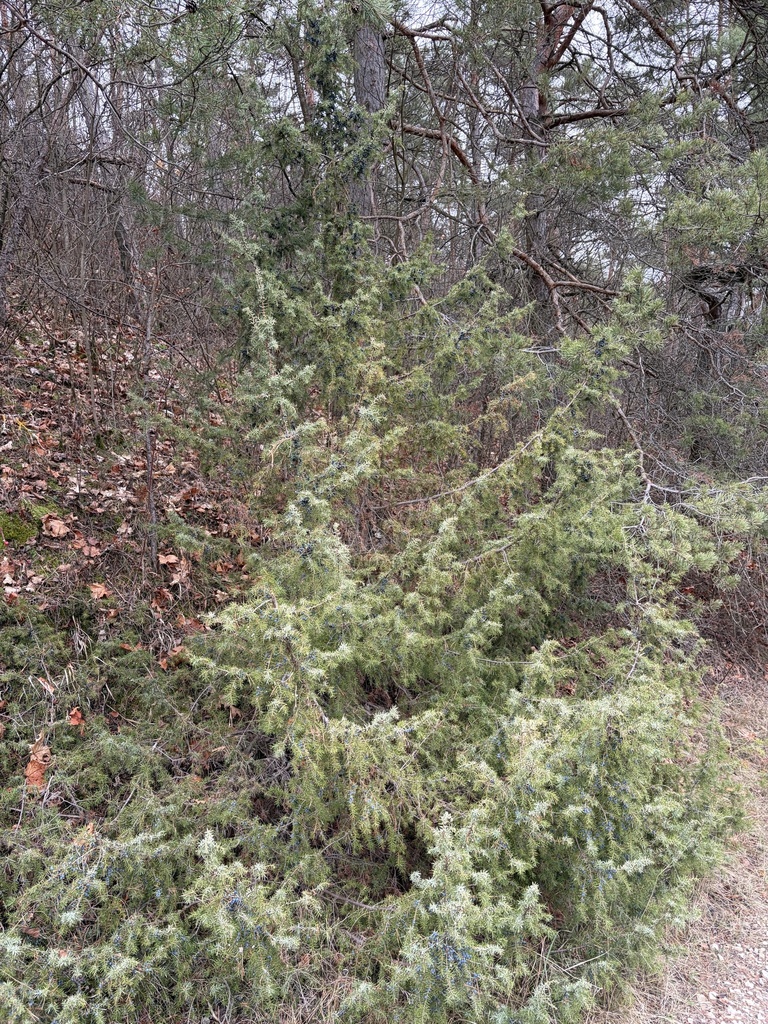
Junipers are a diverse group of evergreen conifers that range from low growing ground covers to tall, stately trees. They are incredibly hardy and add a classic, rugged texture to your landscape. You will love how they stay green all year long.
At a glance
- Care level
- Easy
- Plant type
- Conifer
- Light
- Full sun is essential for best growth.
- Indoor light
- Direct sun
- Water
- Every 7 to 14 days
- Mature size
- Varies by species from 1 to 40 feet.
- Growth rate
- Slow
Care
Make sure they get plenty of sun to keep their foliage dense and healthy. Watch for browning needles which might indicate poor drainage or fungal issues. They are quite drought tolerant once they get established in your garden.
- Watering
- Water deeply during the first year, then only during extended dry spells.
- Feeding
- Apply a balanced fertilizer once in early spring.
- Pruning
- Prune lightly in late winter or early spring to shape.
- Repotting
- Repot only if the plant becomes root bound in a container.
- Soil
- Well draining, sandy or rocky soil.
- Soil pH
- Neutral to slightly alkaline.
Safety
- Pets
- Some species can cause mild gastrointestinal upset if ingested by pets.
How to identify it
- Needle like or scale like leaves
- Small fleshy berry like cones
- Often aromatic foliage when crushed
- Usually evergreen growth habit
Problems to watch for
Check your juniper from a photo
Pocket Botanist looks at a photo of your plant and tells you what's wrong and what to try first.
Scan with your phone's camera to get the app
Or go to pocketbotanist.app/get on your phone
Science
- Family
- Cupressaceae
- Genus
- Juniperus
- Order
- Pinales
- Class
- Pinopsida
Taxonomy resolved against GBIF.
Also in
Keep your juniper growing
This page is a general guide. Save your plant in Pocket Botanist and you get care reminders timed for this plant, plus a care history that shows what worked.
Scan with your phone's camera to get the app
Or go to pocketbotanist.app/get on your phone
This guide was generated with AI on and checked against GBIF taxonomy. It is general information, not horticultural or veterinary advice. Read about how we build these guides.