 Pocket Botanist
Plant guide
Bigroot Geranium.
Geranium macrorrhizum
Pronounced jeh-RAY-nee-um mak-ro-RIH-zum
Also known as Bulgarian geranium, Rock Crane's-bill, big-rooted geranium, bigroot geranium, cranesbill, hardy geranium



Scan with your phone's camera to get the app
Or go to pocketbotanist.app/get on your phone
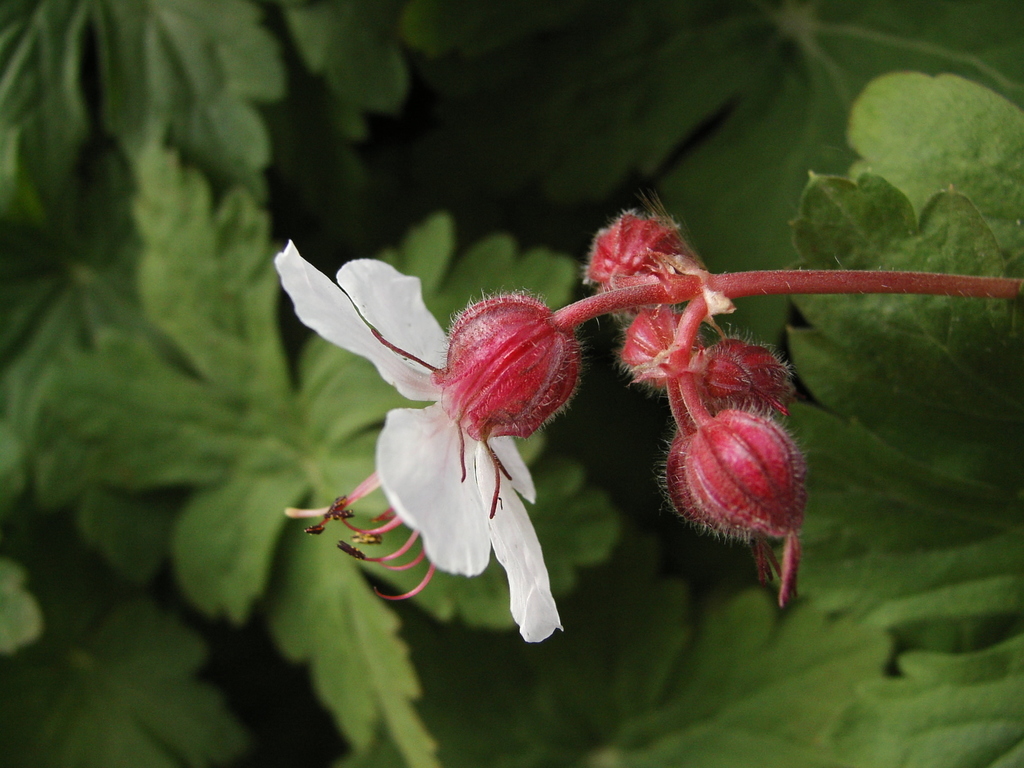
This hardy perennial is a fantastic groundcover that handles shade and dry spells with ease. It features aromatic foliage and lovely pink to magenta flowers in late spring. You will love how it suppresses weeds while looking great in your garden.

At a glance
- Care level
- Easy
- Plant type
- Perennial
- Light
- Partial shade to full shade
- Indoor light
- Medium light
- Water
- Every 7 to 14 days
- Mature size
- 12 to 18 inches
- Growth rate
- Medium
- Hardiness
- USDA 4 to 8
- Bloom time
- Late spring to early summer
Care
Plant this geranium in well draining soil to keep the roots happy. Watch for wilting during extreme heat, though it is quite drought tolerant once established. You can tidy it up by removing spent flower stalks after the main bloom.
- Watering
- Water deeply when the top inch of soil feels dry to the touch.
- Feeding
- A light application of balanced compost in early spring is plenty.
- Pruning
- Cut back foliage in late autumn or early spring to encourage fresh growth.
- Repotting
- If growing in containers, move to a larger pot once the roots become crowded.
- Soil
- Well draining, average garden soil
- Soil pH
- 6.0 to 7.5
- Temperature
- -30 to 35°C
- Humidity
- 40 to 70%
- Drought tolerance
- High
- Lifespan
- Perennial, typically 10 plus years
- Fragrance
- Strong
- Deer and rabbits
- High
Signs it needs repotting
- Roots growing out of the drainage holes
- Water running straight through the pot
- Growth slowing significantly
Safety
- People
- The plant is generally considered non-toxic, but ingestion is not recommended.
- Children
- The plant is not known to be dangerous to children, but it is always best to discourage eating garden plants.
- Contact allergens
- The glandular hairs on the leaves can cause mild skin irritation in sensitive individuals.
- Airborne allergens
- There are no significant reports of respiratory allergies associated with this plant.
- Edibility
- This plant is not considered edible and should not be consumed.
How to identify it
- Deeply lobed, fragrant green leaves
- Thick, spreading rhizomatous roots
- Clusters of five petaled flowers
- Distinctive reddish flower calyces
- Semi evergreen foliage in mild climates
- Height
- 0.2 to 0.4m
- Spread
- 0.3 to 0.6m
- Leaves
- green, bronze, semi-evergreen
- Flowers
- pink, magenta, white, 2 to 3cm
- Fruit
- brown, Summer
Problems to watch for
- Powdery mildew · A fungal infection that appears as white dusty spots on leaves during humid weather.
Check your bigroot geranium from a photo
Pocket Botanist looks at a photo of your plant and tells you what's wrong and what to try first.
Scan with your phone's camera to get the app
Or go to pocketbotanist.app/get on your phone
Growing it
- Propagation
- division, cuttings
- When to plant
- spring, autumn
- Overwintering
- Cut back dead or damaged foliage in late winter to make room for new spring growth.
- In containers
- It grows well in containers, provided the pot has good drainage and is at least 30 centimeters wide.
Division
- 1. Dig up a mature clump in early spring or autumn.
- 2. Gently pull the rhizomes apart into smaller sections.
- 3. Ensure each section has roots and healthy foliage.
- 4. Replant immediately in prepared soil.
Plant this geranium as a living mulch under shrubs to keep the soil cool and suppress weeds.
Grows well with
Similar species
- Bloody Cranesbill · It is another hardy geranium but prefers more sun and has a more mounding habit.
Science
- Family
- Geraniaceae
- Genus
- Geranium
- Order
- Geraniales
- Class
- Magnoliopsida
- Native range
- Southern and central Europe.
- Conservation
- This plant is common in its native range and is not of conservation concern.
It thrives in woodland settings by forming dense colonies that shade out competing vegetation.
- Value to wildlife
- nectar source, ground cover habitat
- Pollinators
- bees, butterflies
- Uses
- ground cover, woodland garden, erosion control, weed suppression
Through the year
Ecological indicators
- Salinity
- 1/9
- Soil reaction
- 6/9
- Light
- 4/9
- Temperature
- 5/9
- Moisture
- 4/9
- Nutrients
- 4/9
Taxonomy resolved against GBIF.
Questions people ask
- Is this plant invasive?
- It spreads by rhizomes but is generally considered well behaved and easy to manage.
- Does it need full sun?
- It prefers partial shade but will tolerate full sun if the soil remains moist.
Where the name comes from
The name Geranium comes from the Greek word geranos, meaning crane, referring to the beak-like fruit. Macrorrhizum means large-rooted, referencing its thick rhizomatous root system.
Good to know
- It is often called Bigroot Geranium because of its thick, spreading rhizomes.
- The leaves often turn a lovely bronze or red color in the autumn.
- It is an excellent choice for dry shade where other plants struggle.
- The plant forms a dense mat that effectively chokes out weeds.
Keep your bigroot geranium growing
This page is a general guide. Save your plant in Pocket Botanist and you get care reminders timed for this plant, plus a care history that shows what worked.
Scan with your phone's camera to get the app
Or go to pocketbotanist.app/get on your phone
This guide was generated with AI on and checked against GBIF taxonomy. It is general information, not horticultural or veterinary advice. Read about how we build these guides.