 Pocket Botanist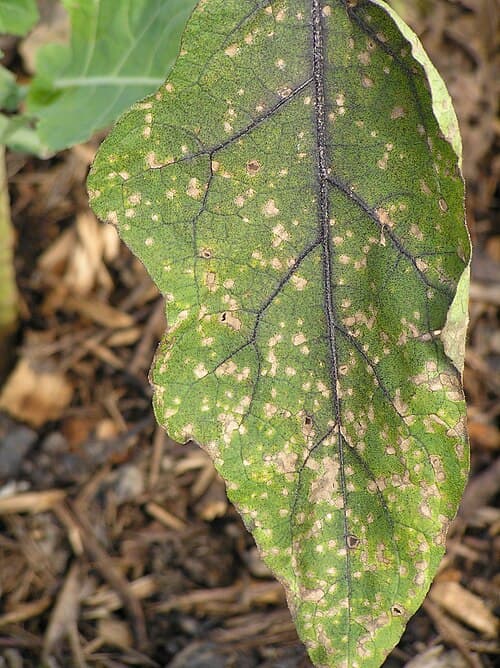

Check these first
- Inspect the leaves for a white, dusty residue.
- Check if the spots are brown or black with yellow edges.
- Look at the spacing between your plants to see if air can move freely.
Likely causes
Powdery Mildew
Most likelyHow to tell: A white, flour like powder appears on the surface of the leaves.
What to do: Improve air circulation around the plant by thinning out nearby vegetation. You can also spray the leaves with a mixture of 1 tablespoon of baking soda in 1 gallon of water.
Leaf Spot Fungi
PossibleHow to tell: Dark brown or black spots with yellow halos appear on the foliage.
What to do: Remove and dispose of the affected leaves to prevent the spread of spores. Avoid overhead watering, which keeps the leaves wet and encourages fungal growth.
When to worry
Small amounts of spotting are common in late summer, but heavy coverage can weaken the plant. If the entire plant is covered in white dust, it may struggle to produce flowers.
Stopping it coming back
Water at the base of the plant rather than over the leaves, and provide plenty of space between plants for good airflow.
Not sure which one it is? Photograph your teasel.
This page lists the usual causes. Pocket Botanist looks at your actual leaf and tells you the likely cause, how serious it is, and what to try first. Identification and a health check are free.


Questions people ask
- Is powdery mildew harmful?
- It is rarely fatal, but it can make the plant look unsightly and reduce its vigor. It is best to treat it early to keep the plant healthy.
- Should I cut off spotted leaves?
- Yes, removing heavily spotted leaves helps reduce the number of fungal spores in your garden. Always dispose of them in the trash rather than the compost.
More problems with Teasel
This article was generated with AI from the plant’s care profile and is general information, not horticultural advice. Read about how we build these guides.