 Pocket Botanist
Plant guide
Creeping Buttonweed.
Dichondra repens
Pronounced dy-KON-druh REE-penz
Also known as Mercury Bay weed, Mercury Bay-weed, Tom Thumb, Wonder Lawn, creeping dichondra, dichondra, kidneyweed



Scan with your phone's camera to get the app
Or go to pocketbotanist.app/get on your phone

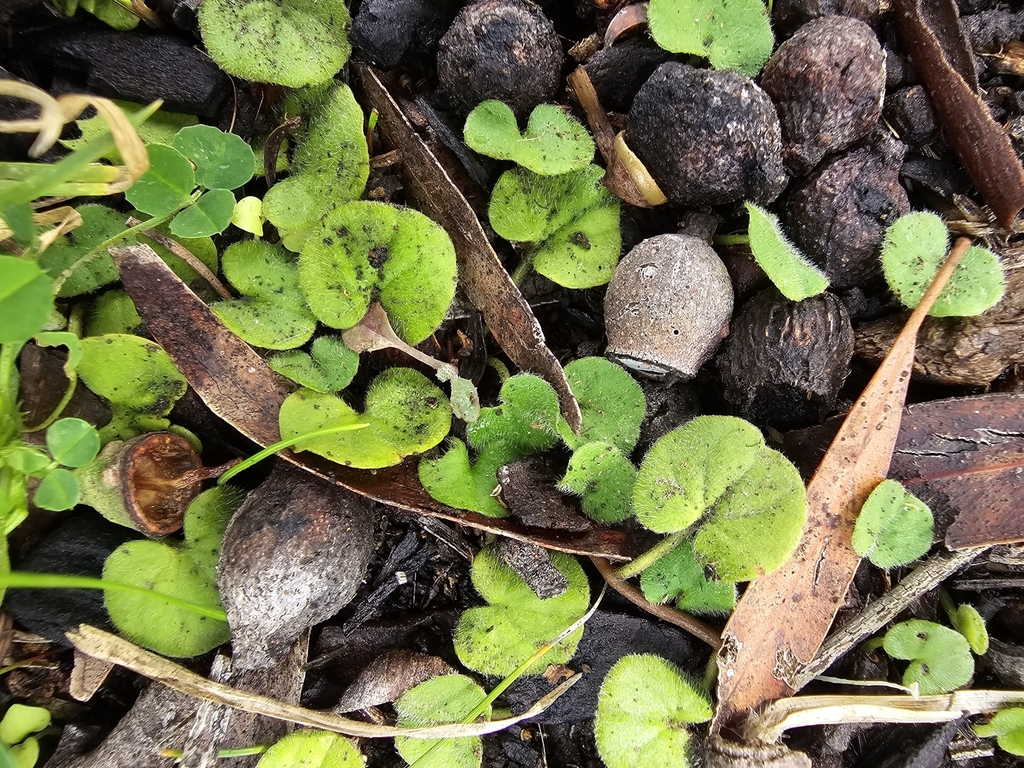
Creeping buttonweed is a charming, low growing groundcover that forms a dense mat of tiny, kidney shaped leaves. It thrives in moist, shaded areas and works well as a lawn alternative or between stepping stones. You will love how it softens the look of any garden path.
At a glance
- Care level
- Easy
- Plant type
- Herbaceous perennial
- Light
- Partial shade to full sun in cooler climates
- Indoor light
- Bright indirect
- Water
- Every 3 to 7 days
- Mature size
- 5 to 10 cm tall
- Growth rate
- Medium
- Hardiness
- USDA 8 to 11
- Bloom time
- Late spring to summer
Care
Keep the soil consistently moist but not waterlogged to prevent root rot. Watch for yellowing leaves which often signal too much water or poor drainage. It prefers a spot with partial shade to keep the foliage lush.
- Watering
- Keep the soil evenly moist to the touch.
- Feeding
- Apply a balanced liquid fertilizer during the active growing season.
- Pruning
- Trim back edges to keep it within its designated area.
- Repotting
- Repot when the plant becomes root bound or fills its container.
- Soil
- Well draining, fertile soil
- Soil pH
- 6.0 to 7.5
- Temperature
- -5 to 35°C
- Humidity
- 40 to 70%
- Drought tolerance
- Moderate
- Lifespan
- Perennial, typically 3 to 5 years
- Deer and rabbits
- Moderate
Signs it needs repotting
- Roots circling the bottom of the pot
- Growth slowing significantly during the active season
- Soil drying out much faster than usual
Safety
- People
- The plant is generally considered non toxic but ingestion is not recommended.
- Pets
- This plant is generally considered non toxic to cats and dogs.
- Children
- The small size of the plant and its low growth habit make it generally safe for areas where children play.
- Contact allergens
- There are no known significant skin irritants associated with this plant.
- Airborne allergens
- The pollen is not typically a significant trigger for respiratory allergies.
- Edibility
- This plant is not considered edible and should be kept away from food preparation areas.
How to identify it
- Tiny kidney shaped leaves
- Low growing mat forming habit
- Creeping stems rooting at nodes
- Small inconspicuous greenish flowers
- Height
- 0.02 to 0.05m
- Spread
- 0.3 to 1m
- Leaves
- bright green, evergreen
- Flowers
- white, greenish, 0.5 to 1cm
Problems to watch for
- CutwormsCommon
- Leaf SpotCommon
- Root RotUncommon
- Slugs and SnailsUncommon
Check your creeping buttonweed from a photo
Pocket Botanist looks at a photo of your plant and tells you what's wrong and what to try first.
Scan with your phone's camera to get the app
Or go to pocketbotanist.app/get on your phone
Growing it
- Propagation
- division, seed, cuttings
- When to plant
- spring, early autumn
- Overwintering
- In colder regions, provide a light mulch layer to protect the roots from frost. Ensure the soil does not remain waterlogged during winter dormancy.
- In containers
- It grows beautifully in containers and hanging baskets, where its trailing habit is showcased best.
Division
- 1. Carefully lift a section of the established mat.
- 2. Separate the rooted stems into smaller clumps.
- 3. Replant immediately in moist, well draining soil.
Pair this with taller perennials to create a lush, multi layered ground cover effect.
Grows well with
- Blue Fescue · The contrasting texture and color create a beautiful visual display.
- Creeping Thyme · They share similar low growth habits, though thyme prefers drier soil.
Similar species
- Silver Falls · A close relative with striking silver foliage often used in containers.
Science
- Family
- Convolvulaceae
- Genus
- Dichondra
- Order
- Solanales
- Class
- Magnoliopsida
- Native range
- Australia and New Zealand
- Conservation
- This species is common and not of conservation concern.
It naturally colonizes damp, shaded areas and forest floors by rooting along its stems.
- Value to wildlife
- low profile ground cover, nectar source
- Pollinators
- bees, butterflies
- Uses
- lawn substitute, ground cover, hanging baskets, rock gardens
Through the year
Ecological indicators
- Salinity
- 2/9
- Moisture
- 6/9
- Soil reaction
- 5/9
- Light
- 5/9
- Temperature
- 7/9
- Nutrients
- 4/9
Taxonomy resolved against GBIF.
Questions people ask
- Can I walk on it?
- It tolerates light foot traffic but is not suitable for high traffic areas.
- Does it need mowing?
- No, it stays very low and does not require mowing.
Where the name comes from
The name Dichondra comes from the Greek words for two grains, referring to the two lobed fruit capsules, while repens means creeping.
Good to know
- It is often called kidney weed because of its distinct leaf shape.
- It spreads by creeping stems that root at the nodes.
- It thrives in both sun and partial shade.
- It is native to Australia and New Zealand.
Keep your creeping buttonweed growing
This page is a general guide. Save your plant in Pocket Botanist and you get care reminders timed for this plant, plus a care history that shows what worked.
Scan with your phone's camera to get the app
Or go to pocketbotanist.app/get on your phone
This guide was generated with AI on and checked against GBIF taxonomy. It is general information, not horticultural or veterinary advice. Read about how we build these guides.