 Pocket Botanist
Plant guide
Dendrobium Orchid.
Dendrobium Sw.
Pronounced den-DROH-bee-um


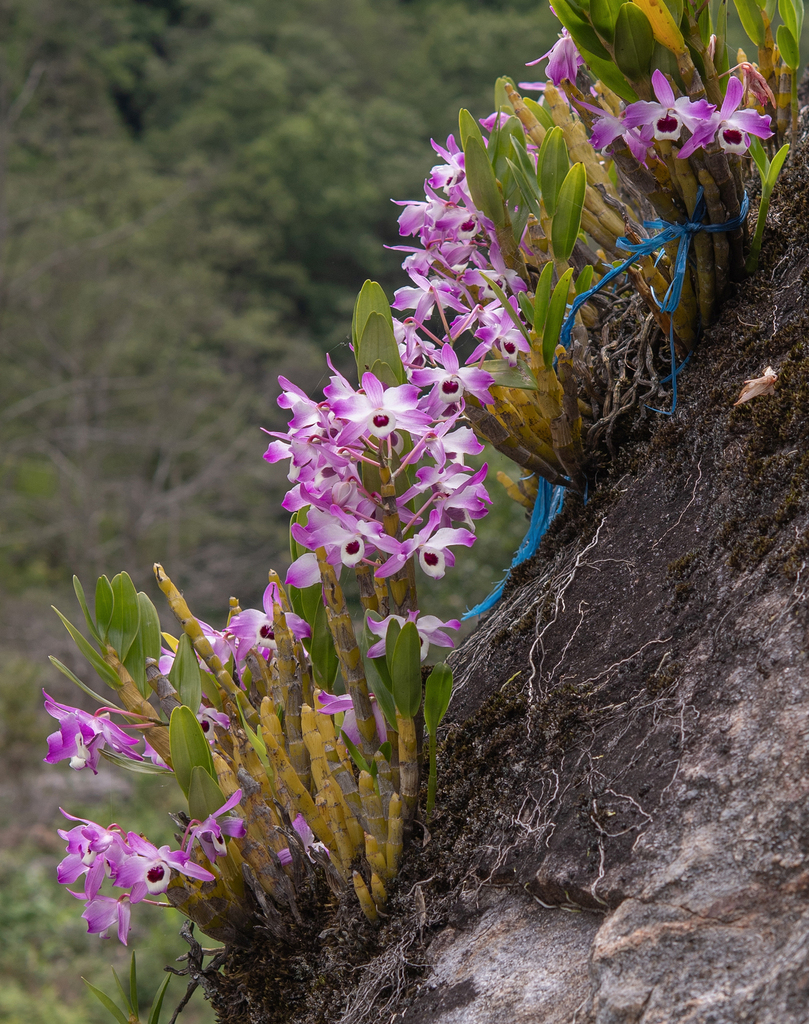
Dendrobiums are a massive group of orchids known for their elegant, cane like stems and showy blooms. They are quite diverse, with many species hailing from tropical regions across Asia and Australia. You will find them to be rewarding plants if you can mimic their natural environment.
At a glance
- Care level
- Moderate
- Plant type
- Epiphytic orchid
- Light
- Bright, indirect light is best for most species.
- Indoor light
- Bright indirect
- Water
- Every 5 to 10 days
- Mature size
- 1 to 4 feet depending on the species.
- Growth rate
- Medium
- Hardiness
- USDA 9 to 12
- Bloom time
- Late winter to spring
Care
These orchids prefer a well draining potting mix designed specifically for epiphytes. Watch for shriveled pseudobulbs which indicate dehydration, or yellowing leaves that might suggest overwatering. Ensure they have good air circulation to keep fungal issues at bay.
- Watering
- Water when the potting medium is nearly dry to the touch.
- Feeding
- Use a balanced orchid fertilizer diluted to half strength during the growing season.
- Pruning
- Remove spent flower spikes once they have completely turned brown.
- Repotting
- Repot only when the potting medium begins to break down or the plant outgrows its container.
- Soil
- Orchid bark mix or sphagnum moss.
- Soil pH
- 5.5 to 6.5
- Temperature
- 10 to 28°C
- Humidity
- 60 to 80%
- Drought tolerance
- Moderate
- Lifespan
- Perennial, can live for many years with proper care.
- Fragrance
- Light
- Deer and rabbits
- Moderate
Signs it needs repotting
- Roots growing out of the pot
- Degraded potting medium
- Plant becoming top heavy
Safety
- People
- The plant is generally non toxic but ingestion of plant parts is not recommended.
- Pets
- Dendrobium orchids are generally considered non toxic to cats and dogs.
- Children
- Keep out of reach to prevent accidental ingestion or damage to the delicate stems.
- Contact allergens
- Some people may experience mild skin irritation from handling the stems.
- Airborne allergens
- There is no significant evidence of respiratory allergies associated with this orchid.
- Edibility
- Dendrobium species are generally not considered edible and some may cause digestive upset.
How to identify it
- Cane like pseudobulbs
- Alternate leaf arrangement
- Clusters of showy flowers
- Fibrous root system
- Height
- 0.3 to 0.9m
- Spread
- 0.2 to 0.5m
- Leaves
- green, evergreen
- Flowers
- white, purple, yellow, pink, 3 to 8cm
Common problems
- Scale — Small sap sucking insects that appear as brown bumps on leaves.
- Root rot — Occurs when the potting medium stays too wet for too long.
Growing it
- Propagation
- division, keiki cuttings
- When to plant
- spring
- Overwintering
- Move indoors before the first frost and provide bright light. Reduce watering slightly during the cooler months to encourage a rest period.
- In containers
- They thrive in containers, specifically orchid pots with drainage holes, and prefer a tight root system.
Division
- 1. Remove the plant from its pot.
- 2. Gently tease the roots apart.
- 3. Ensure each section has at least three canes.
- 4. Repot in fresh orchid bark.
Group orchids together to create a microclimate with higher ambient humidity.
Grows well with
- Phalaenopsis — They share similar light and humidity requirements.
- Ferns — Ferns help maintain the high humidity levels these orchids prefer.
Similar species
- Cattleya — Another popular epiphytic orchid with similar care needs.
- Vanda — Also an epiphyte that appreciates high humidity and bright light.
Science
- Family
- Orchidaceae
- Genus
- Dendrobium
- Order
- Asparagales
- Class
- Liliopsida
- Native range
- Tropical and subtropical Asia and Australia.
- Conservation
- Many species are protected under CITES due to overcollection in the wild.
These orchids use their aerial roots to absorb moisture and nutrients from the air and rain.
- Value to wildlife
- nectar source
- Pollinators
- bees, butterflies
- Uses
- ornamental houseplant, cut flowers
Through the year
Ecological indicators
- Salinity
- 1/9
- Soil reaction
- 5/9
- Light
- 6/9
- Temperature
- 8/9
- Moisture
- 5/9
- Nutrients
- 3/9
Taxonomy resolved against GBIF.
Questions people ask
- Why is my orchid not blooming?
- It likely needs a distinct drop in temperature at night during the winter to trigger flowering.
- How often should I water it?
- Water when the potting medium feels dry to the touch, usually once a week.
Where the name comes from
The name Dendrobium reflects its natural habit of growing on trees in its native environment.
Good to know
- The genus name comes from the Greek words dendron for tree and bios for life.
- They are one of the largest orchid genera with over 1,500 species.
- Some species produce small plantlets called keikis on their canes.
Is your dendrobium orchid looking unwell?
This page is a general guide. Pocket Botanist diagnoses problems from a photo of your actual plant, works out watering for your light and conditions, and reminds you when care is due.
This guide was generated with AI and checked against GBIF taxonomy. It is general information, not horticultural or veterinary advice. Read about how we build these guides.