 Pocket Botanist
Plant guide
Wintersweet.
Chimonanthus praecox
Pronounced ky-mo-NAN-thus PREE-koks
Also known as Japanese allspice, Japanese-allspice, Wax ume, wintersweet



Scan with your phone's camera to get the app
Or go to pocketbotanist.app/get on your phone
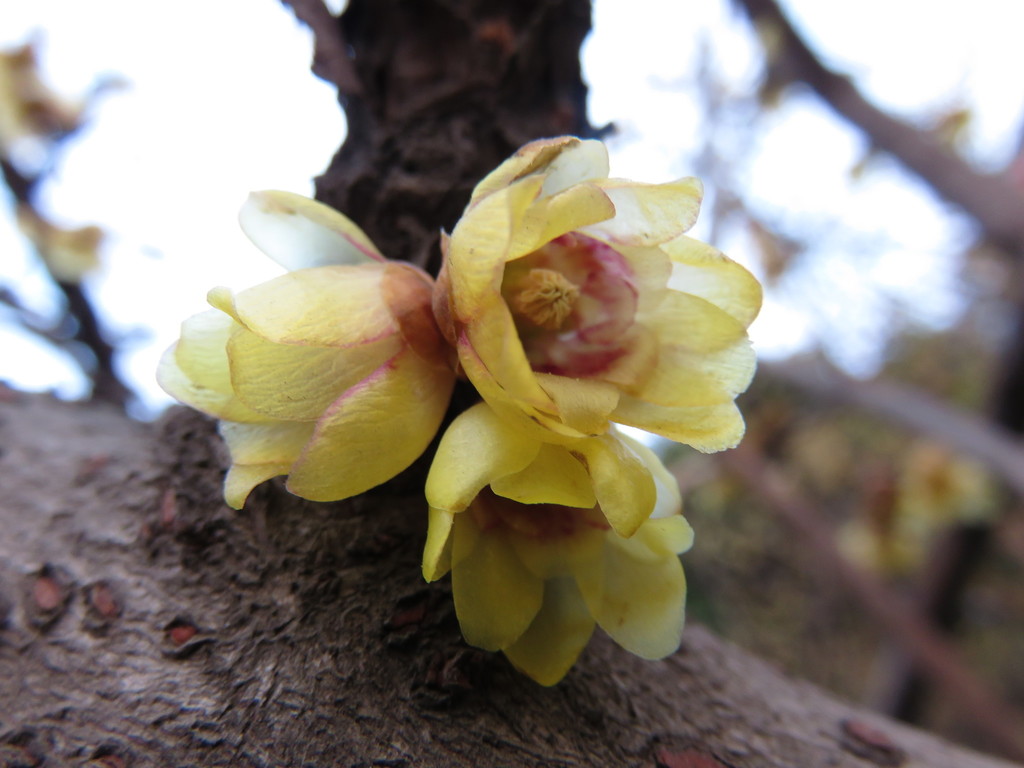
Wintersweet is a lovely deciduous shrub that brings a welcome splash of fragrance to the garden during the coldest months. Its pale yellow, waxy flowers appear on bare branches long before the leaves emerge in spring. It is a hardy choice for gardeners who want to enjoy blooms when everything else is still sleeping.

At a glance
- Care level
- Easy
- Plant type
- Deciduous shrub
- Light
- Full sun to partial shade
- Indoor light
- Bright indirect
- Water
- Every 7 to 14 days
- Mature size
- 8 to 10 feet
- Growth rate
- Medium
- Hardiness
- USDA 7 to 9
- Bloom time
- Mid winter to early spring
Care
Plant this shrub in a spot sheltered from harsh winds to protect the delicate winter blooms. Keep an eye out for yellowing leaves which might signal poor drainage or too much shade. Pruning right after flowering helps maintain a nice shape and encourages more blooms for next year.
- Watering
- Keep the soil consistently moist but never soggy during the growing season.
- Feeding
- Apply a balanced slow release fertilizer once in early spring.
- Pruning
- Prune back flowered stems immediately after the blossoms fade.
- Repotting
- If growing in a container, move to a larger pot every few years as the root system expands.
- Soil
- Well draining loamy soil
- Soil pH
- Neutral to slightly acidic
- Temperature
- -15 to 35°C
- Humidity
- 40 to 70%
- Drought tolerance
- Moderate
- Lifespan
- Perennial, typically 20 to 50 years
- Fragrance
- Strong
- Deer and rabbits
- Moderate
Signs it needs repotting
- Roots growing out of the drainage holes.
- Water draining through the pot too quickly.
Safety
- People
- All parts of the plant, especially the seeds, are toxic if ingested.
- Pets
- The seeds contain calycanthine, a toxic alkaloid, and can poison cats and dogs if chewed or swallowed. Keep pets away from the seed pods.
- Children
- Keep children away from the seeds as they are poisonous if swallowed.
- Contact allergens
- Handling the foliage or sap may cause mild skin irritation in sensitive individuals.
- Airborne allergens
- The pollen is generally not considered a significant allergen.
- Edibility
- The seeds are toxic and should never be consumed.
How to identify it
- Fragrant pale yellow waxy flowers
- Blooms on bare winter branches
- Opposite lance shaped green leaves
- Woody shrub with spreading habit
- Height
- 2 to 4m
- Spread
- 2 to 3m
- Leaves
- green, deciduous
- Flowers
- yellow, red, 2 to 3cm
- Fruit
- brown, Late summer
Problems to watch for
- Late Frost DamageCommon
- Scale InsectsCommon
- CankerUncommon
- Leaf SpotUncommon
Check your wintersweet from a photo
Pocket Botanist looks at a photo of your plant and tells you what's wrong and what to try first.
Scan with your phone's camera to get the app
Or go to pocketbotanist.app/get on your phone
Growing it
- Propagation
- seed, cuttings, layering
- When to plant
- spring, autumn
- Overwintering
- It is hardy, but young plants benefit from a layer of mulch around the base to protect roots from deep freezes.
- In containers
- It can grow in a large container, but it prefers being planted in the ground for best results.
Seed
- 1. Collect ripe seeds in autumn.
- 2. Soak seeds in warm water for 24 hours.
- 3. Sow in pots and keep in a cold frame over winter.
Plant near a doorway or path so you can enjoy the fragrance during the winter months.
Grows well with
Similar species
- Carolina Allspice · It is a related shrub with similar aromatic qualities.
Science
- Family
- Calycanthaceae
- Genus
- Chimonanthus
- Order
- Laurales
- Class
- Magnoliopsida
- Native range
- China
- Conservation
- This plant is not currently listed as threatened or endangered.
It thrives in woodland edges where it benefits from protection against harsh winds.
- Value to wildlife
- early season nectar source
- Pollinators
- bees
- Uses
- ornamental shrub, cut flowers, fragrance garden
Through the year
Ecological indicators
- Salinity
- 1/9
- Soil reaction
- 6/9
- Light
- 7/9
- Temperature
- 4/9
- Moisture
- 5/9
- Nutrients
- 5/9
Taxonomy resolved against GBIF.
Questions people ask
- When should I prune it?
- Prune immediately after flowering to encourage new growth for next year.
- Does it need full sun?
- It prefers full sun but will tolerate light shade.
Where the name comes from
The name Chimonanthus comes from the Greek words for winter and flower, referring to its unique blooming time.
Good to know
- The flowers can bloom even when covered in snow.
- It is a member of the Calycanthaceae family.
- The name wintersweet is a perfect description of its scent.
Also in
Keep your wintersweet growing
This page is a general guide. Save your plant in Pocket Botanist and you get care reminders timed for this plant, plus a care history that shows what worked.
Scan with your phone's camera to get the app
Or go to pocketbotanist.app/get on your phone
This guide was generated with AI on and checked against GBIF taxonomy. It is general information, not horticultural or veterinary advice. Read about how we build these guides.