 Pocket Botanist
Plant guide
Crimson Cattleya.
Cattleya labiata
Pronounced KAT-lee-uh lah-bee-AH-tuh



Scan with your phone's camera to get the app
Or go to pocketbotanist.app/get on your phone
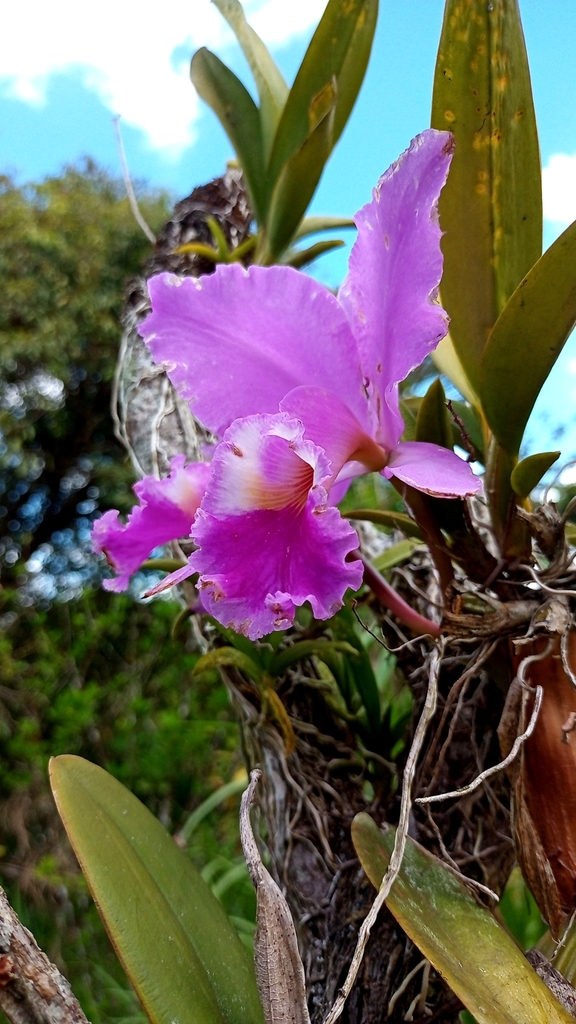
This stunning orchid is a classic favorite known for its large, fragrant, and ruffled blooms. It originates from Brazil and thrives in environments that mimic its native tropical home. You will love how its vibrant flowers brighten up any indoor space.

At a glance
- Care level
- Moderate
- Plant type
- Epiphytic orchid
- Light
- Bright, filtered light is best for healthy growth and blooming.
- Indoor light
- Bright indirect
- Water
- Every 5 to 10 days
- Mature size
- 1 to 2 feet
- Growth rate
- Medium
- Hardiness
- USDA 10 to 12
- Bloom time
- Late summer to autumn
Care
Mount or pot this orchid in a well-draining bark mix to ensure the roots get plenty of air. Watch for shriveled pseudobulbs, which often signal that the plant needs more moisture. Keep an eye out for pests like scale or mealybugs that might hide in the leaf axils.
- Watering
- Water when the potting medium is nearly dry to the touch.
- Feeding
- Use a balanced orchid fertilizer at half strength during the growing season.
- Pruning
- Remove spent flower spikes and dead pseudobulbs using sterilized tools.
- Repotting
- Repot only when the potting medium breaks down or the plant outgrows its container.
- Soil
- Orchid bark mix
- Soil pH
- 5.5 to 6.5
- Temperature
- 15 to 28°C
- Humidity
- 60 to 80%
- Drought tolerance
- Moderate
- Lifespan
- Perennial, can live for many decades with proper care.
- Fragrance
- Strong
- Deer and rabbits
- Moderate
Signs it needs repotting
- The potting medium has broken down and looks like soil.
- New growth is extending over the edge of the pot.
- Roots are visibly rotting or dead.
Safety
- People
- It is generally considered non-toxic to humans.
- Pets
- This plant is generally considered non-toxic to cats and dogs.
- Children
- Keep out of reach of children to prevent accidental ingestion or damage to the plant.
- Edibility
- This plant is not intended for human consumption.
How to identify it
- Large, ruffled, fragrant flowers
- Single leaf atop pseudobulbs
- Deep purple or crimson lip
- Thick, waxy, dark green foliage
- Height
- 0.3 to 0.6m
- Spread
- 0.2 to 0.4m
- Leaves
- dark green, evergreen
- Flowers
- lavender, pink, white, 12 to 18cm
Problems to watch for
- Scale insects · Small sap-sucking insects that appear as brown bumps on leaves and stems.
- Root rot · Caused by overwatering or poor drainage leading to decaying roots.
Check your crimson cattleya from a photo
Pocket Botanist looks at a photo of your plant and tells you what's wrong and what to try first.
Scan with your phone's camera to get the app
Or go to pocketbotanist.app/get on your phone
Growing it
- Propagation
- division
- When to plant
- spring
- Overwintering
- Keep the plant in a warm, bright location away from cold drafts. Reduce watering during the winter rest period to prevent root rot.
- In containers
- It thrives in containers, specifically slatted wooden baskets or pots with excellent drainage.
Division
- 1. Wait until the plant has finished blooming and new growth is starting.
- 2. Carefully remove the plant from its pot and gently shake off old medium.
- 3. Use a sterile blade to divide the rhizome, ensuring each section has at least three pseudobulbs.
- 4. Pot the divisions into fresh orchid bark.
- 5. Keep the new divisions slightly drier until new roots appear.
Group orchids together to create a microclimate that helps maintain higher ambient humidity.
Grows well with
- Phalaenopsis · They share similar light and humidity requirements in a home environment.
Similar species
- Cattleya trianae · It shares a similar growth habit and flower structure but blooms at a different time of year.
Science
- Family
- Orchidaceae
- Genus
- Cattleya
- Order
- Asparagales
- Class
- Liliopsida
- Native range
- Northeastern Brazil
- Conservation
- This species is listed under CITES Appendix II to regulate international trade and protect wild populations.
It grows as an epiphyte on trees in humid, tropical forests where it receives dappled sunlight.
- Value to wildlife
- nectar source
- Pollinators
- bees
- Uses
- ornamental display, greenhouse specimen
Through the year
Ecological indicators
- Salinity
- 1/9
- Soil reaction
- 5/9
- Light
- 6/9
- Temperature
- 8/9
- Moisture
- 5/9
- Nutrients
- 3/9
Taxonomy resolved against GBIF.
Questions people ask
- How often should I water it?
- Water when the potting medium feels nearly dry to the touch, but never let it sit in water.
- Does it need direct sunlight?
- It prefers bright, indirect light, as direct sun can scorch the leaves.
Where the name comes from
The genus is named after William Cattley, a British horticulturist who first bloomed these orchids, while the species name refers to the labellum or lip of the flower.
Good to know
- It is native to the northeastern regions of Brazil.
- The flowers are highly fragrant and can last for several weeks.
- It requires a distinct dry rest period after flowering to bloom well the following year.
Keep your crimson cattleya growing
This page is a general guide. Save your plant in Pocket Botanist and you get care reminders timed for this plant, plus a care history that shows what worked.
Scan with your phone's camera to get the app
Or go to pocketbotanist.app/get on your phone
This guide was generated with AI on and checked against GBIF taxonomy. It is general information, not horticultural or veterinary advice. Read about how we build these guides.