 Pocket Botanist
Plant guide
Star sedge.
Carex echinata
Pronounced KAIR-eks ek-in-AY-tuh
Also known as Star Sedge, bristle-fruited sedge, large-fruited star sedge, little prickly sedge, prickly sedge, spiny star sedge, stellate sedge



Scan with your phone's camera to get the app
Or go to pocketbotanist.app/get on your phone
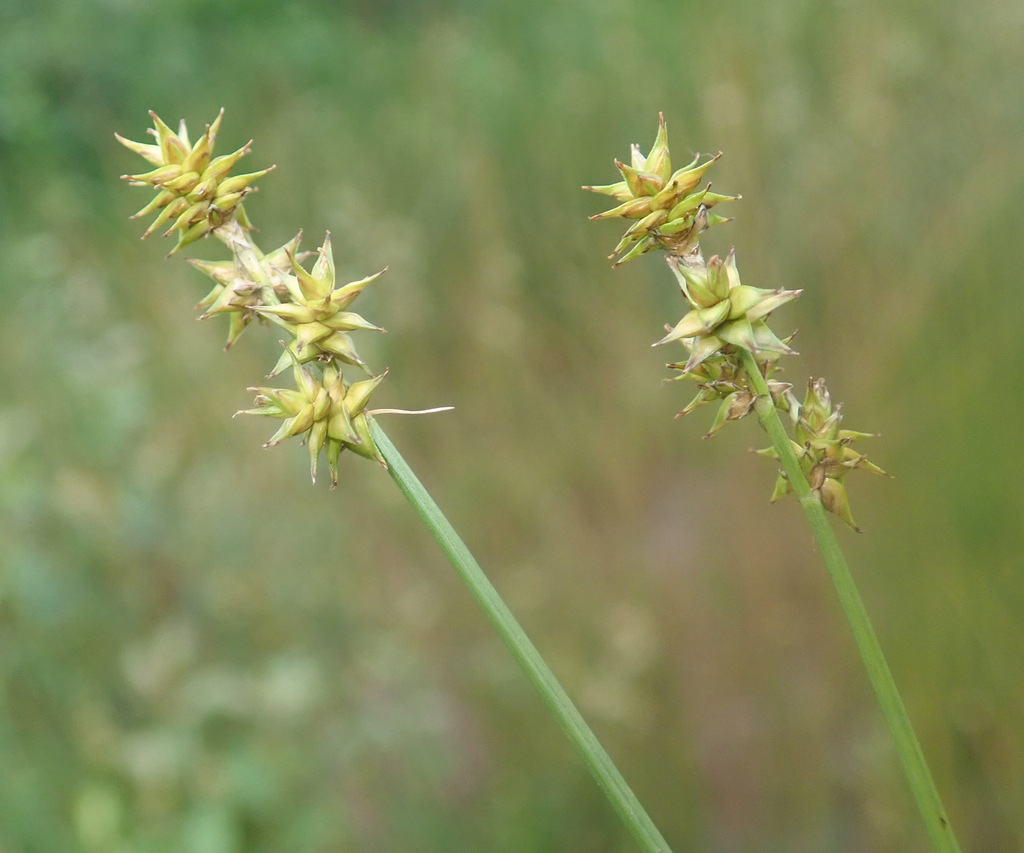
The star sedge is a charming, grass-like perennial that thrives in damp, boggy environments. It gets its name from the star-shaped seed heads that appear in the summer. It is a lovely choice for a rain garden or a moist spot in your landscape.

At a glance
- Care level
- Easy
- Plant type
- Sedge
- Light
- Full sun to partial shade
- Indoor light
- Bright indirect
- Water
- Every 1 to 3 days
- Mature size
- 1 to 2 feet
- Growth rate
- Medium
- Hardiness
- USDA 3 to 8
- Bloom time
- Late spring to mid summer
Care
Keep the soil consistently moist because this plant loves water. Watch for yellowing leaves which can indicate the soil has dried out too much. It is quite hardy and does not need much fuss as long as its feet stay wet.
- Watering
- Keep the soil constantly damp or even waterlogged.
- Feeding
- Apply a balanced, slow-release fertilizer once in the spring.
- Pruning
- Trim back dead foliage in late winter or early spring.
- Repotting
- Divide the clumps every few years to keep the plant vigorous.
- Soil
- Wet, acidic, peaty soil
- Soil pH
- 4.5 to 6.5
- Temperature
- -40 to 25°C
- Humidity
- 60 to 90%
Safety
- People
- There are no known toxic effects to humans from this plant.
- Children
- The leaves have sharp, serrated margins that can cause small paper cuts on delicate skin.
- Contact allergens
- The foliage can have sharp, rough edges that may cause minor skin irritation if handled roughly.
- Airborne allergens
- Like many wind pollinated grasses and sedges, it may produce pollen that triggers hay fever in sensitive individuals.
- Edibility
- This plant is not considered edible for humans.
How to identify it
- Star shaped seed clusters
- Slender grass like foliage
- Clumping growth habit
- Triangular stems
- Green to brownish spikelets
- Height
- 0.15 to 0.4m
- Spread
- 0.2 to 0.4m
- Leaves
- green, evergreen
- Flowers
- green, brown, 0.5 to 1cm
- Fruit
- brown, Late summer
Problems to watch for
- Rust · Fungal spots may appear on leaves during periods of high humidity and poor air circulation.
Check your star sedge from a photo
Pocket Botanist looks at a photo of your plant and tells you what's wrong and what to try first.
Scan with your phone's camera to get the app
Or go to pocketbotanist.app/get on your phone
Growing it
- Propagation
- division, seed
- When to plant
- spring, autumn
Group this sedge with other moisture loving perennials to create a lush, low maintenance water feature border.
Grows well with
- Marsh Marigold · They both thrive in the same wet, boggy conditions.
- Blue Flag Iris · This iris provides a nice vertical contrast to the low clumping habit of the sedge.
Similar species
- Gray Sedge · It has a similar preference for wet soil but features much larger, star shaped seed heads.
Science
- Family
- Cyperaceae
- Genus
- Carex
- Order
- Poales
- Class
- Liliopsida
- Native range
- Northern Hemisphere, including North America and Europe.
- Conservation
- It is widespread across its range and not currently of conservation concern.
It survives in wet, nutrient poor soils by forming dense root systems that help it compete in boggy environments.
- Value to wildlife
- larval host plant, seeds for birds
- Pollinators
- bees, butterflies
- Uses
- wetland restoration, rain gardens, bog gardens, ground cover
Through the year
Ecological indicators
- Salinity
- 1/9
- Soil reaction
- 3/9
- Light
- 5/9
- Temperature
- 4/9
- Moisture
- 8/9
- Nutrients
- 3/9
Taxonomy resolved against GBIF.
Questions people ask
- Does it need full sun?
- It prefers partial shade but can handle full sun if the soil stays consistently moist.
- How often should I water it?
- Keep the soil moist at all times, as this plant does not tolerate drying out.
Where the name comes from
The name echinata comes from the Latin word for hedgehog, referring to the prickly appearance of the seed heads.
Good to know
- It is commonly called the star sedge because of its unique seed arrangement.
- It thrives in acidic soils where many other plants struggle.
- The plant forms neat, dense clumps that stay green through most of the winter.
- It is a very reliable plant for damp, shady spots in the garden.
Keep your star sedge growing
This page is a general guide. Save your plant in Pocket Botanist and you get care reminders timed for this plant, plus a care history that shows what worked.
Scan with your phone's camera to get the app
Or go to pocketbotanist.app/get on your phone
This guide was generated with AI on and checked against GBIF taxonomy. It is general information, not horticultural or veterinary advice. Read about how we build these guides.