 Pocket Botanist
Plant guide
Chinese trumpet vine.
Campsis grandiflora
Pronounced KAMP-sis gran-di-FLOR-uh
Also known as Chinese trumpet creeper, Chinese trumpet vine, Chinese trumpet-creeper



Scan with your phone's camera to get the app
Or go to pocketbotanist.app/get on your phone
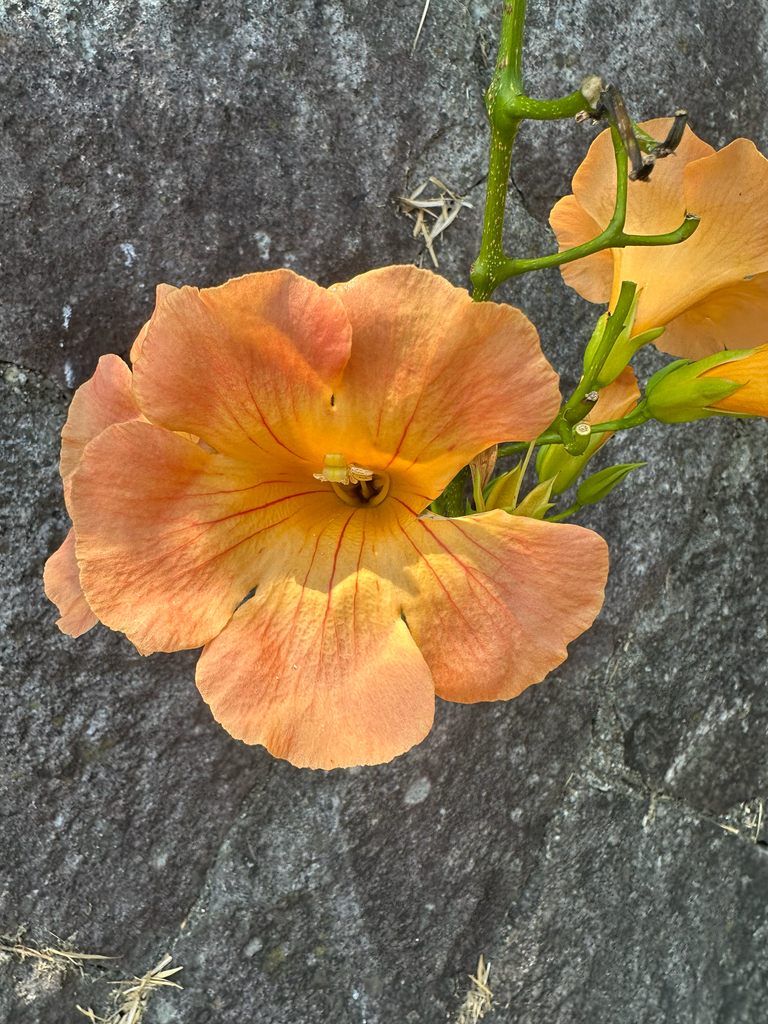
The Chinese trumpet vine is a vigorous climber known for its stunning, large, trumpet shaped flowers. It is a fantastic choice for covering fences or trellises in warmer climates. You will love how it attracts hummingbirds to your garden throughout the summer.

At a glance
- Care level
- Easy
- Plant type
- Deciduous vine
- Light
- Full sun
- Indoor light
- Direct sun
- Water
- Every 5 to 10 days
- Mature size
- 30 feet
- Growth rate
- Fast
- Hardiness
- USDA 7 to 9
- Bloom time
- Mid summer to early autumn
Care
Provide a sturdy support structure because this vine gets quite heavy as it matures. Watch for yellowing leaves which often signal that the soil is staying too wet. Prune back hard in late winter to keep its size in check and encourage more blooms.
- Watering
- Keep the soil consistently moist but never soggy during the active growing season.
- Feeding
- Feed with a balanced liquid fertilizer once a month during the spring and summer.
- Pruning
- Cut back the previous year's growth in late winter to promote vigorous flowering.
- Repotting
- Repot only when the plant becomes root bound in its container.
- Soil
- Well draining loamy soil
- Soil pH
- 6.0 to 7.5
- Temperature
- -15 to 35°C
- Humidity
- 40 to 70%
- Drought tolerance
- Moderate
- Lifespan
- Perennial, typically 20 plus years.
- Deer and rabbits
- Moderate
Signs it needs repotting
- Roots growing out of the drainage holes.
- Water running straight through the pot.
- Stunted growth during the active season.
Safety
- People
- Contact with the foliage can cause skin irritation in sensitive individuals.
- Pets
- This plant is generally considered non toxic to cats and dogs, though ingestion may cause mild stomach upset.
- Children
- Keep children away from the sap as it can cause skin irritation, and discourage them from eating the seed pods.
- Contact allergens
- The sap can cause mild skin irritation or dermatitis upon contact.
- Airborne allergens
- Pollen is not typically a major allergen but can be bothersome to some people.
- Edibility
- This plant is not considered edible and may cause stomach upset if ingested.
How to identify it
- Large orange to red trumpet flowers
- Pinnately compound dark green leaves
- Aerial rootlets for climbing support
- Deciduous woody vine habit
- Height
- 3 to 9m
- Spread
- 2 to 4m
- Leaves
- green, deciduous
- Flowers
- orange, red, 5 to 8cm
- Fruit
- brown, autumn
Problems to watch for
- Aphids · Small insects that cluster on new growth and suck plant juices.
- Powdery mildew · A fungal infection that appears as white dusty spots on leaves.
Check your chinese trumpet vine from a photo
Pocket Botanist looks at a photo of your plant and tells you what's wrong and what to try first.
Scan with your phone's camera to get the app
Or go to pocketbotanist.app/get on your phone
Growing it
- Propagation
- cuttings, layering, seed
- When to plant
- spring, autumn
- Overwintering
- In colder regions, apply a thick layer of mulch around the base to protect the roots from freezing. If in a container, move it to a sheltered, unheated area.
- In containers
- It can grow in a large container, but it will require a very large pot and frequent pruning to keep it manageable.
Softwood cuttings
- Take a 15 cm cutting in early summer.
- Remove the lower leaves.
- Dip the end in rooting hormone.
- Place in a moist, well draining potting mix.
- Keep in a humid spot until roots form.
Plant at the base of a very sturdy structure, as this vine becomes quite heavy over time.
Grows well with
Similar species
- American Trumpet Vine · A much more aggressive relative that is often confused with this species.
Science
- Family
- Bignoniaceae
- Genus
- Campsis
- Order
- Lamiales
- Class
- Magnoliopsida
- Native range
- Eastern Asia, specifically China and Japan.
- Conservation
- Not currently of conservation concern.
It thrives in sunny woodland edges where it can climb trees to reach the canopy light.
- Value to wildlife
- nectar source
- Pollinators
- bees, hummingbirds
- Uses
- ornamental climber, wall cover, trellis plant
Through the year
Ecological indicators
- Salinity
- 2/9
- Soil reaction
- 6/9
- Light
- 8/9
- Temperature
- 7/9
- Moisture
- 5/9
- Nutrients
- 6/9
Taxonomy resolved against GBIF.
Questions people ask
- Does it need a trellis?
- Yes, it needs a sturdy support structure to climb effectively.
- How do I prune it?
- Prune back the previous year's growth in early spring to encourage more flowers.
Where the name comes from
The genus name Campsis comes from the Greek word for curve, referring to the curved stamens, while grandiflora means large flowered.
Good to know
- It has only a few aerial rootlets, fewer than its American cousin, so it usually needs tying in to a support.
- The flowers are shaped like trumpets to accommodate hummingbirds.
- It is a popular choice for covering pergolas in warm climates.
Keep your chinese trumpet vine growing
This page is a general guide. Save your plant in Pocket Botanist and you get care reminders timed for this plant, plus a care history that shows what worked.
Scan with your phone's camera to get the app
Or go to pocketbotanist.app/get on your phone
This guide was generated with AI on and checked against GBIF taxonomy. It is general information, not horticultural or veterinary advice. Read about how we build these guides.