 Pocket Botanist
Plant guide
Showy milkweed.
Asclepias speciosa
Pronounced as-KLEE-pee-as spee-see-OH-suh
Also known as Greek milkweed, pink milkweed, showy milkweed



Scan with your phone's camera to get the app
Or go to pocketbotanist.app/get on your phone
This lovely perennial is a favorite for native gardens because it attracts so many pollinators. It features tall, sturdy stems topped with clusters of fragrant, star shaped flowers. You will find it thrives in open, sunny spaces where it can spread its roots.

At a glance
- Care level
- Easy
- Plant type
- Perennial
- Light
- Full sun
- Indoor light
- Direct sun
- Water
- Every 7 to 14 days
- Mature size
- 3 to 4 feet
- Growth rate
- Medium
- Hardiness
- USDA 3 to 9
- Bloom time
- Late spring to mid summer
Care
Plant this in a spot with plenty of sun and well draining soil. Watch for aphids on the stems, which are common but usually harmless. Allow the soil to dry out between waterings to keep the root system healthy.
- Watering
- Water deeply once established, but let the soil dry out between sessions.
- Feeding
- A light application of compost in the spring is plenty for this hardy plant.
- Pruning
- Cut the stems back to the ground in late autumn or early winter after the foliage dies.
- Repotting
- This plant prefers to stay in the ground, but if container grown, move to a larger pot every few years.
- Soil
- Well draining, sandy or loamy soil
- Soil pH
- 6.0 to 7.5
- Temperature
- -30 to 35°C
- Humidity
- 20 to 50%
Safety
- People
- All parts of the plant are toxic if eaten and the milky sap can cause skin irritation.
- Pets
- This plant contains cardiac glycosides and is toxic to cats and dogs if ingested.
- Children
- Keep children away from the plant to prevent accidental ingestion or sap contact with eyes or skin.
- Contact allergens
- The milky latex sap can cause contact dermatitis in sensitive individuals.
- Airborne allergens
- The pollen is not considered a significant airborne allergen.
- Edibility
- This plant is not for consumption as it contains cardiac glycosides that are toxic if ingested.
How to identify it
- Large, thick, oval shaped leaves
- Soft, velvety hairs on foliage
- Clusters of pink, star shaped flowers
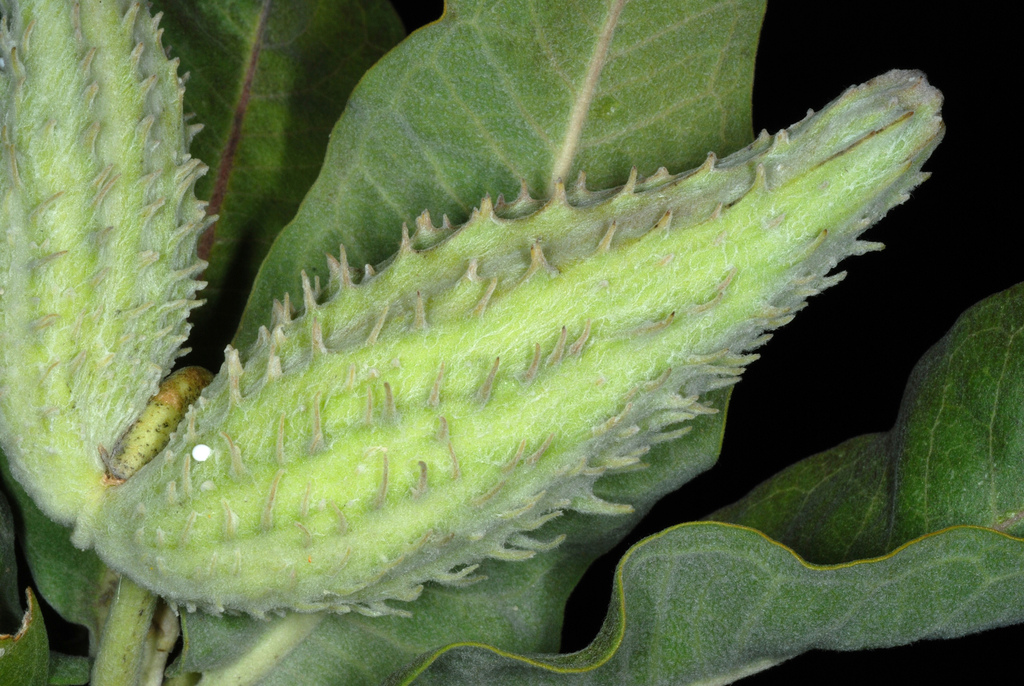
- Large, warty seed pods
- Height
- 0.6 to 1.2m
- Spread
- 0.3 to 0.6m
- Leaves
- gray-green, deciduous
- Flowers
- pink, purple, 1 to 2cm
- Fruit
- green, brown, Late summer to fall
Problems to watch for
- Aphids · Small insects that cluster on new growth and flower buds, though they rarely kill the plant.
- Milkweed bugs · Orange and black insects that feed on the seeds and plant tissues.
Check your showy milkweed from a photo
Pocket Botanist looks at a photo of your plant and tells you what's wrong and what to try first.
Scan with your phone's camera to get the app
Or go to pocketbotanist.app/get on your phone
Growing it
- Propagation
- seed, division
- When to plant
- spring, fall
Plant in large drifts to make it easier for pollinators to find your garden.
Grows well with
- Purple Coneflower · They share similar sun and water requirements while providing a nice color contrast.
- Little Bluestem · This grass provides a beautiful structural backdrop for the milkweed.
Similar species
- Common Milkweed · It is a close relative with a similar growth habit but slightly different flower shape.
Science
- Family
- Apocynaceae
- Genus
- Asclepias
- Order
- Gentianales
- Class
- Magnoliopsida
- Native range
- Western and central North America.
- Conservation
- It is not currently listed as endangered, though it is a vital native species that should be protected in its natural habitat.
It thrives in open, sunny areas and provides essential habitat for various insects.
- Value to wildlife
- larval host plant, nectar source
- Pollinators
- bees, butterflies, moths
- Uses
- pollinator garden, native plant restoration, meadow planting
Through the year
Ecological indicators
- Salinity
- 2/9
- Soil reaction
- 6/9
- Light
- 8/9
- Temperature
- 5/9
- Moisture
- 3/9
- Nutrients
- 4/9
Taxonomy resolved against GBIF.
Questions people ask
- Does it need a lot of water?
- No, it is quite drought tolerant once established.
- Will it take over my garden?
- It can spread by rhizomes, so give it space or use a barrier if you have a small garden.
Where the name comes from
The genus name Asclepias honors the Greek god of medicine, while the species name speciosa means showy or beautiful.
Good to know
- The flowers are arranged in large, fragrant, star-shaped clusters.
- It spreads via underground rhizomes to form colonies.
- The seed pods split open to release seeds attached to silky white hairs that travel on the wind.
- Native American tribes historically used the fibers for cordage and the roots for medicinal purposes.
Also in
Keep your showy milkweed growing
This page is a general guide. Save your plant in Pocket Botanist and you get care reminders timed for this plant, plus a care history that shows what worked.
Scan with your phone's camera to get the app
Or go to pocketbotanist.app/get on your phone
This guide was generated with AI on and checked against GBIF taxonomy. It is general information, not horticultural or veterinary advice. Read about how we build these guides.