 Pocket Botanist
Plant guide
American hogpeanut.
Amphicarpaea bracteata
Pronounced am-fi-kar-PEE-uh brak-tee-AY-tuh
Also known as American Hogpeanut, American hog peanut, Hog Peanut, hog-peanut, Wild Peanut



Scan with your phone's camera to get the app
Or go to pocketbotanist.app/get on your phone
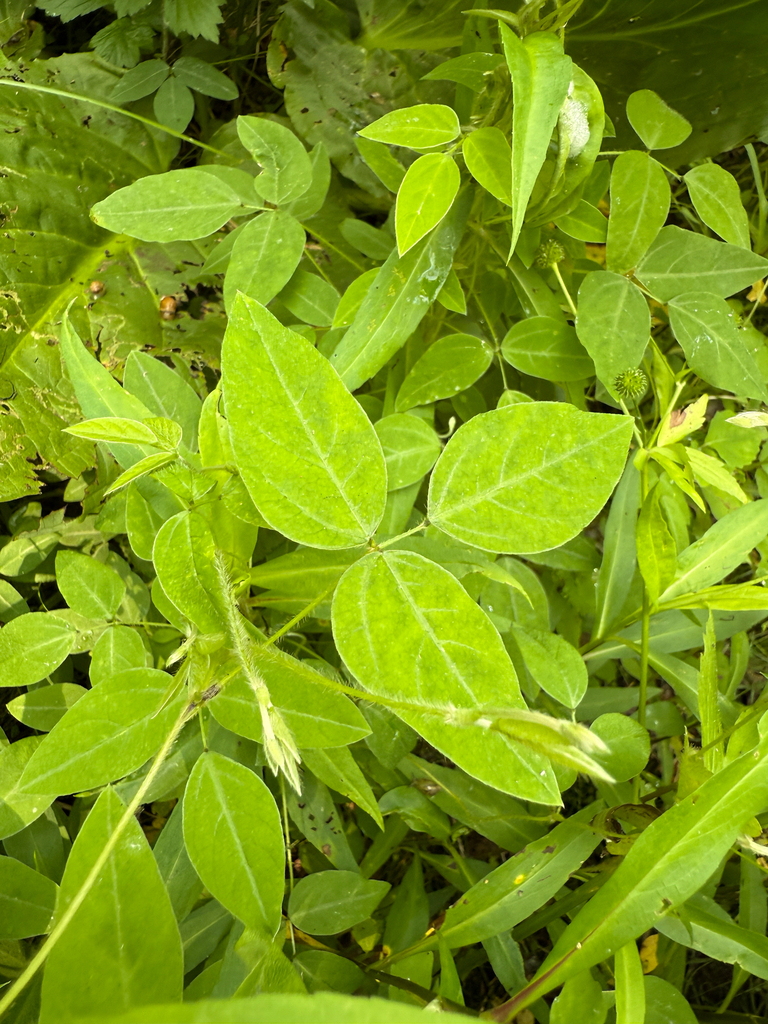
This unique native legume produces both showy flowers above ground and hidden flowers near the roots. It is a fascinating woodland climber that adds a touch of wild charm to shaded gardens. You will enjoy watching its delicate trifoliate leaves spread across the forest floor.

At a glance
- Care level
- Easy
- Plant type
- Herbaceous annual vine
- Light
- Partial shade to full shade
- Indoor light
- Medium light
- Water
- Every 3 to 7 days
- Mature size
- 3 to 6 feet
- Growth rate
- Medium
- Hardiness
- USDA 3 to 8
- Bloom time
- Mid to late summer
Care
Keep the soil consistently moist to mimic its natural woodland habitat. Watch for wilting during dry spells, as this plant prefers a steady supply of water. It thrives best when allowed to climb or sprawl in a sheltered spot.
- Watering
- Water whenever the top inch of soil feels dry to the touch.
- Feeding
- Apply a light balanced fertilizer once during the growing season if needed.
- Pruning
- Trim back dead vines in late winter to tidy up the area.
- Repotting
- Repot only if the plant becomes root bound in its container.
- Soil
- Rich, moist, well draining soil
- Soil pH
- 6.0 to 7.5
- Temperature
- -30 to 30°C
- Humidity
- 40 to 70%
- Drought tolerance
- Low
- Lifespan
- Annual
- Deer and rabbits
- Low
Safety
- People
- There are no known reports of toxicity in humans.
- Children
- The seeds are small and could pose a choking hazard to very young children.
- Contact allergens
- No specific contact irritants are known.
- Airborne allergens
- Pollen may cause mild reactions in sensitive individuals.
- Edibility
- The underground cleistogamous seeds are edible when cooked, but ensure proper identification before consumption.
How to identify it
- Trifoliate leaves with pointed leaflets
- Small pale purple or white flowers
- Twining stems that climb nearby plants
- Produces underground edible seeds
- Height
- 0.3 to 3m
- Spread
- 0.3 to 0.6m
- Leaves
- green, deciduous
- Flowers
- white, lavender, purple, 0.5 to 1.5cm
- Fruit
- tan, brown, Late summer to autumn
Problems to watch for
- Powdery mildew · A fungal infection that appears as white dust on leaves during humid conditions.
Check your american hogpeanut from a photo
Pocket Botanist looks at a photo of your plant and tells you what's wrong and what to try first.
Scan with your phone's camera to get the app
Or go to pocketbotanist.app/get on your phone
Growing it
- Propagation
- seed
- When to plant
- spring, autumn
- Overwintering
- The plant dies back completely after the first frost. No special care is needed as it reseeds itself naturally.
- In containers
- It is not well-suited for containers due to its need for deep soil to produce its subterranean fruit.
Direct Sowing
- 1. Collect mature seeds in late autumn.
- 2. Sow seeds directly into moist, shaded soil.
- 3. Lightly cover with leaf mulch to mimic natural conditions.
Plant this near taller perennials that can act as a natural support for its twining stems.
Grows well with
- Wild Ginger · They share similar woodland shade requirements.
- Mayapple · They grow well together in the dappled light of a forest floor.
Similar species
- Groundnut · Both are native legumes with edible underground parts.
Science
- Family
- Fabaceae
- Genus
- Amphicarpaea
- Order
- Fabales
- Class
- Magnoliopsida
- Native range
- Most of North America, excluding the far west.
- Conservation
- It is widespread and not of conservation concern.
It thrives in woodland edges and shaded areas where it can climb or trail through leaf litter.
- Value to wildlife
- nectar source, larval host plant
- Pollinators
- bees, butterflies
- Uses
- ground cover, wildlife habitat, foraging
Through the year
Ecological indicators
- Salinity
- 1/9
- Soil reaction
- 6/9
- Light
- 4/9
- Temperature
- 5/9
- Moisture
- 6/9
- Nutrients
- 5/9
Taxonomy resolved against GBIF.
Questions people ask
- Does it need a trellis?
- It prefers to climb over low shrubs or other plants but can grow as a ground cover.
- Is it invasive?
- It is native to North America and generally behaves well in woodland gardens.
Where the name comes from
The genus name Amphicarpaea comes from Greek words meaning both-fruit, referring to its two types of pods. The species name bracteata refers to the leafy bracts found on the stems.
Good to know
- The name hog peanut comes from the fact that pigs love to root out the subterranean beans.
- It is a nitrogen-fixing legume that improves soil health.
- The plant uses its twining stems to climb over other vegetation.
Also in
Keep your american hogpeanut growing
This page is a general guide. Save your plant in Pocket Botanist and you get care reminders timed for this plant, plus a care history that shows what worked.
Scan with your phone's camera to get the app
Or go to pocketbotanist.app/get on your phone
This guide was generated with AI on and checked against GBIF taxonomy. It is general information, not horticultural or veterinary advice. Read about how we build these guides.