 Pocket Botanist
Plant guide
False indigo bush.
Amorpha fruticosa
Pronounced uh-MOR-fuh froo-tih-KOH-suh
Also known as Desert false indigo, False indigo-bush, Bastard indigobush, False indigo, Shrubby amorpha, Indigobush amorpha, Falseindigo, bastard false indigo, bastard indigo-bush



Scan with your phone's camera to get the app
Or go to pocketbotanist.app/get on your phone
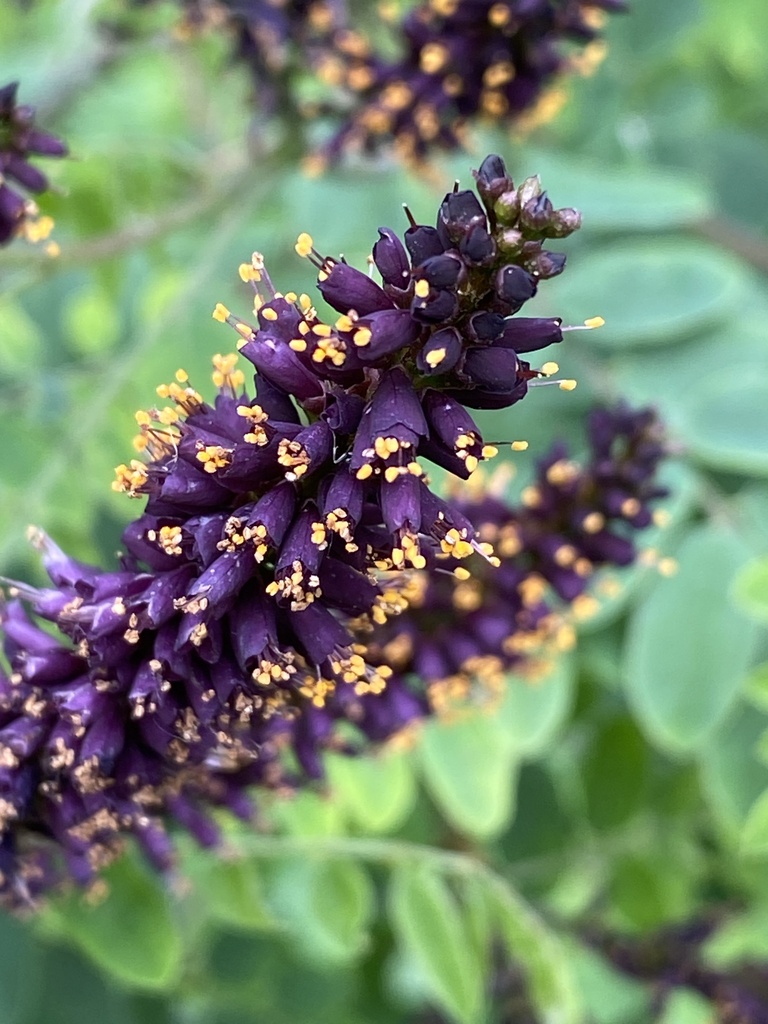
This hardy shrub is a great choice if you want to attract pollinators to your garden. It features lovely spikes of purple flowers that really stand out against its fine foliage. It is a tough plant that handles various soil conditions quite well.

At a glance
- Care level
- Easy
- Plant type
- Deciduous shrub
- Light
- Full sun to partial shade
- Indoor light
- Direct sun
- Water
- Every 5 to 10 days
- Mature size
- 10 to 15 feet
- Growth rate
- Fast
- Hardiness
- USDA 4 to 9
- Bloom time
- Late spring to early summer
Care
Keep the soil consistently moist while the plant is young to help it establish a strong root system. Watch for wilting during dry spells, though mature plants are fairly drought tolerant. Prune back in late winter to keep the shrub from getting too leggy.
- Watering
- Water deeply once a week during the first year to encourage deep roots.
- Feeding
- A light application of balanced fertilizer in early spring is plenty.
- Pruning
- Trim back in late winter to encourage a bushier shape.
- Repotting
- If grown in a container, move to a larger pot every few years.
- Soil
- Adaptable to most soil types
- Soil pH
- 6.0 to 8.0
- Temperature
- -30 to 35°C
- Humidity
- 40 to 70%
- Drought tolerance
- Moderate
- Lifespan
- Perennial, typically 15 to 20 years
- Fragrance
- Light
- Deer and rabbits
- Moderate
Signs it needs repotting
- Roots growing out of the drainage holes
- Water running straight through the pot without soaking in
Safety
- People
- All parts of the plant are considered mildly toxic if ingested.
- Children
- Keep children away from the seeds and foliage, as ingestion can lead to nausea or vomiting.
- Contact allergens
- Handling the foliage may cause mild skin irritation in sensitive individuals.
- Airborne allergens
- The pollen can trigger allergic reactions in some people during the flowering season.
- Edibility
- This plant is not considered edible and may cause digestive upset if ingested.
How to identify it
- Pinnately compound leaves with many leaflets
- Dense spikes of purple flowers
- Bright orange anthers on flowers
- Woody stems with smooth bark
- Small curved seed pods
- Height
- 1.5 to 4.5m
- Spread
- 1.5 to 4.5m
- Leaves
- green, deciduous
- Flowers
- purple, yellow, 0.5 to 1cm
- Fruit
- brown, Late summer to autumn
Problems to watch for
- Powdery mildew · A white fungal growth on leaves caused by high humidity and poor air circulation.
Check your false indigo bush from a photo
Pocket Botanist looks at a photo of your plant and tells you what's wrong and what to try first.
Scan with your phone's camera to get the app
Or go to pocketbotanist.app/get on your phone
Growing it
- Propagation
- seed, cuttings, division
- When to plant
- spring, autumn
- Overwintering
- No special winter care is needed as it is fully hardy. Simply clear away any dead debris in early spring before new growth starts.
- In containers
- It is generally too large for typical containers, but can be grown in very large tubs if pruned regularly.
Seed
- 1. Scarify the hard seed coat with sandpaper.
- 2. Soak seeds in warm water for 24 hours.
- 3. Sow in moist soil and keep warm until germination.
Pair this shrub with other moisture loving natives to create a low maintenance rain garden.
Grows well with
- Switchgrass · They share similar moisture requirements and create a nice textural contrast.
- Joe Pye Weed · Both plants thrive in moist soil and attract a wide array of pollinators.
Similar species
- Leadplant · It is a smaller, more drought tolerant relative that prefers drier sites.
Science
- Family
- Fabaceae
- Genus
- Amorpha
- Order
- Fabales
- Class
- Magnoliopsida
- Native range
- Central and North America
- Conservation
- It is considered invasive in some regions outside its native range, so check local regulations.
It naturally colonizes riparian zones and floodplains, helping to stabilize soil with its extensive root system.
- Value to wildlife
- nectar source, larval host plant
- Pollinators
- bees, butterflies
- Uses
- erosion control, pollinator gardens, wildlife hedges
Through the year
Ecological indicators
- Salinity
- 2/9
- Soil reaction
- 6/9
- Light
- 7/9
- Temperature
- 5/9
- Moisture
- 7/9
- Nutrients
- 5/9
Taxonomy resolved against GBIF.
Questions people ask
- Is it hard to grow?
- Not at all, it is quite adaptable and grows well in many soil types.
- Does it need pruning?
- You can prune it in late winter to maintain its shape or encourage denser growth.
Where the name comes from
The name Amorpha comes from the Greek word for shapeless, describing the flower's unique structure, while fruticosa means shrubby.
Good to know
- It is commonly known as false indigo because it was once used as a poor substitute for true indigo dye.
- The genus name Amorpha means formless, referring to the lack of standard petals in the flowers.
- It thrives in wet soils and is often found along riverbanks in the wild.
Keep your false indigo bush growing
This page is a general guide. Save your plant in Pocket Botanist and you get care reminders timed for this plant, plus a care history that shows what worked.
Scan with your phone's camera to get the app
Or go to pocketbotanist.app/get on your phone
This guide was generated with AI on and checked against GBIF taxonomy. It is general information, not horticultural or veterinary advice. Read about how we build these guides.