 Pocket Botanist
Plant guide
Common agrimony.
Agrimonia eupatoria
Pronounced ag-ri-MO-nee-uh yoo-pa-TOR-ee-uh
Also known as Agrimony, Churchsteeples, European agrimony, European grooveburr



Scan with your phone's camera to get the app
Or go to pocketbotanist.app/get on your phone
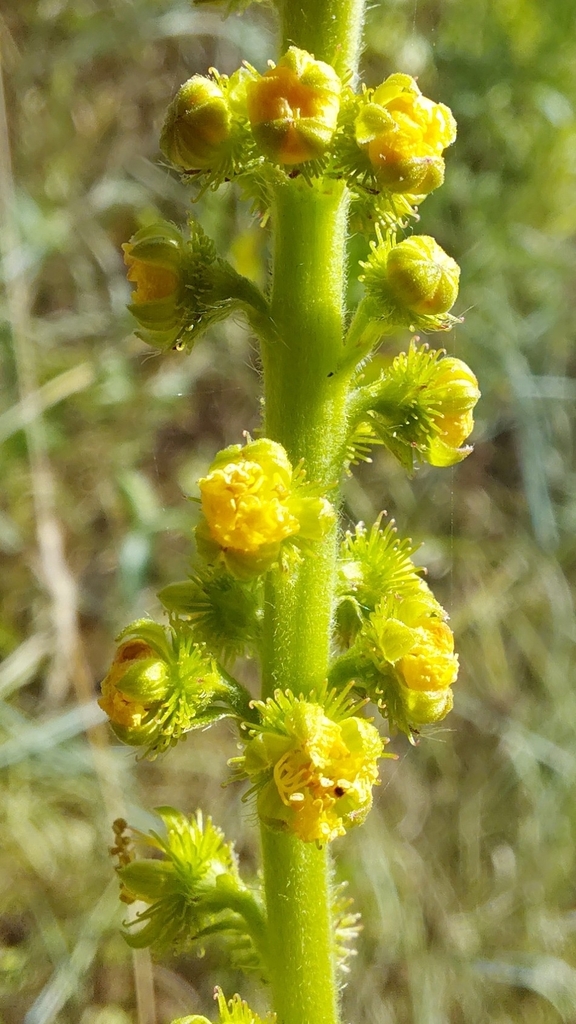
Common agrimony is a lovely perennial herb that is often found growing in meadows and along hedgerows. It produces tall spikes of small, yellow flowers that bloom throughout the summer months. This plant has a long history of use in traditional herbal practices.

At a glance
- Care level
- Easy
- Plant type
- Perennial herb
- Light
- Full sun to partial shade
- Indoor light
- Bright indirect
- Water
- Every 5 to 10 days
- Mature size
- 2 to 3 feet
- Growth rate
- Medium
- Hardiness
- USDA 4 to 8
- Bloom time
- Mid to late summer
Care
This plant thrives in well draining soil and appreciates a spot with plenty of airflow. Keep an eye out for powdery mildew on the leaves if the environment stays too humid. It is quite hardy and generally does not need much fuss to stay happy.
- Watering
- Water when the top inch or so of soil feels dry. Established plants tolerate dry spells and dislike constantly wet soil.
- Feeding
- Apply a balanced organic fertilizer once during the spring growth spurt.
- Pruning
- Cut the plant back to the ground after it finishes flowering in the fall.
- Repotting
- Repot only if the plant becomes root bound or needs fresh soil.
- Soil
- Well draining loamy soil
- Soil pH
- Neutral to slightly alkaline
- Temperature
- -25 to 30°C
- Humidity
- 40 to 70%
- Drought tolerance
- Moderate
- Lifespan
- Perennial, typically 3 to 5 years.
- Fragrance
- Light
- Deer and rabbits
- Moderate
Signs it needs repotting
- Roots growing out of the drainage holes.
- Water running straight through the pot without soaking in.
Safety
- People
- This plant is generally considered non-toxic, but excessive ingestion should be avoided.
- Children
- The burr-like fruits can be annoying if they get stuck in clothing or hair but are not inherently dangerous to children.
- Contact allergens
- The fine hairs on the stems and leaves may cause mild skin irritation in sensitive individuals.
- Airborne allergens
- Pollen may cause mild reactions in people with severe seasonal allergies.
- Edibility
- While historically used in teas, consult a professional before consuming wild plants as misidentification can lead to health risks.
How to identify it
- Tall spikes of yellow flowers
- Pinnately compound leaves with serrated edges
- Softly hairy stems and foliage
- Small burr like fruits with hooks
- Height
- 0.6 to 1.2m
- Spread
- 0.3 to 0.6m
- Leaves
- green, deciduous
- Flowers
- yellow, 0.5 to 1cm
- Fruit
- brown, Autumn
Problems to watch for
- Powdery mildew · White fungal growth appears on leaves during periods of high humidity and poor air circulation.
Check your common agrimony from a photo
Pocket Botanist looks at a photo of your plant and tells you what's wrong and what to try first.
Scan with your phone's camera to get the app
Or go to pocketbotanist.app/get on your phone
Growing it
- Propagation
- seed, division
- When to plant
- spring, autumn
- Overwintering
- Cut the stems back to the ground after the foliage dies back in late autumn. A light layer of mulch can help protect the crown during harsh winters.
- In containers
- It can grow in a large container, but it is much happier when planted directly in the ground.
Seed Sowing
- 1. Collect seeds in autumn once they turn brown.
- 2. Sow directly into prepared soil in late autumn or early spring.
- 3. Keep the soil lightly moist until germination occurs.
Plant agrimony in a sunny border alongside other drought tolerant perennials to create a low maintenance pollinator haven.
Grows well with
- Common Yarrow · They share similar light and soil requirements and look lovely together in a meadow setting.
- Oxeye Daisy · These plants provide a classic cottage garden look and attract a wide range of beneficial insects.
Similar species
- Fragrant Agrimony · It is very similar in appearance but has a distinct scent and different leaf characteristics.
Science
- Family
- Rosaceae
- Genus
- Agrimonia
- Order
- Rosales
- Class
- Magnoliopsida
- Native range
- Europe and parts of Western Asia.
- Conservation
- It is common throughout its range and not currently of conservation concern.
It survives in the wild by colonizing sunny, open areas and using its hooked seeds to disperse via animal fur.
- Value to wildlife
- nectar source, larval host plant
- Pollinators
- bees, butterflies, beetles
- Uses
- pollinator garden, herbal tea, meadow planting
Through the year
Ecological indicators
- Salinity
- 1/9
- Soil reaction
- 6/9
- Light
- 6/9
- Temperature
- 5/9
- Moisture
- 5/9
- Nutrients
- 5/9
Taxonomy resolved against GBIF.
Questions people ask
- Is agrimony easy to grow?
- Yes, it is quite hardy and adapts well to most garden soils.
- Does it need full sun?
- It prefers full sun but will tolerate partial shade.
Where the name comes from
The name Agrimonia is derived from the Greek argemone, meaning a plant used to heal the eyes, while eupatoria honors Mithridates Eupator, an ancient king known for his interest in medicinal plants.
Good to know
- The name agrimony comes from the Greek word for a plant used to treat eye conditions.
- It has a long history of use in traditional medicine for soothing sore throats.
- The plant releases a pleasant, spicy scent when crushed.
- It thrives in disturbed soil, making it a common sight along woodland edges.
Keep your common agrimony growing
This page is a general guide. Save your plant in Pocket Botanist and you get care reminders timed for this plant, plus a care history that shows what worked.
Scan with your phone's camera to get the app
Or go to pocketbotanist.app/get on your phone
This guide was generated with AI on and checked against GBIF taxonomy. It is general information, not horticultural or veterinary advice. Read about how we build these guides.