 Pocket Botanist
Guide botanique
Portia tree.
Thespesia populnea
Prononciation thes-PEE-zee-uh pop-yul-NEE-uh
Aussi appelée Indian tuliptree


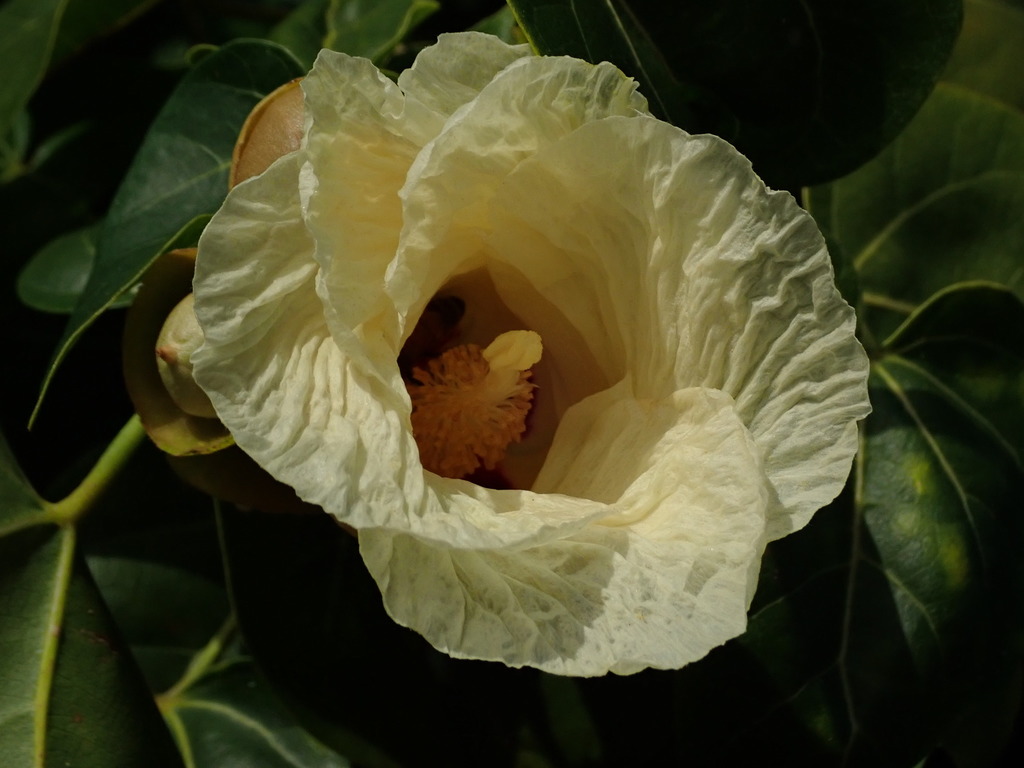
The Portia tree is a beautiful tropical evergreen that thrives in coastal areas. It is well known for its heart shaped leaves and bright yellow flowers that fade to purple. You will often see it used as a shade tree in warm climates.

En un coup d'œil
- Niveau d'entretien
- Moyenne
- Type de plante
- Evergreen tree
- Lumière
- Full sun
- Lumière en intérieur
- Soleil direct
- Arrosage
- Tous les 3 à 7 jours
- Taille adulte
- 30 to 40 feet
- Croissance
- Rapide
- Rusticité
- USDA 10 à 12
- Floraison
- Year round in tropical climates
Entretien
Keep this tree in a spot with plenty of sunshine to encourage healthy growth. Watch for yellowing leaves which can indicate overwatering or poor drainage. It is quite salt tolerant, so it handles coastal breezes like a champ.
- Arrosage
- Water deeply whenever the top inch of soil feels dry to the touch.
- Engrais
- Apply a balanced fertilizer during the active growing season.
- Taille
- Trim back branches once a year to maintain a desired shape or size.
- Rempotage
- Move to a larger container once the roots begin to circle the bottom.
- Sol
- Well draining sandy or loamy soil
- pH du sol
- 6.0 to 8.0
- Température
- 10 à 35°C
- Humidité
- 60 à 90%
Sécurité
- Humains
- The plant contains compounds that can be irritating if ingested or handled excessively.
- Enfants
- Keep children away from the seed pods as they can be a choking hazard.
- Allergènes de contact
- The sap may cause mild skin irritation in sensitive individuals.
- Allergènes aéroportés
- Pollen may trigger mild allergic reactions in sensitive people.
- Comestibilité
- The plant is not considered edible and ingestion may cause gastrointestinal distress.
Comment l'identifier
- Heart shaped glossy green leaves
- Bright yellow cup shaped flowers
- Flowers age to deep purple
- Round woody seed capsules
- Smooth greyish brown bark
- Hauteur
- 5 à 15m
- Envergure
- 3 à 8m
- Feuilles
- green, evergreen
- Fleurs
- yellow, maroon, 5 à 8cm
- Fruits
- brown, black, Year round
Problèmes courants
- Aphids — Small insects that suck sap from new growth.
- Leaf spot — Fungal infection causing dark spots on foliage.
La cultiver
- Multiplication
- seed, cuttings
- Quand planter
- Spring, Summer, Autumn
Pair with other salt tolerant coastal plants to create a resilient windbreak.
Bonnes associations
- Sea grape — They share similar coastal environmental requirements.
- Ipomoea pes-caprae — This groundcover helps retain moisture at the base of the tree.
Espèces similaires
- Hibiscus — They share the same family and similar flower structures.
Science
- Famille
- Malvaceae
- Genre
- Thespesia
- Ordre
- Malvales
- Classe
- Magnoliopsida
- Région d'origine
- Tropical regions of the Old World, including Africa, Asia, and the Pacific Islands.
- Préservation
- Not currently threatened, but it is often managed in coastal areas to prevent erosion.
It is a pioneer species that stabilizes coastal dunes and withstands salt spray.
- Intérêt pour la faune
- nectar source, shelter for coastal birds
- Pollinisateurs
- abeilles, papillons
- Utilisations
- ornamental shade tree, coastal erosion control, woodworking, traditional medicine
Au fil des saisons
Repères écologiques
- Salinité
- 8/9
- Réaction du sol
- 7/9
- Lumière
- 8/9
- Température
- 9/9
- Humidité
- 6/9
- Nutriments
- 5/9
Taxonomie vérifiée avec le GBIF.
Ce qu'on demande souvent
- Does it need full sun?
- Yes, it grows best in full sun.
- Can it grow in sand?
- It is highly tolerant of sandy, saline soils.
D'où vient le nom
Thespesia comes from the Greek word for divine, while populnea refers to the resemblance of its leaves to those of the poplar tree.
Bon à savoir
- It is often called the Portia tree.
- The flowers change color from yellow to deep red as they age.
- It thrives in salty coastal environments.
- The seeds are buoyant and spread by ocean currents.
Ta plante a mauvaise mine ?
Cette page est un guide général. Pocket Botanist diagnostique les problèmes directement à partir d'une photo de ta plante, adapte l'arrosage à sa luminosité et te prévient quand il faut t'en occuper.
Ce guide a été généré par IA et vérifié avec la taxonomie du GBIF. Il s'agit d'informations générales, et non de conseils horticoles ou vétérinaires. Découvre comment nous concevons ces guides.