 Pocket Botanist
Pflanzenratgeber
Portia tree.
Thespesia populnea
Aussprache thes-PEE-zee-uh pop-yul-NEE-uh
Auch bekannt als Indian tuliptree


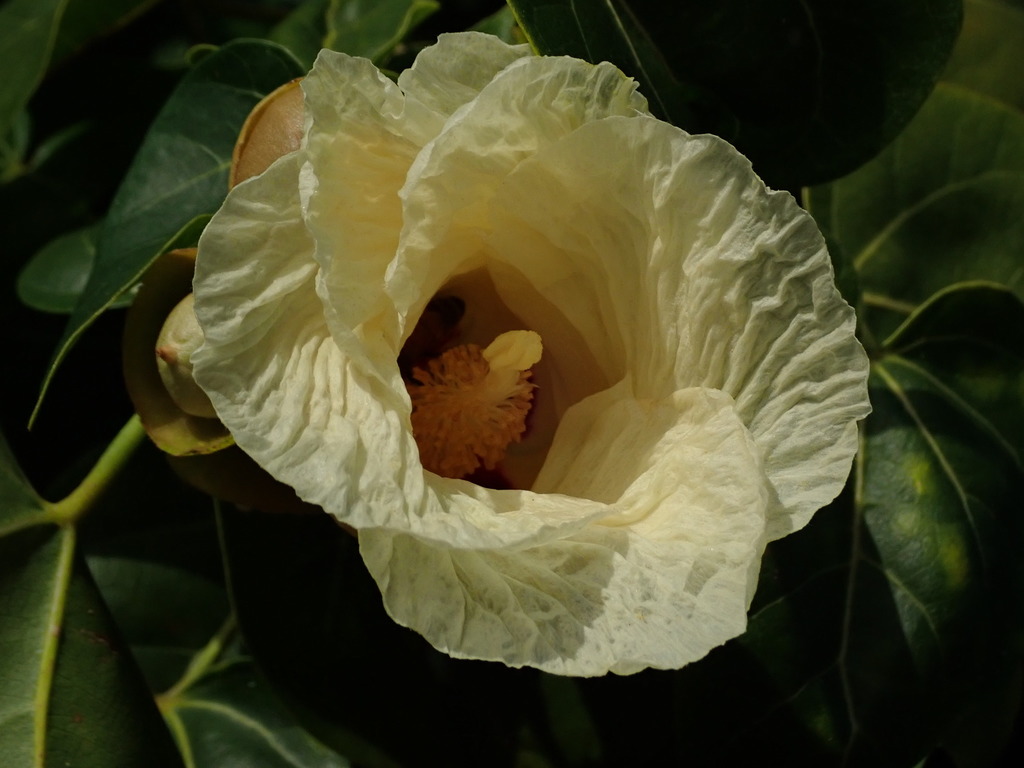
The Portia tree is a beautiful tropical evergreen that thrives in coastal areas. It is well known for its heart shaped leaves and bright yellow flowers that fade to purple. You will often see it used as a shade tree in warm climates.

Auf einen Blick
- Pflegestufe
- Mittel
- Pflanzenart
- Evergreen tree
- Licht
- Full sun
- Licht im Innenraum
- Direkte Sonne
- Gießen
- Alle 3 bis 7 Tage
- Endgröße
- 30 to 40 feet
- Wachstum
- Schnell
- Winterhärte
- USDA 10 bis 12
- Blütezeit
- Year round in tropical climates
Pflege
Keep this tree in a spot with plenty of sunshine to encourage healthy growth. Watch for yellowing leaves which can indicate overwatering or poor drainage. It is quite salt tolerant, so it handles coastal breezes like a champ.
- Gießen
- Water deeply whenever the top inch of soil feels dry to the touch.
- Düngen
- Apply a balanced fertilizer during the active growing season.
- Schneiden
- Trim back branches once a year to maintain a desired shape or size.
- Umtopfen
- Move to a larger container once the roots begin to circle the bottom.
- Boden
- Well draining sandy or loamy soil
- Boden-pH
- 6.0 to 8.0
- Temperatur
- 10 bis 35°C
- Luftfeuchtigkeit
- 60 bis 90%
Sicherheit
- Menschen
- The plant contains compounds that can be irritating if ingested or handled excessively.
- Kinder
- Keep children away from the seed pods as they can be a choking hazard.
- Kontaktallergene
- The sap may cause mild skin irritation in sensitive individuals.
- Allergene in der Luft
- Pollen may trigger mild allergic reactions in sensitive people.
- Essbarkeit
- The plant is not considered edible and ingestion may cause gastrointestinal distress.
So erkennst du die Pflanze
- Heart shaped glossy green leaves
- Bright yellow cup shaped flowers
- Flowers age to deep purple
- Round woody seed capsules
- Smooth greyish brown bark
- Höhe
- 5 bis 15m
- Breite
- 3 bis 8m
- Blätter
- green, evergreen
- Blüten
- yellow, maroon, 5 bis 8cm
- Früchte
- brown, black, Year round
Häufige Probleme
- Aphids — Small insects that suck sap from new growth.
- Leaf spot — Fungal infection causing dark spots on foliage.
Standort und Pflege
- Vermehrung
- seed, cuttings
- Pflanzzeit
- Spring, Summer, Autumn
Pair with other salt tolerant coastal plants to create a resilient windbreak.
Gute Pflanzpartner
- Sea grape — They share similar coastal environmental requirements.
- Ipomoea pes-caprae — This groundcover helps retain moisture at the base of the tree.
Ähnliche Arten
- Hibiscus — They share the same family and similar flower structures.
Botanisches
- Familie
- Malvaceae
- Gattung
- Thespesia
- Ordnung
- Malvales
- Klasse
- Magnoliopsida
- Ursprüngliche Heimat
- Tropical regions of the Old World, including Africa, Asia, and the Pacific Islands.
- Artenschutz
- Not currently threatened, but it is often managed in coastal areas to prevent erosion.
It is a pioneer species that stabilizes coastal dunes and withstands salt spray.
- Nutzen für Wildtiere
- nectar source, shelter for coastal birds
- Bestäuber
- Bienen, Schmetterlinge
- Verwendung
- ornamental shade tree, coastal erosion control, woodworking, traditional medicine
Im Jahresverlauf
Ökologische Zeigerwerte
- Salzgehalt
- 8/9
- Bodenreaktion
- 7/9
- Licht
- 8/9
- Temperatur
- 9/9
- Feuchtigkeit
- 6/9
- Nährstoffe
- 5/9
Taxonomie abgeglichen mit GBIF.
Häufige Fragen
- Does it need full sun?
- Yes, it grows best in full sun.
- Can it grow in sand?
- It is highly tolerant of sandy, saline soils.
Woher der Name kommt
Thespesia comes from the Greek word for divine, while populnea refers to the resemblance of its leaves to those of the poplar tree.
Gut zu wissen
- It is often called the Portia tree.
- The flowers change color from yellow to deep red as they age.
- It thrives in salty coastal environments.
- The seeds are buoyant and spread by ocean currents.
Probleme mit Portia tree?
Diese Seite bietet allgemeine Infos. Pocket Botanist erkennt Probleme anhand eines Fotos deiner echten Pflanze, passt das Gießen an dein Licht und deinen Standort an und erinnert dich an die Pflege.
Dieser Ratgeber wurde mit KI erstellt und mit der GBIF-Taxonomie abgeglichen. Er dient zur allgemeinen Information und ersetzt keine gärtnerische oder tierärztliche Beratung. Hier erfährst du, wie wir diese Ratgeber erstellen.