 Pocket Botanist
Guide botanique
Cyprès chauve.
Taxodium distichum
Prononciation tack-SO-dee-um dis-TICK-um
Aussi appelée Cyprès chauve, Cyprès chauve, Cyprès des marais, Cyprès blanc, Cyprès de la côte, Cyprès du golfe, Cyprès rouge, Cyprès chauve, Louisiana-cypress, Marsh-cypress, Cyprès des marais, Cyprès chauve, Cyprès des marais


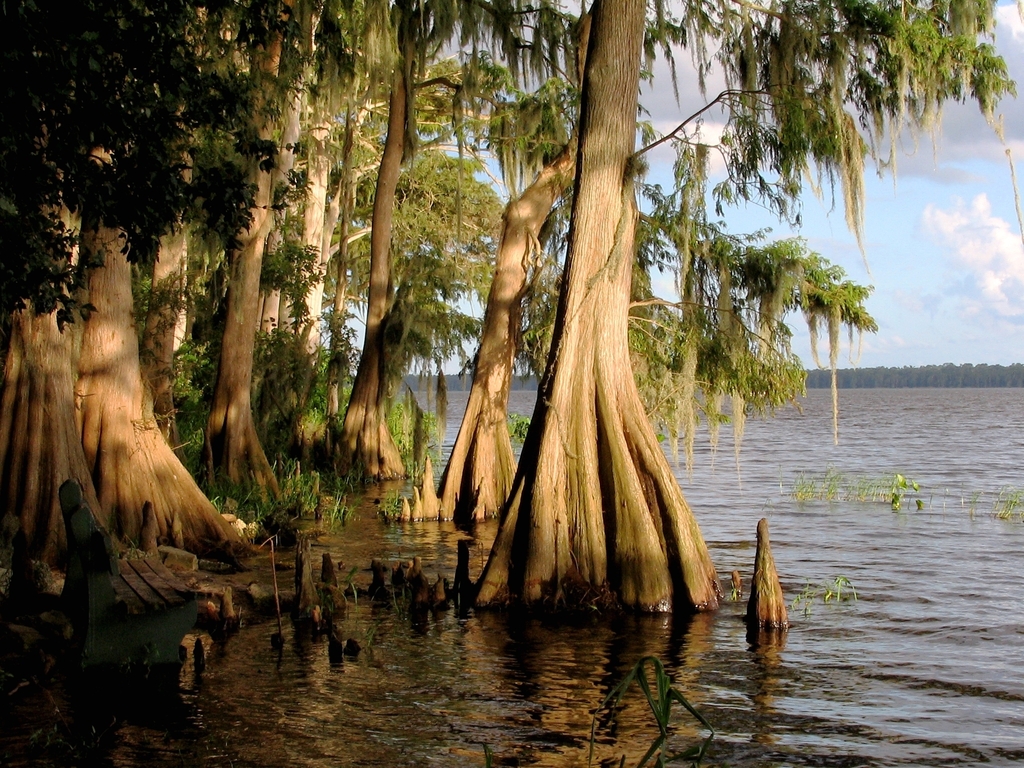
Le cyprès chauve est un conifère majestueux à feuilles caduques, connu pour sa capacité à prospérer dans les sols humides et marécageux. Il développe une forme conique unique et produit souvent des excroissances ligneuses appelées genoux lorsqu'il pousse dans l'eau. Cet arbre est un excellent choix pour les grands paysages avec des zones humides.

En un coup d'œil
- Niveau d'entretien
- Facile
- Type de plante
- Conifère
- Lumière
- Plein soleil
- Lumière en intérieur
- Soleil direct
- Arrosage
- Tous les 1 à 7 jours
- Taille adulte
- 20 à 35 mètres
- Croissance
- Moyenne
- Rusticité
- USDA 4 à 10
- Floraison
- Début du printemps
Entretien
Assurez-vous que le sol reste constamment humide, car cet arbre préfère les conditions humides. Surveillez le jaunissement des aiguilles, ce qui pourrait indiquer un besoin de plus d'eau ou de nutriments spécifiques du sol. La taille est rarement nécessaire, sauf si vous souhaitez enlever les branches mortes ou endommagées.
- Arrosage
- Gardez le sol constamment humide, voire saturé.
- Engrais
- Appliquez un engrais équilibré au début du printemps si la croissance semble lente.
- Taille
- Taille pendant la saison dormante d'hiver pour enlever le bois mort.
- Rempotage
- Rempotez uniquement s'il est cultivé en conteneur, bien qu'il soit mieux adapté à la pleine terre.
- Sol
- Sols humides, acides, sableux ou argileux
- pH du sol
- Acide à neutre
- Température
- -30 à 38°C
- Humidité
- 50 à 90%
- Résistance à la sécheresse
- Moyenne
- Durée de vie
- Vivace, vivant souvent plusieurs siècles.
- Résistance aux chevreuils et lapins
- Moyenne
Signes qu'il faut rempoter
- Des racines sortant des trous de drainage.
- L'eau traversant directement le pot sans s'infiltrer.
- L'arbre semblant stunted malgré un arrosage régulier.
Sécurité
- Humains
- Il n'y a pas de toxicité significative pour l'homme, bien que la résine puisse être collante et irritante pour les peaux sensibles.
- Enfants
- Les petits cônes ligneux peuvent présenter un risque d'étouffement s'ils sont avalés par de jeunes enfants.
- Allergènes de contact
- La résine peut provoquer une légère irritation cutanée chez certaines personnes.
- Allergènes aéroportés
- Le pollen peut être un allergène modéré pour les personnes sensibles au pollen des arbres pendant le printemps.
- Comestibilité
- Les cônes et le feuillage ne sont pas considérés comme comestibles et peuvent provoquer des troubles digestifs s'ils sont ingérés.
Comment l'identifier
- Les aiguilles caduques deviennent bronze en automne
- Écorce fibreuse, brun rougeâtre, qui s'écaille
- Port conique lorsqu'il est jeune
- Des genoux ligneux émergent du système racinaire
- Petits cônes ligneux ronds
- Hauteur
- 15 à 35m
- Envergure
- 6 à 12m
- Feuilles
- vert, bronze, caduc
- Fleurs
- jaune, vert, 0,5 à 1,5cm
- Fruits
- brun, Automne
Problèmes à surveiller
- Dessèchement des rameauxCourant
- TétranyquesCourant
- ChlorosePeu courant
- PsychésPeu courant
- Galles des rameaux de cyprès — De petites galles se forment sur les rameaux en raison de l'activité des cécidomyies, bien qu'elles nuisent rarement à la santé globale de l'arbre.
- Tétranyque des cimes de cyprès — Les larves pénètrent dans les extrémités des branches, provoquant leur brunissement et leur dépérissement.
Par symptôme
Vérifie la santé de ta plante en photo
Pocket Botanist analyse une photo de ta plante et te dit ce qui ne va pas et quoi essayer en premier.
La cultiver
- Multiplication
- semis
- Quand planter
- printemps, automne
- Hivernage
- Aucun soin particulier n'est nécessaire car il est entièrement rustique et perd naturellement ses aiguilles pour survivre à l'hiver.
- En pot
- Il est généralement trop grand pour une culture en conteneur à long terme, bien que les jeunes spécimens puissent être conservés dans de grandes cuves pendant quelques années.
Propagation par graines
- Collectez les cônes mûrs à l'automne.
- Laissez sécher les cônes jusqu'à ce qu'ils libèrent leurs graines.
- Faites tremper les graines dans de l'eau pendant quelques jours pour imiter les conditions humides.
- Semez les graines dans un mélange de terreau humide et sableux.
- Gardez le sol constamment humide jusqu'à la germination.
Regroupez cet arbre avec d'autres plantes aimant l'humidité pour créer un parterre de jardin humide cohérent et sain.
Bonnes associations
- Céphalanthus — Ils partagent un amour pour les sols humides et offrent un excellent habitat pour la faune locale.
- Asclépiade des marais — This perennial enjoys the moist margins often found near cypress trees.
Espèces similaires
- Séquoia d'eau — C'est un autre conifère à feuilles caduques qui ressemble beaucoup mais qui n'a pas les genoux emblématiques.
Science
- Famille
- Cupressaceae
- Genre
- Taxodium
- Ordre
- Pinales
- Classe
- Pinopsida
- Région d'origine
- Sud-est des États-Unis, principalement dans les zones humides et le long des berges des rivières.
- Préservation
- Il n'est actuellement pas considéré comme menacé, mais les populations sauvages sont gérées pour protéger les habitats humides.
Il prospère dans les sols saturés en développant des structures racinaires spécialisées qui l'aident à s'ancrer dans la boue et à échanger des gaz.
- Intérêt pour la faune
- site de nidification, abri pour la sauvagine
- Pollinisateurs
- abeilles
- Utilisations
- spécimen ornemental, restauration des zones humides, production de bois d'œuvre
Au fil des saisons
Repères écologiques
- Salinité
- 2/9
- Réaction du sol
- 5/9
- Lumière
- 7/9
- Température
- 6/9
- Nutriments
- 5/9
- Humidité
- 8/9
Taxonomie vérifiée avec le GBIF.
Ce qu'on demande souvent
- Dois-je avoir un marais pour le cultiver ?
- Pas du tout, il pousse en fait très bien dans un sol de jardin moyen tant qu'il reçoit suffisamment d'eau.
- Pourquoi mes aiguilles brunissent-elles à l'automne ?
- C'est un comportement tout à fait normal pour ce conifère à feuilles caduques.
D'où vient le nom
Le nom Taxodium vient du mot grec pour if, tandis que distichum fait référence à l'arrangement à deux rangées de ses aiguilles.
Bon à savoir
- Il est célèbre pour développer des excroissances ligneuses appelées genoux qui émergent des racines.
- Le bois est exceptionnellement résistant à la pourriture et était historiquement utilisé pour les bardeaux et la construction de bateaux.
- Il peut vivre plus de 500 ans dans des conditions idéales.
Garde ta plante en pleine forme
Cette page est un guide général. Enregistre ta plante dans Pocket Botanist et tu reçois des rappels d'entretien adaptés à cette plante, ainsi qu'un historique d'entretien qui montre ce qui a marché.
Ce guide a été généré par IA et vérifié avec la taxonomie du GBIF. Il s'agit d'informations générales, et non de conseils horticoles ou vétérinaires. Découvre comment nous concevons ces guides.