 Pocket Botanist
Guide botanique
French tamarisk.
Tamarix gallica
Prononciation ta-MAR-iks GAL-li-ka
Aussi appelée French tamarisk, Tamarisk, saltcedar, tamarix


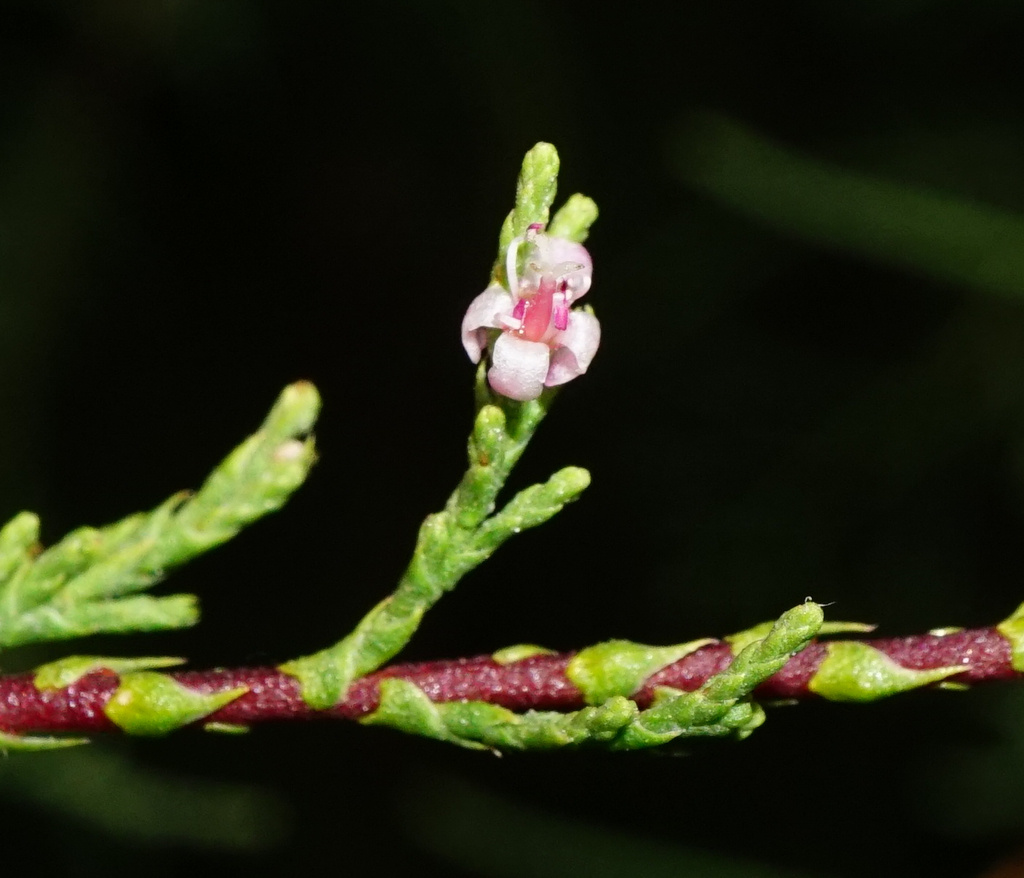
The French tamarisk is a hardy, salt tolerant shrub known for its feathery foliage and delicate pink flowers. It thrives in coastal environments and adds a soft, airy texture to any landscape. You will love how its wispy branches sway in the breeze.
En un coup d'œil
- Niveau d'entretien
- Facile
- Type de plante
- Deciduous shrub
- Lumière
- Full sun
- Lumière en intérieur
- Soleil direct
- Arrosage
- Tous les 7 à 14 jours
- Taille adulte
- 15 feet
- Croissance
- Rapide
- Rusticité
- USDA 5 à 9
- Floraison
- Late spring to late summer
Entretien
Plant this shrub in a spot with plenty of sun and well draining soil. Keep an eye out for yellowing leaves which might suggest poor drainage or too much shade. It is quite resilient once established and rarely needs fussing.
- Arrosage
- Water deeply during the first year to help the roots settle in.
- Engrais
- A light application of balanced fertilizer in early spring is plenty.
- Taille
- Prune back hard after flowering to keep the shrub dense and tidy.
- Rempotage
- Repotting is rarely needed for this plant as it prefers being in the ground.
- Sol
- Sandy or saline soils
- pH du sol
- Neutral to alkaline
- Température
- -15 à 40°C
- Humidité
- 20 à 60%
Sécurité
- Humains
- The plant is generally considered non-toxic, but it is not meant for consumption.
- Enfants
- The fine, needle-like foliage might be irritating if handled roughly by small children.
- Allergènes de contact
- The foliage can cause mild skin irritation in sensitive individuals.
- Allergènes aéroportés
- The pollen may trigger mild allergic reactions in some people during the flowering season.
- Comestibilité
- This plant is not considered edible and may cause stomach upset if ingested.
Comment l'identifier
- Feathery scale like leaves
- Tiny pink flower spikes
- Slender reddish brown branches
- Deeply furrowed gray bark
- Hauteur
- 3 à 5m
- Envergure
- 2 à 4m
- Feuilles
- blue-green, deciduous
- Fleurs
- pink, white, 0,3 à 0,5cm
Problèmes courants
- Scale insects — Small sap-sucking insects that can cause yellowing and stunted growth.
- Canker — Fungal infection causing dead patches on stems and branches.
La cultiver
- Multiplication
- cuttings, seed
- Quand planter
- spring, autumn
Pair this shrub with other salt-tolerant, sun-loving perennials to create a resilient coastal garden.
Bonnes associations
- Limonium latifolium — It shares a love for sandy, well-draining soil and coastal conditions.
- Eryngium maritimum — This companion thrives in the same sunny, dry, and salty environments.
Espèces similaires
- Tamarix ramosissima — It is a closely related species often confused with T. gallica due to similar appearance.
Science
- Famille
- Tamaricaceae
- Genre
- Tamarix
- Ordre
- Caryophyllales
- Classe
- Magnoliopsida
- Région d'origine
- Western Mediterranean and parts of Europe.
- Préservation
- It is considered invasive in some regions outside its native range, so check local regulations before planting.
It survives in harsh, saline environments by filtering salt through specialized glands on its leaves.
- Intérêt pour la faune
- nectar source
- Pollinisateurs
- abeilles, papillons
- Utilisations
- ornamental shrub, coastal windbreak, erosion control
Au fil des saisons
Repères écologiques
- Salinité
- 8/9
- Réaction du sol
- 7/9
- Lumière
- 8/9
- Température
- 6/9
- Humidité
- 3/9
- Nutriments
- 2/9
Taxonomie vérifiée avec le GBIF.
Ce qu'on demande souvent
- Does it need pruning?
- Yes, prune back hard after flowering to keep it bushy and prevent it from becoming leggy.
- Can it grow in dry soil?
- Once established, it is quite drought tolerant and thrives in poor, sandy soils.
D'où vient le nom
The name Tamarix is derived from the Tamaris River in the Pyrenees, while gallica refers to its historical range in Gaul, or modern-day France.
Bon à savoir
- It is incredibly tolerant of salt spray, making it perfect for seaside gardens.
- The feathery foliage gives the plant a soft, airy appearance.
- It was historically used to produce manna in some desert regions.
- The wood is sometimes used for small crafts.
Ta plante a mauvaise mine ?
Cette page est un guide général. Pocket Botanist diagnostique les problèmes directement à partir d'une photo de ta plante, adapte l'arrosage à sa luminosité et te prévient quand il faut t'en occuper.
Ce guide a été généré par IA et vérifié avec la taxonomie du GBIF. Il s'agit d'informations générales, et non de conseils horticoles ou vétérinaires. Découvre comment nous concevons ces guides.