 Pocket Botanist
Pflanzenratgeber
French tamarisk.
Tamarix gallica
Aussprache ta-MAR-iks GAL-li-ka
Auch bekannt als French tamarisk, Tamarisk, saltcedar, tamarix


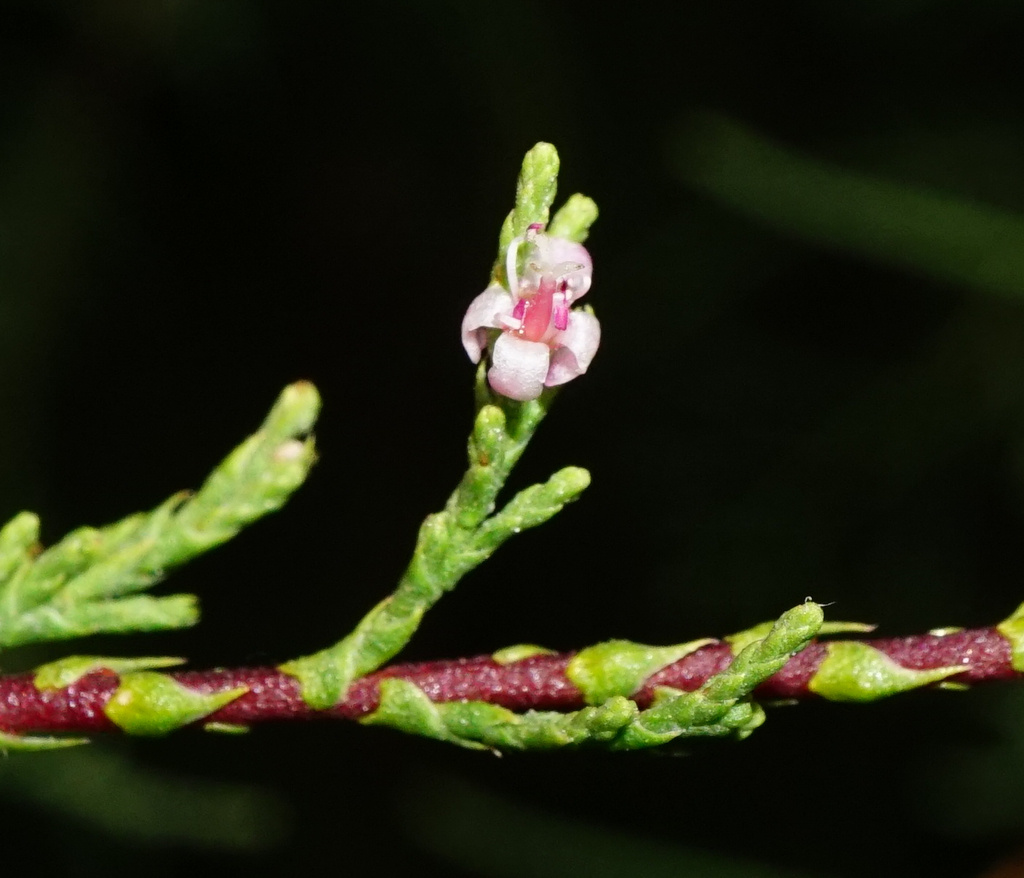
The French tamarisk is a hardy, salt tolerant shrub known for its feathery foliage and delicate pink flowers. It thrives in coastal environments and adds a soft, airy texture to any landscape. You will love how its wispy branches sway in the breeze.
Auf einen Blick
- Pflegestufe
- Einfach
- Pflanzenart
- Deciduous shrub
- Licht
- Full sun
- Licht im Innenraum
- Direkte Sonne
- Gießen
- Alle 7 bis 14 Tage
- Endgröße
- 15 feet
- Wachstum
- Schnell
- Winterhärte
- USDA 5 bis 9
- Blütezeit
- Late spring to late summer
Pflege
Plant this shrub in a spot with plenty of sun and well draining soil. Keep an eye out for yellowing leaves which might suggest poor drainage or too much shade. It is quite resilient once established and rarely needs fussing.
- Gießen
- Water deeply during the first year to help the roots settle in.
- Düngen
- A light application of balanced fertilizer in early spring is plenty.
- Schneiden
- Prune back hard after flowering to keep the shrub dense and tidy.
- Umtopfen
- Repotting is rarely needed for this plant as it prefers being in the ground.
- Boden
- Sandy or saline soils
- Boden-pH
- Neutral to alkaline
- Temperatur
- -15 bis 40°C
- Luftfeuchtigkeit
- 20 bis 60%
Sicherheit
- Menschen
- The plant is generally considered non-toxic, but it is not meant for consumption.
- Kinder
- The fine, needle-like foliage might be irritating if handled roughly by small children.
- Kontaktallergene
- The foliage can cause mild skin irritation in sensitive individuals.
- Allergene in der Luft
- The pollen may trigger mild allergic reactions in some people during the flowering season.
- Essbarkeit
- This plant is not considered edible and may cause stomach upset if ingested.
So erkennst du die Pflanze
- Feathery scale like leaves
- Tiny pink flower spikes
- Slender reddish brown branches
- Deeply furrowed gray bark
- Höhe
- 3 bis 5m
- Breite
- 2 bis 4m
- Blätter
- blue-green, deciduous
- Blüten
- pink, white, 0,3 bis 0,5cm
Häufige Probleme
- Scale insects — Small sap-sucking insects that can cause yellowing and stunted growth.
- Canker — Fungal infection causing dead patches on stems and branches.
Standort und Pflege
- Vermehrung
- cuttings, seed
- Pflanzzeit
- spring, autumn
Pair this shrub with other salt-tolerant, sun-loving perennials to create a resilient coastal garden.
Gute Pflanzpartner
- Limonium latifolium — It shares a love for sandy, well-draining soil and coastal conditions.
- Eryngium maritimum — This companion thrives in the same sunny, dry, and salty environments.
Ähnliche Arten
- Tamarix ramosissima — It is a closely related species often confused with T. gallica due to similar appearance.
Botanisches
- Familie
- Tamaricaceae
- Gattung
- Tamarix
- Ordnung
- Caryophyllales
- Klasse
- Magnoliopsida
- Ursprüngliche Heimat
- Western Mediterranean and parts of Europe.
- Artenschutz
- It is considered invasive in some regions outside its native range, so check local regulations before planting.
It survives in harsh, saline environments by filtering salt through specialized glands on its leaves.
- Nutzen für Wildtiere
- nectar source
- Bestäuber
- Bienen, Schmetterlinge
- Verwendung
- ornamental shrub, coastal windbreak, erosion control
Im Jahresverlauf
Ökologische Zeigerwerte
- Salzgehalt
- 8/9
- Bodenreaktion
- 7/9
- Licht
- 8/9
- Temperatur
- 6/9
- Feuchtigkeit
- 3/9
- Nährstoffe
- 2/9
Taxonomie abgeglichen mit GBIF.
Häufige Fragen
- Does it need pruning?
- Yes, prune back hard after flowering to keep it bushy and prevent it from becoming leggy.
- Can it grow in dry soil?
- Once established, it is quite drought tolerant and thrives in poor, sandy soils.
Woher der Name kommt
The name Tamarix is derived from the Tamaris River in the Pyrenees, while gallica refers to its historical range in Gaul, or modern-day France.
Gut zu wissen
- It is incredibly tolerant of salt spray, making it perfect for seaside gardens.
- The feathery foliage gives the plant a soft, airy appearance.
- It was historically used to produce manna in some desert regions.
- The wood is sometimes used for small crafts.
Probleme mit French tamarisk?
Diese Seite bietet allgemeine Infos. Pocket Botanist erkennt Probleme anhand eines Fotos deiner echten Pflanze, passt das Gießen an dein Licht und deinen Standort an und erinnert dich an die Pflege.
Dieser Ratgeber wurde mit KI erstellt und mit der GBIF-Taxonomie abgeglichen. Er dient zur allgemeinen Information und ersetzt keine gärtnerische oder tierärztliche Beratung. Hier erfährst du, wie wir diese Ratgeber erstellen.