 Pocket Botanist
Guide botanique
Rowan.
Sorbus aucuparia
Prononciation SOR-bus aw-kew-PAIR-ee-uh
Aussi appelée European mountain ash, European mountain-ash, Mountain Ash, Quicken-tree, Rowan



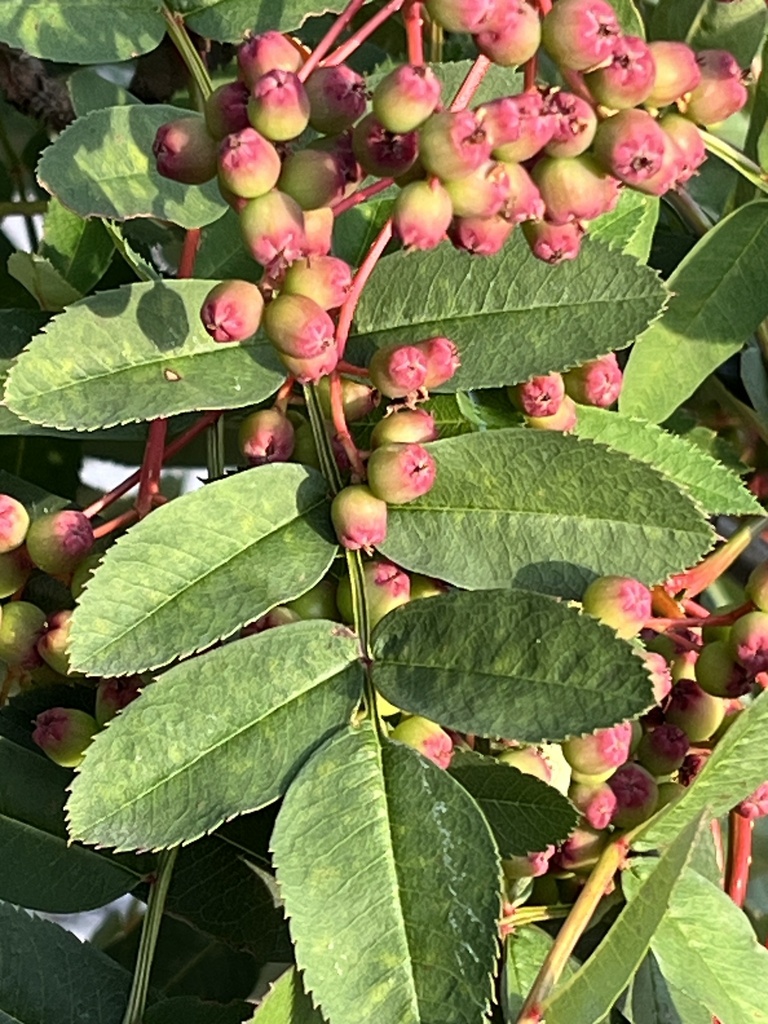
The rowan is a lovely deciduous tree known for its beautiful white spring flowers and bright red autumn berries. It is a hardy native that brings a nice touch of seasonal color to any garden. Birds absolutely love the fruit, making it a great choice for wildlife enthusiasts.
En un coup d'œil
- Niveau d'entretien
- Facile
- Type de plante
- Deciduous tree
- Lumière
- Full sun to partial shade
- Lumière en intérieur
- Lumière vive indirecte
- Arrosage
- Tous les 7 à 14 jours
- Taille adulte
- 15 meters
- Croissance
- Moyenne
- Rusticité
- USDA 3 à 7
- Floraison
- Late spring to early summer
Entretien
Plant your rowan in a spot with well draining soil and keep it moist while it gets established. Watch for signs of leaf scorch during very hot summers. Pruning is best done in winter to maintain a nice shape and remove any damaged wood.
- Arrosage
- Keep the soil consistently moist but not waterlogged during the first few years.
- Engrais
- Apply a balanced slow release fertilizer in early spring to support healthy growth.
- Taille
- Prune during the dormant winter period to remove dead or crossing branches.
- Rempotage
- If growing in a container, move to a larger pot every few years until it reaches its final size.
- Sol
- Moist but well drained
- pH du sol
- Acidic to neutral
- Température
- -35 à 30°C
- Humidité
- 40 à 70%
- Résistance à la sécheresse
- Moyenne
- Durée de vie
- Perennial, typically 50 to 100 years.
- Parfum
- Léger
- Résistance aux chevreuils et lapins
- Moyenne
Signes qu'il faut rempoter
- Roots growing out of the drainage holes.
- Water running straight through the pot.
Sécurité
- Humains
- The raw fruit is mildly toxic if ingested in large quantities due to parasorbic acid.
- Enfants
- The bright red berries may look tempting to small children and should be kept out of reach to prevent accidental ingestion.
- Allergènes de contact
- The leaves and bark are generally non-irritating to the skin.
- Allergènes aéroportés
- The pollen can be a mild allergen for sensitive individuals during the flowering period.
- Comestibilité
- The raw berries contain parasorbic acid which can cause stomach upset, though cooking renders them safe.
Comment l'identifier
- Pinnate leaves with serrated edges
- Clusters of small white flowers
- Bright red berry like fruits
- Smooth grey bark on young stems
- Hauteur
- 8 à 15m
- Envergure
- 4 à 8m
- Feuilles
- green, deciduous
- Fleurs
- white, 0,5 à 1cm
- Fruits
- red, orange, Late summer to autumn
Problèmes courants
- Fire blight — A bacterial infection causing scorched looking leaves and branches.
- Aphids — Small insects that suck sap from new growth.
La cultiver
- Multiplication
- seed, cuttings
- Quand planter
- spring, autumn
- Hivernage
- No special winter care is needed as it is fully hardy. Ensure the base is clear of debris to prevent fungal issues.
- En pot
- It is not well suited for long term container growth due to its large size.
Seed
- 1. Collect ripe berries in autumn.
- 2. Clean the seeds from the pulp.
- 3. Sow in pots outdoors to cold stratify over winter.
Plant in groups with other native woodland trees to create a naturalistic habitat for local birds.
Bonnes associations
- Common Hawthorn — They share similar soil and light requirements in woodland settings.
- Silver Birch — These trees often grow together in natural forest clearings.
Espèces similaires
- Amelanchier lamarckii — It offers a similar habit and bird-friendly fruit.
Science
- Famille
- Rosaceae
- Genre
- Sorbus
- Ordre
- Rosales
- Classe
- Magnoliopsida
- Région d'origine
- Europe and parts of Asia.
- Préservation
- This species is common and not of conservation concern.
It thrives in woodland edges and mountain slopes where it can access sufficient light.
- Intérêt pour la faune
- nectar source, bird food source
- Pollinisateurs
- abeilles, papillons
- Utilisations
- ornamental tree, wildlife garden, culinary jellies
Au fil des saisons
Repères écologiques
- Salinité
- 2/9
- Réaction du sol
- 5/9
- Lumière
- 6/9
- Température
- 4/9
- Humidité
- 5/9
- Nutriments
- 4/9
Taxonomie vérifiée avec le GBIF.
Ce qu'on demande souvent
- Can I eat the berries raw?
- It is best to avoid eating them raw as they can cause digestive distress.
- Does it need a lot of water?
- It prefers moist but well drained soil and does not like to sit in water.
D'où vient le nom
The name Sorbus is the ancient Latin name for the tree, while aucuparia means bird-catching, referring to the use of berries as bait.
Bon à savoir
- It is often called the rowan tree in folklore.
- Ancient traditions suggest planting it near homes for protection.
- The wood is very tough and was historically used for tool handles.
Ta plante a mauvaise mine ?
Cette page est un guide général. Pocket Botanist diagnostique les problèmes directement à partir d'une photo de ta plante, adapte l'arrosage à sa luminosité et te prévient quand il faut t'en occuper.
Ce guide a été généré par IA et vérifié avec la taxonomie du GBIF. Il s'agit d'informations générales, et non de conseils horticoles ou vétérinaires. Découvre comment nous concevons ces guides.