 Pocket Botanist
Guide botanique
Field madder.
Sherardia arvensis
Prononciation sheh-RAR-dee-uh ar-VEN-sis
Aussi appelée Blue Field-madder, Blue Fieldmadder, Field Madder, Herb-sherard


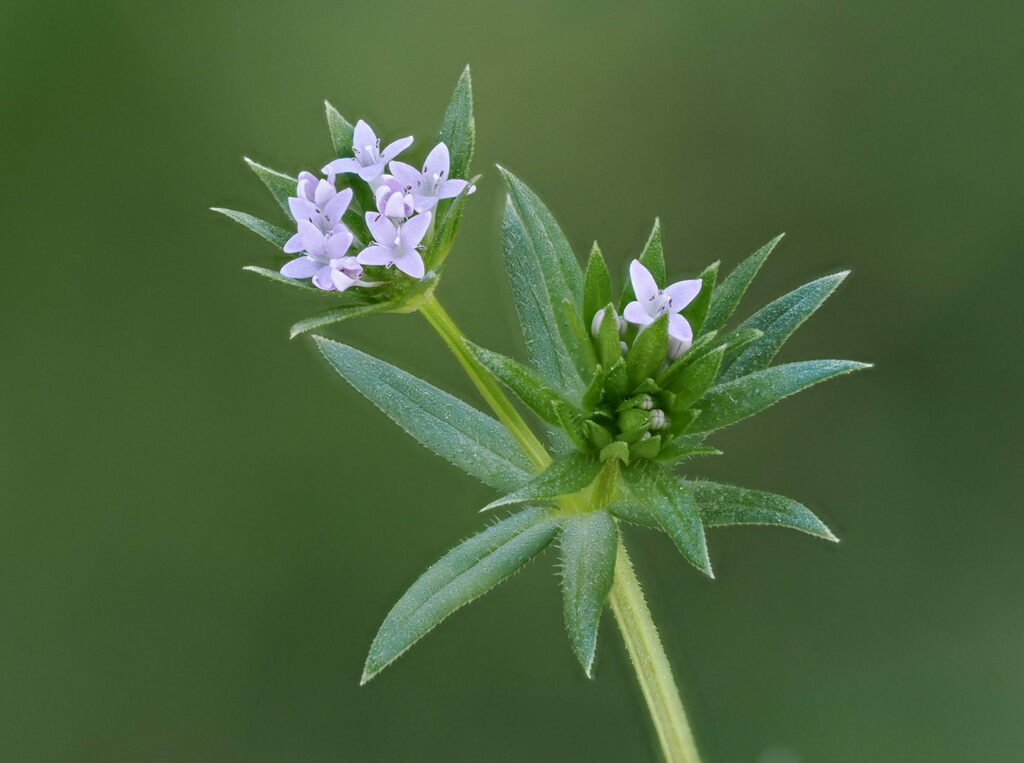
Field madder is a charming little annual that often pops up in fields and gardens as a weed. It features delicate, star shaped whorls of leaves and tiny, pale pink or lilac flowers. You will find it thrives in disturbed soil and open, sunny spots.

En un coup d'œil
- Niveau d'entretien
- Facile
- Type de plante
- Annual herb
- Lumière
- Full sun to partial shade
- Lumière en intérieur
- Soleil direct
- Arrosage
- Tous les 3 à 7 jours
- Taille adulte
- 15 cm
- Croissance
- Rapide
- Rusticité
- USDA 5 à 9
- Floraison
- Late spring to early autumn
Entretien
This plant is quite resilient and usually takes care of itself in its natural habitat. Keep an eye on soil moisture to ensure it does not dry out completely during germination. If you are growing it intentionally, just make sure it has plenty of space to spread.
- Arrosage
- Keep the soil consistently moist but not waterlogged while the plant is establishing.
- Engrais
- This plant generally does not require supplemental fertilizer when grown in garden soil.
- Taille
- Deadhead spent flowers if you want to prevent it from spreading seeds throughout your garden.
- Rempotage
- As an annual, this plant completes its life cycle in one season and does not require repotting.
- Sol
- Well draining sandy or loamy soil
- pH du sol
- Neutral to slightly alkaline
- Température
- -15 à 30°C
- Humidité
- 40 à 70%
- Résistance à la sécheresse
- Moyenne
- Durée de vie
- Annual, typically 1 year
- Résistance aux chevreuils et lapins
- Moyenne
Sécurité
- Humains
- There are no reports of significant toxicity to humans.
- Enfants
- The small size and delicate nature of this plant make it unlikely to pose a choking hazard, but ingestion should be avoided.
- Comestibilité
- This plant is not considered edible and should be avoided.
Comment l'identifier
- Square stems with rough edges
- Whorls of six narrow leaves
- Tiny pale pink or lilac flowers
- Small fruit with persistent calyx teeth
- Hauteur
- 0,05 à 0,2m
- Envergure
- 0,1 à 0,3m
- Feuilles
- green, deciduous
- Fleurs
- pink, lilac, 0,2 à 0,4cm
- Fruits
- brown, late summer
Problèmes courants
- Aphids — Small insects that may cluster on new growth.
La cultiver
- Multiplication
- seed
- Quand planter
- spring, autumn
- Hivernage
- As an annual, the plant completes its life cycle in one season and does not require special winter care.
- En pot
- It grows well in shallow containers but is best suited for open ground.
Seed
- 1. Collect seeds in late summer.
- 2. Sow directly into prepared soil in autumn or spring.
- 3. Keep the soil lightly moist until germination.
Plant this in areas where you want a low growing carpet to suppress other opportunistic weeds.
Bonnes associations
- Field Poppy — They share similar requirements for disturbed, sunny soil.
- Cornflower — They make excellent companions in a traditional wildflower meadow.
Espèces similaires
- Cleavers — They are related and share a similar leaf structure.
Science
- Famille
- Rubiaceae
- Genre
- Sherardia
- Ordre
- Gentianales
- Classe
- Magnoliopsida
- Région d'origine
- Europe, Western Asia, and North Africa.
- Préservation
- It is a common weed and is not of conservation concern.
It thrives in open, sunny, and disturbed habitats where competition from taller plants is low.
- Intérêt pour la faune
- nectar source
- Pollinisateurs
- abeilles, papillons
- Utilisations
- ground cover, wildflower meadow filler
Au fil des saisons
Repères écologiques
- Salinité
- 1/9
- Réaction du sol
- 6/9
- Lumière
- 7/9
- Température
- 5/9
- Humidité
- 4/9
- Nutriments
- 4/9
Taxonomie vérifiée avec le GBIF.
Ce qu'on demande souvent
- Is it a perennial?
- It is typically an annual plant.
- Does it spread easily?
- Yes, it produces seeds that germinate readily in open soil.
D'où vient le nom
The genus honors the English botanist William Sherard, while the species name arvensis refers to its tendency to grow in fields.
Bon à savoir
- It is commonly known as field madder.
- The plant often grows in disturbed soils.
- It has a sprawling habit that creates a nice mat.
Ta plante a mauvaise mine ?
Cette page est un guide général. Pocket Botanist diagnostique les problèmes directement à partir d'une photo de ta plante, adapte l'arrosage à sa luminosité et te prévient quand il faut t'en occuper.
Ce guide a été généré par IA et vérifié avec la taxonomie du GBIF. Il s'agit d'informations générales, et non de conseils horticoles ou vétérinaires. Découvre comment nous concevons ces guides.