 Pocket Botanist
Guide botanique
cactus de Noël.
Schlumbergera buckleyi
Prononciation shlum-BER-ger-uh buck-LEE-eye
Aussi appelée cactus de Noël


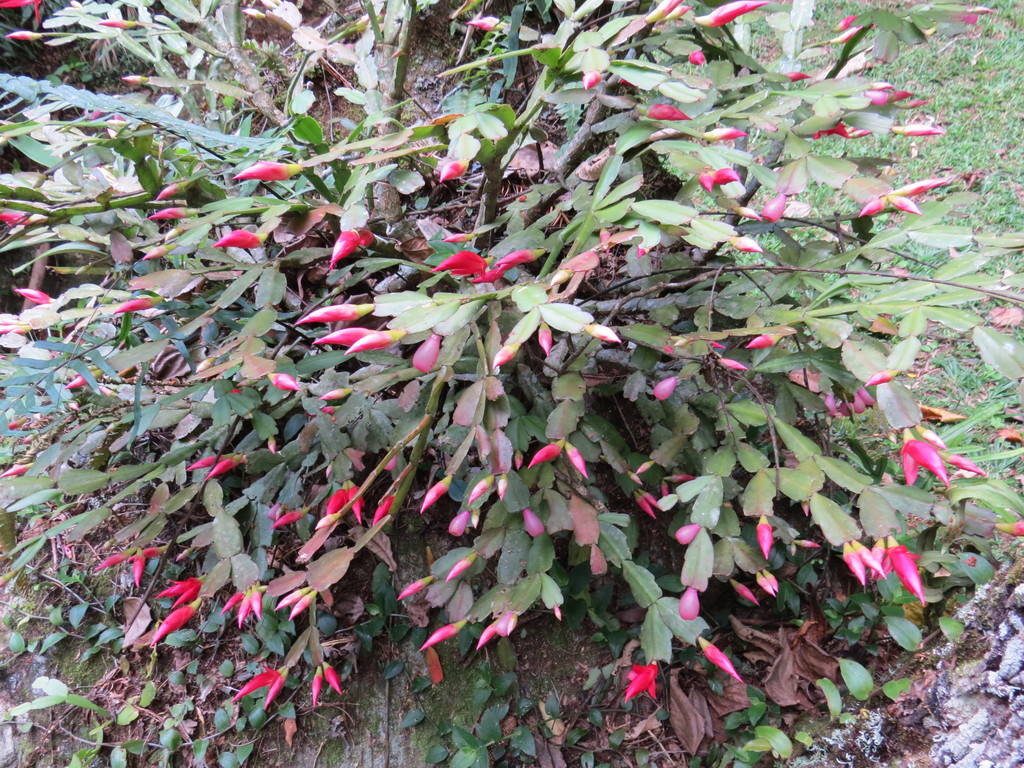
Le cactus de Noël est une jolie plante succulente qui produit des fleurs tubulaires vibrantes pendant les mois d'hiver. C'est un habitant des forêts qui préfère des conditions différentes de celles de votre cactus du désert typique. Vous constaterez que c'est une superbe plante retombante pour un endroit lumineux de votre maison.
En un coup d'œil
- Niveau d'entretien
- Facile
- Type de plante
- Succulente épiphyte
- Lumière
- Une lumière vive et indirecte est préférable pour éviter de brûler les tiges.
- Lumière en intérieur
- Lumière vive indirecte
- Arrosage
- Tous les 7 à 14 jours
- Taille adulte
- 1 à 2 pieds de haut et de large
- Croissance
- Moyenne
- Rusticité
- USDA 10 à 12
- Floraison
- Fin de l'automne au début de l'hiver
Entretien
Gardez le sol légèrement humide pendant la floraison, mais laissez la couche supérieure sécher entre les arrosages. Surveillez les tiges ratatinées qui indiquent qu'elle a besoin de plus d'eau, ou les tiges molles qui suggèrent une pourriture des racines due à un arrosage excessif. Elle préfère les températures plus fraîches pour former ses boutons floraux en automne.
- Arrosage
- Arrosez lorsque le pouce supérieur de terre est sec au toucher.
- Engrais
- Utilisez un engrais liquide équilibré pendant la saison de croissance active.
- Taille
- Taille les tiges après la floraison pour encourager une forme plus touffue.
- Rempotage
- Rempotez uniquement lorsque la plante est à l'étroit dans son conteneur.
- Sol
- Mélange de terreau à base de tourbe bien drainant
- pH du sol
- 5.5 à 6.2
- Température
- 10 à 24°C
- Humidité
- 50 à 70%
- Résistance à la sécheresse
- Moyenne
- Durée de vie
- Plante vivace, généralement 20 à 30 ans
- Résistance aux chevreuils et lapins
- Moyenne
Signes qu'il faut rempoter
- Les racines sortent des trous de drainage.
- L'eau traverse le pot sans s'infiltrer.
- Croissance ralentie malgré des soins appropriés.
Sécurité
- Humains
- La plante est généralement considérée comme non toxique, mais son ingestion peut néanmoins entraîner une légère irritation de l'estomac.
- Animaux
- Cette plante est non toxique pour les chats et les chiens.
- Enfants
- Les tiges peuvent être cassantes et se briser facilement, alors gardez-la hors de portée des tout-petits curieux.
- Allergènes de contact
- Aucun irritant cutané significatif connu n'est associé à cette plante.
- Allergènes aéroportés
- Aucun allergène aéroporté significatif connu n'est associé à cette plante.
- Comestibilité
- Cette plante n'est pas considérée comme comestible et son ingestion peut provoquer des troubles gastro-intestinaux.
Comment l'identifier
- Tiges vertes segmentées et aplaties
- Bords de tige lisses et arrondis
- Fleurs tubulaires, multicouches
- Les fleurs apparaissent aux extrémités des tiges
- Hauteur
- 0,3 à 0,6m
- Envergure
- 0,3 à 0,6m
- Feuilles
- vert, persistant
- Fleurs
- rose, rouge, magenta, 5 à 8cm
Problèmes à surveiller
- Chute des boutons florauxCourant
- Cochenilles farineusesCourant
- Pourriture des racinesCourant
- Brûlures du feuillagePeu courant
- Mouches du terreauPeu courant
- TétranyquesPeu courant
- Cochenilles — Petits insectes blancs cotonneux qui se nourrissent de la sève de la plante.
Vérifie la santé de ta plante en photo
Pocket Botanist analyse une photo de ta plante et te dit ce qui ne va pas et quoi essayer en premier.
La cultiver
- Multiplication
- boutures
- Quand planter
- printemps
- Hivernage
- Conserver la plante dans un endroit frais et lumineux, à l'abri des courants d'air et des chauffages. Réduire considérablement l'arrosage pendant les mois d'hiver.
- En pot
- Elle pousse magnifiquement dans des paniers suspendus ou des pots avec un excellent drainage, nécessitant un conteneur d'au moins 15 cm.
Boutures de tige
- Tordre un segment en Y à l'extrémité d'une tige.
- Laisser sécher l'extrémité coupée un jour ou deux jusqu'à ce qu'elle forme un cal.
- Insérer l'extrémité cicatrisée dans un terreau humide et bien drainé.
- Garder le sol légèrement humide jusqu'à l'apparition de nouvelles pousses.
Regroupez les plantes ayant des besoins en eau similaires pour maintenir un microclimat constant.
Bonnes associations
- Spathiphyllum — Ils partagent des exigences similaires en matière de lumière indirecte et d'humidité constante.
- Pothos doré — Les deux plantes prospèrent dans des environnements intérieurs et des niveaux d'humidité similaires.
Espèces similaires
- Schlumbergera truncata — Il a des segments de tige plus pointus par rapport aux bords arrondis du cactus de Noël.
- Hatiora gaertneri — Il fleurit au printemps et a des fleurs en forme d'étoile plutôt que tubulaires.
Science
- Famille
- Cactaceae
- Genre
- Schlumbergera
- Ordre
- Caryophyllales
- Classe
- Magnoliopsida
- Région d'origine
- Montagnes côtières du sud-est du Brésil.
- Préservation
- Cet hybride est largement cultivé et n'est pas une préoccupation de conservation à l'état sauvage.
Il pousse en épiphyte dans les canopées forestières humides et ombragées où il capte l'humidité de l'air.
- Intérêt pour la faune
- source de nectar
- Pollinisateurs
- colibris
- Utilisations
- plante d'intérieur, spécimen en suspension
Au fil des saisons
Repères écologiques
- Humidité
- 5/9
- Salinité
- 1/9
- Réaction du sol
- 5/9
- Lumière
- 4/9
- Nutriments
- 3/9
- Température
- 7/9
Taxonomie vérifiée avec le GBIF.
Ce qu'on demande souvent
- Pourquoi les feuilles se flétrissent-elles ?
- Il est probablement assoiffé ou souffre de dommages aux racines dus à un mauvais drainage.
- Comment le faire fleurir ?
- Fournissez 12 à 14 heures d'obscurité totale chaque nuit pendant 6 semaines en automne.
D'où vient le nom
Le genre honore le collectionneur français Frédéric Schlumberger, tandis que le nom de l'espèce commémore William Buckley qui a créé l'hybride.
Bon à savoir
- Il est communément appelé cactus de Noël.
- Il a besoin de jours plus courts et de nuits plus fraîches pour déclencher la formation de bourgeons floraux.
- Les tiges sont en fait des branches modifiées appelées cladodes.
- C'est une épiphyte qui pousse sur les arbres dans son habitat d'origine.
- Il peut vivre plusieurs décennies avec des soins appropriés.
Garde ta plante en pleine forme
Cette page est un guide général. Enregistre ta plante dans Pocket Botanist et tu reçois des rappels d'entretien adaptés à cette plante, ainsi qu'un historique d'entretien qui montre ce qui a marché.
Ce guide a été généré par IA et vérifié avec la taxonomie du GBIF. Il s'agit d'informations générales, et non de conseils horticoles ou vétérinaires. Découvre comment nous concevons ces guides.