 Pocket Botanist
Guide botanique
Philodendron grimpant.
Philodendron hederaceum var. hederaceum
Prononciation fil-oh-DEN-dron hed-er-AY-see-um
Aussi appelée Philodendron hederaceum var. hederaceum, Plante coeur, vilevine



Le philodendron grimpant est une plante d'intérieur retombante classique, incroyablement facile à cultiver. Il présente de charmantes feuilles en forme de cœur qui sont magnifiques lorsqu'elles tombent d'une suspension ou grimpent sur un petit treillis. Cette plante est une favorite des débutants car elle est très indulgente.
En un coup d'œil
- Niveau d'entretien
- Facile
- Type de plante
- Liane à feuilles persistantes
- Lumière
- La lumière vive et indirecte est idéale, mais il tolère bien les faibles niveaux de lumière.
- Lumière en intérieur
- Lumière moyenne
- Arrosage
- Tous les 7 à 14 jours
- Taille adulte
- Les lianes peuvent atteindre 1 à 3 mètres de long.
- Croissance
- Rapide
- Rusticité
- USDA 11 à 12
- Floraison
- Fleurit rarement à l'intérieur, mais peut fleurir au printemps ou en été dans des conditions idéales.
Entretien
Laissez sécher le premier à deux centimètres de terre entre deux arrosages pour que les racines restent heureuses. Surveillez les feuilles jaunissantes, qui signalent souvent un arrosage excessif. Essuyez les feuilles de temps en temps pour les garder sans poussière et en bonne santé.
- Arrosage
- Arrosez lorsque la couche supérieure du sol est sèche au toucher.
- Engrais
- Nourrissez avec un engrais liquide équilibré pendant la saison de croissance.
- Taille
- Taillez les longues tiges pour encourager une apparence plus touffue.
- Rempotage
- Rempotez lorsque la plante devient à l'étroit dans son pot ou que la croissance ralentit de façon significative.
- Sol
- Mélange de terreau bien drainant à base de tourbe.
- pH du sol
- 6.0 à 7.0
- Température
- 15 à 27°C
- Humidité
- 50 à 70%
- Résistance à la sécheresse
- Moyenne
- Durée de vie
- Plante vivace, généralement de 5 à 10 ans.
- Résistance aux chevreuils et lapins
- Faible
Signes qu'il faut rempoter
- Les racines sortent des trous de drainage.
- L'eau traverse directement le pot sans s'infiltrer.
- Croissance ralentie pendant la saison active.
Sécurité
- Humains
- La plante contient des cristaux d'oxalate de calcium qui provoquent une irritation si ingérés ou manipulés par des personnes à la peau sensible.
- Animaux
- Cette plante est toxique pour les chats et les chiens en cas d'ingestion.
- Enfants
- Gardez cette plante hors de portée des enfants, car l'ingestion des feuilles peut provoquer un gonflement douloureux de la bouche et de la gorge.
- Allergènes de contact
- La sève peut provoquer une légère irritation cutanée ou une dermatite chez les personnes sensibles.
- Allergènes aéroportés
- Il n'y a pas d'allergènes respiratoires notables associés à cette plante.
- Comestibilité
- Cette plante n'est pas destinée à la consommation et peut provoquer une grave irritation buccale.
Comment l'identifier
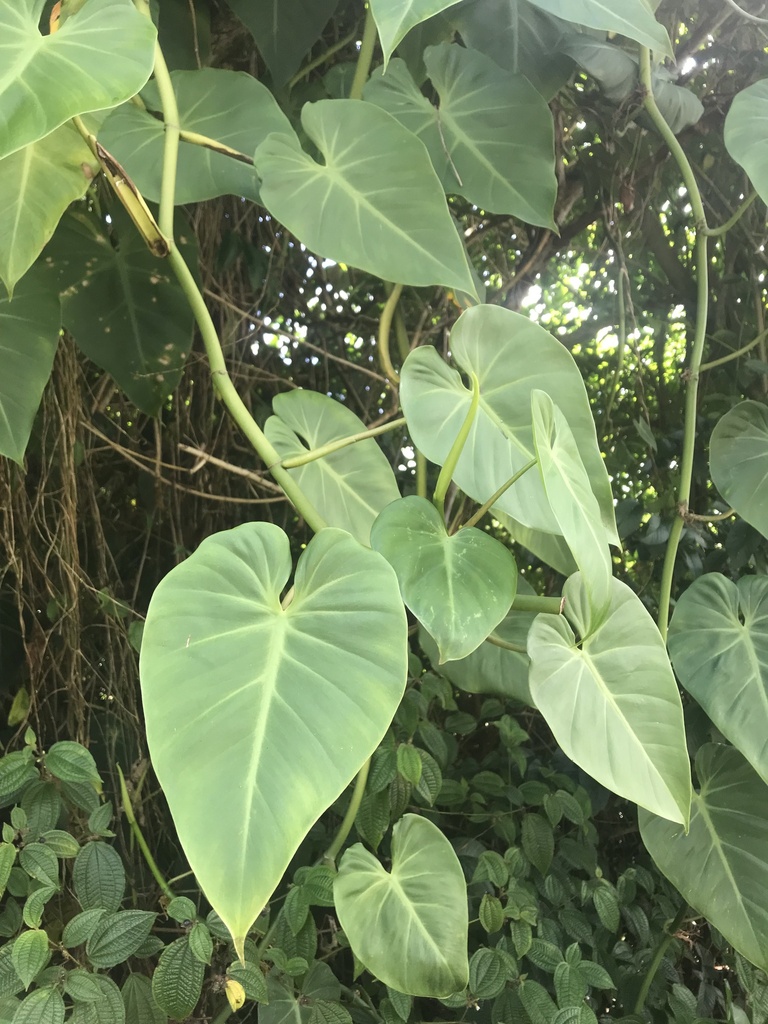
- Feuilles vertes en forme de cœur
- Port retombant ou grimpant
- Tiges grimpantes avec racines aériennes
- Texture de feuille lisse
- Hauteur
- 0,3 à 3m
- Envergure
- 0,3 à 1m
- Feuilles
- vert foncé, vert citron, evergreen
- Fleurs
- blanc, vert, 5 à 10cm
- Fruits
- blanc
Problèmes à surveiller
- Brunissement du bord des feuillesCourant
- Pourriture des racinesCourant
- TétranyquesCourant
- Chute des feuillesPeu courant
- Cochenilles farineusesPeu courant
- Mouches du terreauPeu courant
- Acariens — De minuscules parasites qui causent des taches sur les feuilles et une fine toile.
Par symptôme
Vérifie la santé de ta plante en photo
Pocket Botanist analyse une photo de ta plante et te dit ce qui ne va pas et quoi essayer en premier.
La cultiver
- Multiplication
- boutures, division
- Quand planter
- printemps, été
- Hivernage
- Rentrez la plante à l'intérieur si les températures descendent en dessous de 15 degrés Celsius. Réduisez l'arrosage pendant les mois d'hiver lorsque la croissance ralentit.
- En pot
- Elle prospère en pots et est parfaite pour les paniers suspendus ou les pots d'une taille minimale de 15 centimètres.
Boutures de tige
- 1. Coupez une section de tige avec au moins deux nœuds.
- 2. Placez la bouture dans un bocal d'eau ou un sol humide.
- 3. Attendez que les racines atteignent 5 centimètres avant de planter.
Regroupez les plantes ayant des besoins en eau similaires pour faciliter l'entretien.
Bonnes associations
- Spathiphyllum — Ils partagent des exigences similaires en matière de lumière et d'humidité.
- Pothos doré — Ils sont superbes ensemble dans des contenants mélangés.
Espèces similaires
- Pothos doré — Souvent confondus en raison de leurs habitudes de croissance retombante similaires.
Science
- Famille
- Araceae
- Genre
- Philodendron
- Ordre
- Alismatales
- Classe
- Liliopsida
- Région d'origine
- Amérique centrale et du Sud.
- Préservation
- Cette espèce est commune et ne suscite aucune préoccupation en matière de conservation.
Il pousse comme épiphyte ou hémépiphyte dans les forêts tropicales humides, grimpant aux arbres pour atteindre la lumière.
- Intérêt pour la faune
- source de nectar
- Pollinisateurs
- abeilles, coléoptères
- Utilisations
- plante d'intérieur, panier suspendu, feuillage retombant
Au fil des saisons
Repères écologiques
- Réaction du sol
- 6/9
- Lumière
- 3/9
- Humidité
- 5/9
- Nutriments
- 4/9
- Salinité
- 1/9
- Température
- 8/9
Taxonomie vérifiée avec le GBIF.
Ce qu'on demande souvent
- Pourquoi mes feuilles jaunissent-elles ?
- Les feuilles jaunissantes indiquent souvent un arrosage excessif ou un mauvais drainage.
- A-t-il besoin de soleil direct ?
- Non, il préfère une lumière vive et indirecte.
D'où vient le nom
Le nom Philodendron vient des mots grecs philo signifiant amour et dendron signifiant arbre, faisant référence à son habitude de grimper.
Bon à savoir
- C'est l'une des plantes d'intérieur les plus populaires au monde.
- Les feuilles sont naturellement en forme de cœur.
- Il peut être cultivé dans l'eau pendant de longues périodes.
- C'est une plante grimpante qui peut s'accrocher si on lui donne un support.
Aussi dans
Garde ta plante en pleine forme
Cette page est un guide général. Enregistre ta plante dans Pocket Botanist et tu reçois des rappels d'entretien adaptés à cette plante, ainsi qu'un historique d'entretien qui montre ce qui a marché.
Ce guide a été généré par IA et vérifié avec la taxonomie du GBIF. Il s'agit d'informations générales, et non de conseils horticoles ou vétérinaires. Découvre comment nous concevons ces guides.