 Pocket Botanist
Guía de plantas
Filodendro de hoja de corazón.
Philodendron hederaceum var. hederaceum
Pronunciación fil-oh-DEN-dron hed-er-AY-see-um
También se conoce como Philodendron hederaceum var. hederaceum, Planta corazón, enredadera vil



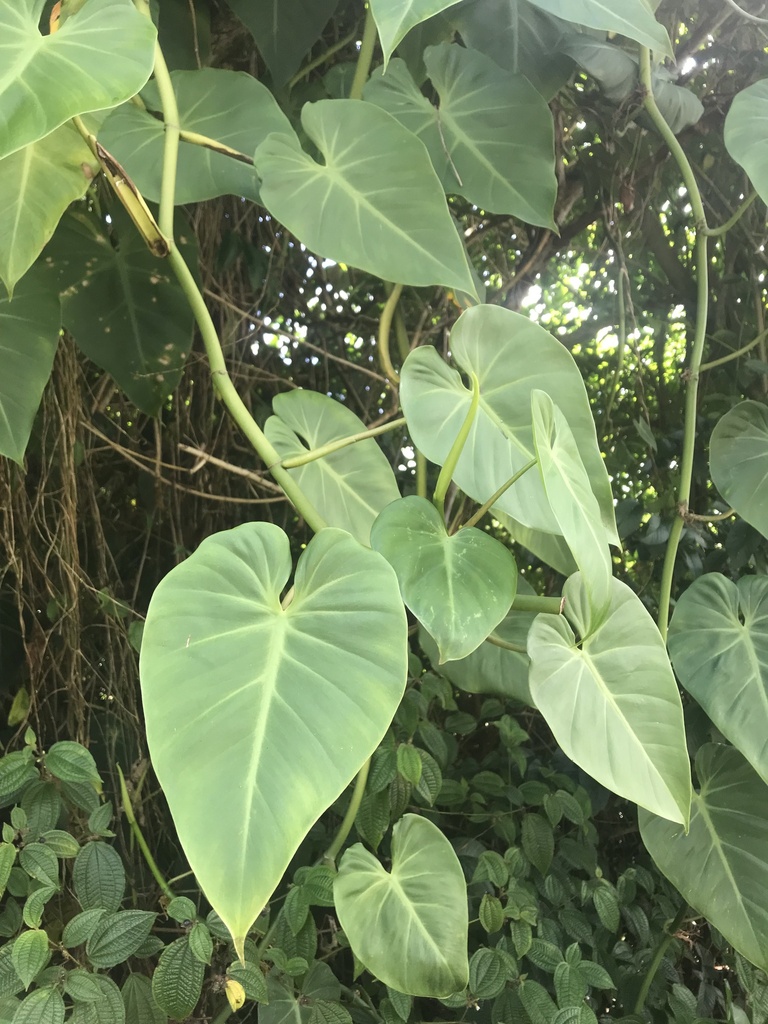
El filodendro de hoja de corazón es una planta de interior clásica y rastrera que es increíblemente fácil de cultivar. Presenta encantadoras hojas en forma de corazón que lucen preciosas cayendo de una maceta colgante o trepando por un pequeño enrejado. Esta planta es una favorita para principiantes porque es muy tolerante.
De un vistazo
- Nivel de cuidados
- Fácil
- Tipo de planta
- Enredadera perenne
- Luz
- La luz brillante indirecta es la mejor, pero tolera bien los niveles de luz más bajos.
- Luz en interior
- Luz media
- Riego
- Cada 7 a 14 días
- Tamaño adulto
- Las enredaderas pueden alcanzar de 1 a 3 metros de longitud.
- Ritmo de crecimiento
- Rápido
- Rusticidad
- USDA 11 a 12
- Floración
- Raramente florece en interiores, pero puede florecer en primavera o verano en condiciones ideales.
Cuidados
Deja que la pulgada o dos superiores de tierra se sequen entre riegos para mantener las raíces contentas. Vigila las hojas amarillas, que a menudo indican un riego excesivo. Limpia las hojas ocasionalmente para mantenerlas libres de polvo y saludables.
- Riego
- Riega cuando la capa superior de la tierra se sienta seca al tacto.
- Abonado
- Alimenta con un fertilizante líquido equilibrado durante la temporada de crecimiento.
- Poda
- Poda los tallos largos para fomentar una apariencia más frondosa.
- Trasplante
- Trasplanta cuando la planta tenga las raíces apretadas o el crecimiento se ralentice significativamente.
- Suelo
- Sustrato para macetas a base de turba bien drenado.
- pH del suelo
- 6.0 a 7.0
- Temperatura
- 15 a 27°C
- Humedad
- 50 a 70%
- Tolerancia a la sequía
- Moderada
- Longevidad
- Perenne, típicamente de 5 a 10 años.
- Resistencia a ciervos y conejos
- Baja
Señales de que necesita trasplante
- Raíces que crecen por los agujeros de drenaje.
- El agua pasa directamente a través de la maceta sin empaparse.
- Crecimiento atrofiado durante la temporada activa.
Seguridad
- Personas
- La planta contiene cristales de oxalato de calcio que causan irritación si se ingieren o se manipulan con piel sensible.
- Mascotas
- Esta planta es tóxica para gatos y perros si se ingiere.
- Niños
- Mantenga esta planta fuera del alcance de los niños, ya que la ingestión de las hojas puede causar hinchazón dolorosa de la boca y la garganta.
- Alérgenos por contacto
- La savia puede causar irritación leve de la piel o dermatitis en personas sensibles.
- Alérgenos en el aire
- No hay alérgenos respiratorios notables asociados con esta planta.
- Comestibilidad
- Esta planta no es para el consumo y puede causar una severa irritación bucal.
Cómo identificarla
- Hojas verdes en forma de corazón
- Hábito de crecimiento rastrero o trepador
- Tallos enredados con raíces aéreas
- Textura de hoja lisa
- Altura
- 0,3 a 3m
- Anchura
- 0,3 a 1m
- Hojas
- verde oscuro, verde lima, perenne
- Flores
- blanco, verde, 5 a 10cm
- Frutos
- blanco
Problemas a vigilar
- Araña rojaComún
- Bordes marrones en las hojasComún
- Podredumbre radicularComún
- Caída de hojasPoco común
- Cochinillas algodonosasPoco común
- Moscas del mantilloPoco común
- Ácaros araña — Pequeñas plagas que causan punteado en las hojas y finas telarañas.
- Pudrición de raíz — Generalmente causado por riego excesivo y mal drenaje.
Por síntoma
Revisa tu filodendro de hoja de corazón con una foto
Pocket Botanist mira una foto de tu planta y te dice qué le pasa y qué probar primero.
Cómo cultivarla
- Propagación
- esquejes, división
- Cuándo plantar
- primavera, verano
- Cuidados en invierno
- Traiga la planta al interior si las temperaturas bajan de 15 grados Celsius. Reduzca el riego durante los meses de invierno, cuando el crecimiento se ralentiza.
- En maceta
- Prospera en macetas y es perfecta para macetas colgantes o macetas de un tamaño mínimo de 15 centímetros.
Esquejes de tallo
- 1. Corte una sección de tallo con al menos dos nudos.
- 2. Coloque el esqueje en un frasco con agua o tierra húmeda.
- 3. Espere a que las raíces crezcan hasta 5 centímetros antes de plantar.
Agrupe plantas con necesidades de agua similares para facilitar el mantenimiento.
Buenas compañeras
- Spathiphyllum — Comparten requisitos similares de luz y humedad.
- Potos dorado — Se ven geniales juntos en macetas mixtas.
Especies parecidas
- Potos dorado — A menudo se confunden debido a hábitos de crecimiento colgante similares.
Ciencia
- Familia
- Araceae
- Género
- Philodendron
- Orden
- Alismatales
- Clase
- Liliopsida
- Distribución natural
- América Central y del Sur.
- Conservación
- Esta especie es común y no es motivo de preocupación para la conservación.
Crece como epífita o hemiepífita en selvas tropicales, trepando árboles para alcanzar la luz.
- Valor para la fauna
- fuente de néctar
- Polinizadores
- abejas, escarabajos
- Usos
- planta de interior, maceta colgante, follaje colgante
A lo largo del año
Indicadores ecológicos
- Reacción del suelo
- 6/9
- Luz
- 3/9
- Humedad
- 5/9
- Nutrientes
- 4/9
- Salinidad
- 1/9
- Temperatura
- 8/9
Taxonomía cotejada con GBIF.
Lo que más preguntan
- ¿Por qué se ponen amarillas mis hojas?
- Las hojas amarillas a menudo indican riego excesivo o mal drenaje.
- ¿Necesita sol directo?
- No, prefiere luz brillante e indirecta.
De dónde viene el nombre
El nombre Filodendro proviene de las palabras griegas 'philo' que significa amor y 'dendron' que significa árbol, refiriéndose a su hábito de trepar.
Bueno saberlo
- Es una de las plantas de interior más populares del mundo.
- Las hojas tienen forma de corazón de forma natural.
- Se puede cultivar en agua durante largos períodos.
- Es una planta trepadora que puede trepar si se le proporciona un soporte.
También en
Que tu filodendro de hoja de corazón siga creciendo
Esta página es una guía general. Guarda tu planta en Pocket Botanist y tendrás recordatorios de cuidado pensados para esta planta, además de un historial de cuidados que muestra qué ha funcionado.
Esta guía se ha generado con IA y se ha cotejado con la taxonomía de GBIF. Es información general, no asesoramiento botánico ni veterinario. Descubre cómo elaboramos estas guías.