 Pocket Botanist
Guide botanique
Japanese kerria.
Kerria japonica
Prononciation KEER-ee-uh juh-PON-ih-kuh
Aussi appelée Japan Globeflower, Japanese Kerria, Japanese Rose, Japanese globeflower, Japanese-rose, Jew's-mallow, Kerria


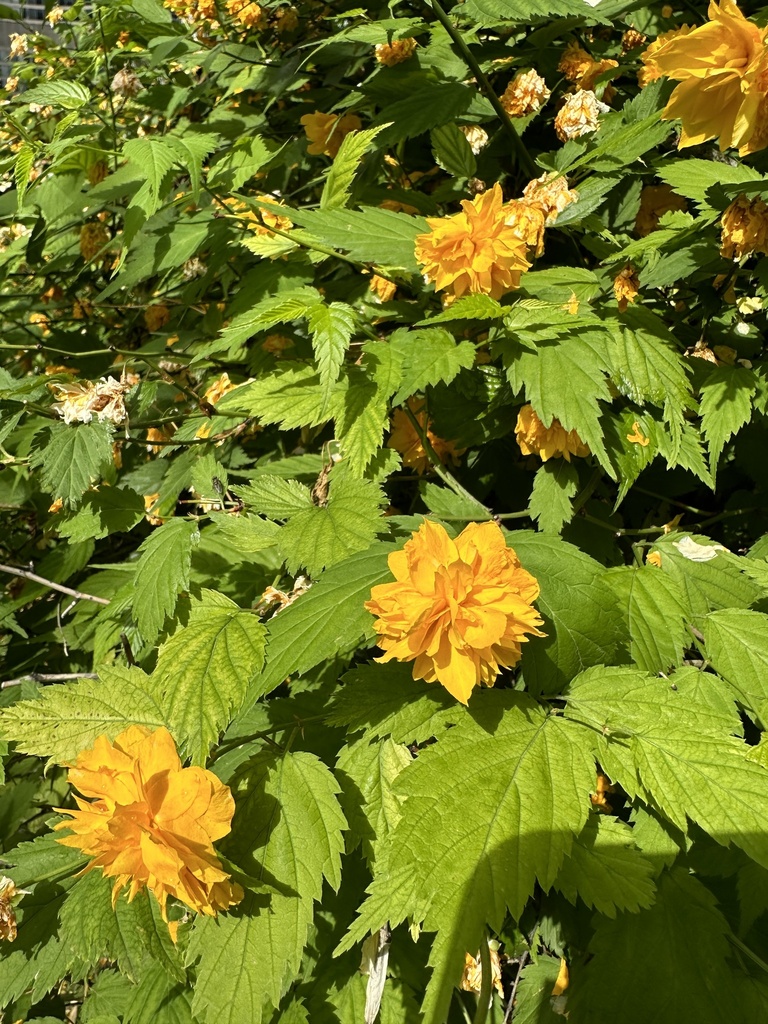
The Japanese kerria is a charming deciduous shrub known for its bright, golden yellow flowers that bloom in spring. It has a graceful, arching habit that looks lovely in a woodland garden or as a border plant. You will love how its green stems add a bit of color to your garden even in the winter months.

En un coup d'œil
- Niveau d'entretien
- Facile
- Type de plante
- Deciduous shrub
- Lumière
- Partial shade to full sun
- Lumière en intérieur
- Lumière vive indirecte
- Arrosage
- Tous les 7 à 14 jours
- Taille adulte
- 6 to 8 feet
- Croissance
- Moyenne
- Rusticité
- USDA 4 à 9
- Floraison
- Mid to late spring
Entretien
Plant this shrub in well-draining soil and prune it right after it finishes flowering to encourage new growth. Watch for wilting leaves, which may indicate the soil has dried out too much. It is quite hardy, but it appreciates a spot protected from harsh afternoon sun.
- Arrosage
- Keep the soil consistently moist but not waterlogged, especially during the first year of growth.
- Engrais
- Apply a balanced, slow-release fertilizer in early spring as new growth begins.
- Taille
- Prune back old or flowered stems immediately after the spring bloom to maintain shape.
- Rempotage
- If growing in a container, move to a larger pot every few years when the roots become crowded.
- Sol
- Well-draining, fertile soil
- pH du sol
- 6.0 to 7.5
- Température
- -25 à 35°C
- Humidité
- 40 à 70%
- Résistance à la sécheresse
- Moyenne
- Durée de vie
- Perennial, typically 15 to 20 years.
- Résistance aux chevreuils et lapins
- Moyenne
Signes qu'il faut rempoter
- Roots growing out of drainage holes.
- Water draining through the pot too quickly.
- Stunted growth during the active season.
Sécurité
- Humains
- The plant is generally considered non toxic to humans.
- Enfants
- The stems are somewhat brittle, but there are no significant ingestion risks for children.
- Allergènes de contact
- No specific skin irritants are known.
- Allergènes aéroportés
- Pollen may cause mild reactions in sensitive individuals during the spring.
- Comestibilité
- This plant is not considered edible and should not be consumed.
Comment l'identifier
- Bright yellow, rose-like flowers
- Arching, bright green stems
- Alternate, serrated, lance-shaped leaves
- Deciduous shrub growth habit
- Hauteur
- 1 à 2,5m
- Envergure
- 1,5 à 3m
- Feuilles
- bright green, deciduous
- Fleurs
- yellow, 3 à 5cm
Problèmes courants
- Twig blight — Fungal infection causing dieback of stems.
La cultiver
- Multiplication
- cuttings, division
- Quand planter
- spring, autumn
- Hivernage
- No special winter care is needed as it is quite hardy. You can mulch around the base to protect the roots if you live in a very cold climate.
- En pot
- It can be grown in large containers, but it prefers being planted in the ground for long term health.
Softwood cuttings
- Take 10 cm cuttings in early summer.
- Remove lower leaves.
- Place in moist potting mix and keep humid until rooted.
Pair this shrub with shade loving perennials to create a lush, low maintenance woodland border.
Bonnes associations
- Hosta — They share similar light requirements and provide a nice foliage contrast.
- Lamprocapnos spectabilis — Both plants bloom in spring and appreciate the same woodland conditions.
Espèces similaires
- Forsythia x intermedia — Both are spring flowering shrubs with yellow blooms.
Science
- Famille
- Rosaceae
- Genre
- Kerria
- Ordre
- Rosales
- Classe
- Magnoliopsida
- Région d'origine
- China, Japan, and the Korean Peninsula.
- Préservation
- This species is not of conservation concern.
It naturally grows in thickets and along forest edges where it benefits from dappled light.
- Intérêt pour la faune
- nectar source
- Pollinisateurs
- abeilles, papillons
- Utilisations
- ornamental shrub, woodland garden, foundation planting
Au fil des saisons
Repères écologiques
- Salinité
- 1/9
- Réaction du sol
- 5/9
- Lumière
- 5/9
- Température
- 5/9
- Humidité
- 5/9
- Nutriments
- 5/9
Taxonomie vérifiée avec le GBIF.
Ce qu'on demande souvent
- Does it need pruning?
- Pruning immediately after flowering helps keep the shrub tidy and encourages new growth.
- Can it grow in full sun?
- It prefers partial shade, as hot afternoon sun can fade the yellow flowers.
D'où vient le nom
The genus is named after William Kerr, a Scottish gardener who introduced the plant to the West. The specific epithet refers to its native range in Japan.
Bon à savoir
- It is the only species in its genus.
- The bright green stems remain colorful even in winter.
- It thrives in partial shade where other shrubs might struggle.
Ta plante a mauvaise mine ?
Cette page est un guide général. Pocket Botanist diagnostique les problèmes directement à partir d'une photo de ta plante, adapte l'arrosage à sa luminosité et te prévient quand il faut t'en occuper.
Ce guide a été généré par IA et vérifié avec la taxonomie du GBIF. Il s'agit d'informations générales, et non de conseils horticoles ou vétérinaires. Découvre comment nous concevons ces guides.