 Pocket Botanist
Pflanzenratgeber
Japanese kerria.
Kerria japonica
Aussprache KEER-ee-uh juh-PON-ih-kuh
Auch bekannt als Japan Globeflower, Japanese Kerria, Japanese Rose, Japanese globeflower, Japanese-rose, Jew's-mallow, Kerria


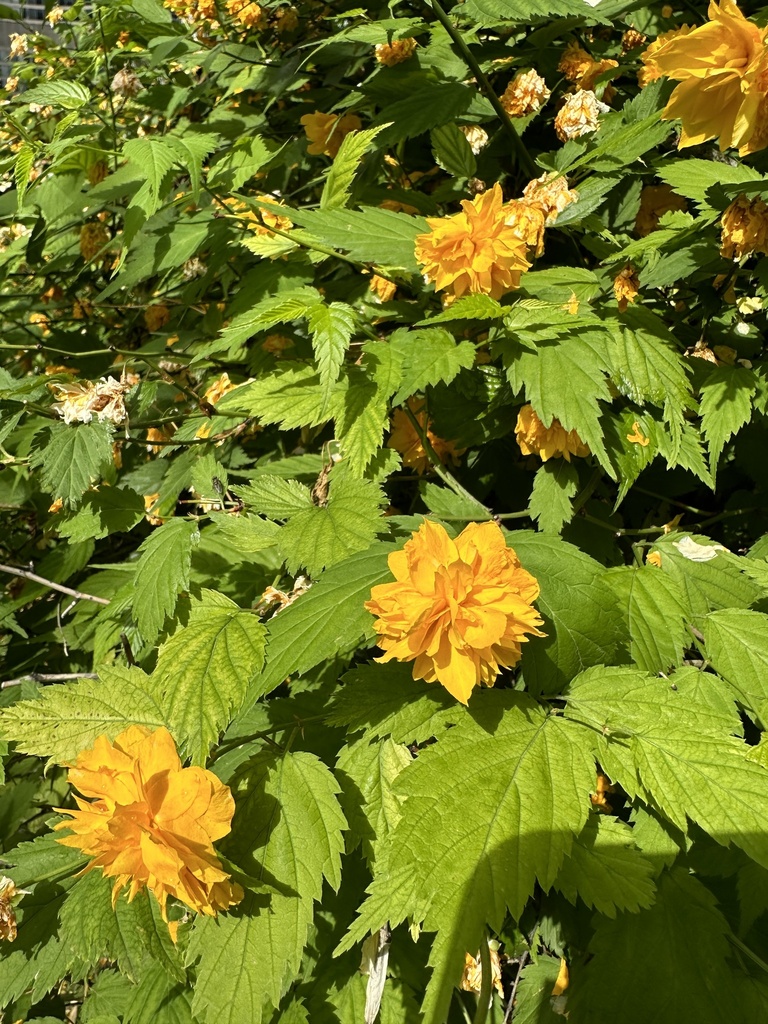
The Japanese kerria is a charming deciduous shrub known for its bright, golden yellow flowers that bloom in spring. It has a graceful, arching habit that looks lovely in a woodland garden or as a border plant. You will love how its green stems add a bit of color to your garden even in the winter months.

Auf einen Blick
- Pflegestufe
- Einfach
- Pflanzenart
- Deciduous shrub
- Licht
- Partial shade to full sun
- Licht im Innenraum
- Hell, indirekt
- Gießen
- Alle 7 bis 14 Tage
- Endgröße
- 6 to 8 feet
- Wachstum
- Mittel
- Winterhärte
- USDA 4 bis 9
- Blütezeit
- Mid to late spring
Pflege
Plant this shrub in well-draining soil and prune it right after it finishes flowering to encourage new growth. Watch for wilting leaves, which may indicate the soil has dried out too much. It is quite hardy, but it appreciates a spot protected from harsh afternoon sun.
- Gießen
- Keep the soil consistently moist but not waterlogged, especially during the first year of growth.
- Düngen
- Apply a balanced, slow-release fertilizer in early spring as new growth begins.
- Schneiden
- Prune back old or flowered stems immediately after the spring bloom to maintain shape.
- Umtopfen
- If growing in a container, move to a larger pot every few years when the roots become crowded.
- Boden
- Well-draining, fertile soil
- Boden-pH
- 6.0 to 7.5
- Temperatur
- -25 bis 35°C
- Luftfeuchtigkeit
- 40 bis 70%
- Trockenheitstoleranz
- Mittel
- Lebensdauer
- Perennial, typically 15 to 20 years.
- Wildverbiss-Resistenz
- Mittel
Anzeichen fürs Umtopfen
- Roots growing out of drainage holes.
- Water draining through the pot too quickly.
- Stunted growth during the active season.
Sicherheit
- Menschen
- The plant is generally considered non toxic to humans.
- Kinder
- The stems are somewhat brittle, but there are no significant ingestion risks for children.
- Kontaktallergene
- No specific skin irritants are known.
- Allergene in der Luft
- Pollen may cause mild reactions in sensitive individuals during the spring.
- Essbarkeit
- This plant is not considered edible and should not be consumed.
So erkennst du die Pflanze
- Bright yellow, rose-like flowers
- Arching, bright green stems
- Alternate, serrated, lance-shaped leaves
- Deciduous shrub growth habit
- Höhe
- 1 bis 2,5m
- Breite
- 1,5 bis 3m
- Blätter
- bright green, deciduous
- Blüten
- yellow, 3 bis 5cm
Häufige Probleme
- Twig blight — Fungal infection causing dieback of stems.
Standort und Pflege
- Vermehrung
- cuttings, division
- Pflanzzeit
- spring, autumn
- Überwinterung
- No special winter care is needed as it is quite hardy. You can mulch around the base to protect the roots if you live in a very cold climate.
- Im Kübel
- It can be grown in large containers, but it prefers being planted in the ground for long term health.
Softwood cuttings
- Take 10 cm cuttings in early summer.
- Remove lower leaves.
- Place in moist potting mix and keep humid until rooted.
Pair this shrub with shade loving perennials to create a lush, low maintenance woodland border.
Gute Pflanzpartner
- Funkie — They share similar light requirements and provide a nice foliage contrast.
- Lamprocapnos spectabilis — Both plants bloom in spring and appreciate the same woodland conditions.
Ähnliche Arten
- Forsythia x intermedia — Both are spring flowering shrubs with yellow blooms.
Botanisches
- Familie
- Rosaceae
- Gattung
- Kerria
- Ordnung
- Rosales
- Klasse
- Magnoliopsida
- Ursprüngliche Heimat
- China, Japan, and the Korean Peninsula.
- Artenschutz
- This species is not of conservation concern.
It naturally grows in thickets and along forest edges where it benefits from dappled light.
- Nutzen für Wildtiere
- nectar source
- Bestäuber
- Bienen, Schmetterlinge
- Verwendung
- ornamental shrub, woodland garden, foundation planting
Im Jahresverlauf
Ökologische Zeigerwerte
- Salzgehalt
- 1/9
- Bodenreaktion
- 5/9
- Licht
- 5/9
- Temperatur
- 5/9
- Feuchtigkeit
- 5/9
- Nährstoffe
- 5/9
Taxonomie abgeglichen mit GBIF.
Häufige Fragen
- Does it need pruning?
- Pruning immediately after flowering helps keep the shrub tidy and encourages new growth.
- Can it grow in full sun?
- It prefers partial shade, as hot afternoon sun can fade the yellow flowers.
Woher der Name kommt
The genus is named after William Kerr, a Scottish gardener who introduced the plant to the West. The specific epithet refers to its native range in Japan.
Gut zu wissen
- It is the only species in its genus.
- The bright green stems remain colorful even in winter.
- It thrives in partial shade where other shrubs might struggle.
Probleme mit Japanese kerria?
Diese Seite bietet allgemeine Infos. Pocket Botanist erkennt Probleme anhand eines Fotos deiner echten Pflanze, passt das Gießen an dein Licht und deinen Standort an und erinnert dich an die Pflege.
Dieser Ratgeber wurde mit KI erstellt und mit der GBIF-Taxonomie abgeglichen. Er dient zur allgemeinen Information und ersetzt keine gärtnerische oder tierärztliche Beratung. Hier erfährst du, wie wir diese Ratgeber erstellen.