 Pocket Botanist
Guide botanique
foxtail barley.
Hordeum jubatum
Prononciation HOR-dee-um joo-BAY-tum
Aussi appelée Foxtail Barley


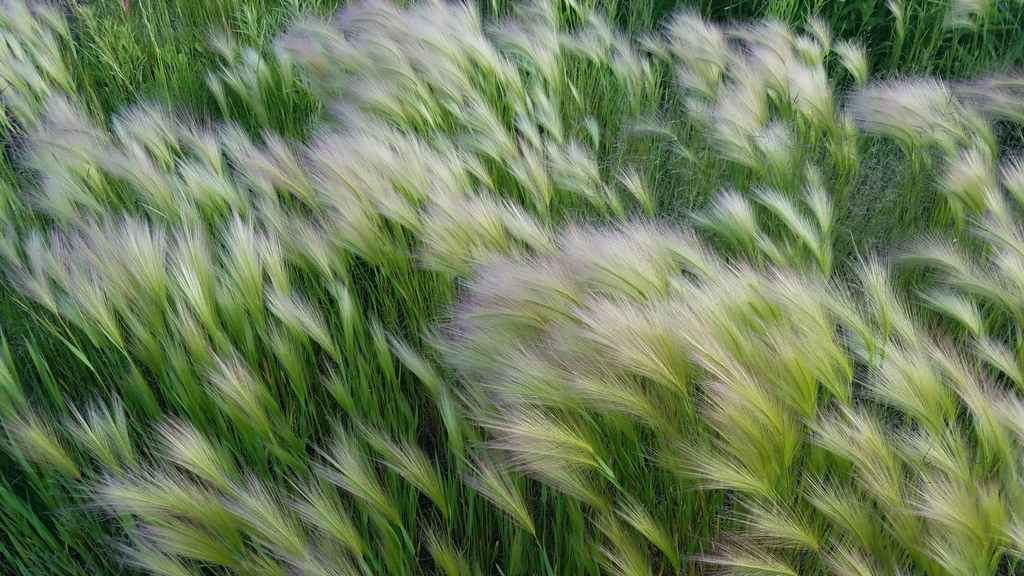
L'orge à épi est une belle graminée d'ornement connue pour ses épis soyeux et penchés. Elle prospère dans les climats frais et ajoute une texture douce et aérienne à n'importe quel espace de jardin. Vous apprécierez comment les épis de graines attrapent la lumière en se balançant au gré du vent.

En un coup d'œil
- Niveau d'entretien
- Facile
- Type de plante
- Herbe vivace
- Lumière
- Plein soleil
- Lumière en intérieur
- Soleil direct
- Arrosage
- Tous les 3 à 7 jours
- Taille adulte
- 2 pieds
- Croissance
- Rapide
- Rusticité
- USDA 3 à 9
- Floraison
- Fin du printemps à mi-été
Entretien
Plantez cette graminée dans un endroit ensoleillé avec un sol bien drainé pour qu'elle se porte bien. Surveillez le dessèchement des épis de graines, car ils peuvent devenir envahissants s'ils se propagent librement. Gardez un œil sur les niveaux d'humidité pendant la chaleur de l'été pour éviter que le feuillage ne brunisse.
- Arrosage
- Gardez le sol constamment humide mais pas détrempé pendant la saison de croissance active.
- Engrais
- Appliquez un engrais équilibré à libération lente une fois au printemps pour soutenir une croissance saine.
- Taille
- Taillez le feuillage jusqu'au sol à la fin de l'hiver ou au début du printemps avant l'apparition de nouvelle croissance.
- Rempotage
- Divisez les touffes tous les deux ans pour maintenir la vigueur et éviter la surpopulation.
- Sol
- Sol bien drainé, sableux ou limoneux
- pH du sol
- 6.0 à 8.0
- Température
- -35 à 35°C
- Humidité
- 30 à 70%
- Résistance à la sécheresse
- Moyenne
- Durée de vie
- Vivace de courte durée, généralement de 2 à 4 ans.
- Résistance aux chevreuils et lapins
- Moyenne
Signes qu'il faut rempoter
- Les racines sortent des trous de drainage.
- L'eau traverse le pot sans l'imbiber.
- Croissance ralentie pendant la saison active.
Sécurité
- Humains
- Cette plante n'est pas considérée comme toxique pour l'homme, mais les arêtes pointues sont un irritant mécanique.
- Animaux
- Les arêtes acérées peuvent provoquer une irritation physique de la bouche ou de la peau des animaux domestiques si elles sont ingérées ou touchées.
- Enfants
- Éloignez les enfants des têtes de fleurs car les arêtes pointues et barbelées peuvent facilement perforer la peau ou provoquer une irritation oculaire.
- Allergènes de contact
- Les arêtes rigides et barbelées peuvent provoquer une irritation cutanée ou se coincer dans les vêtements.
- Allergènes aéroportés
- Le pollen peut déclencher des allergies saisonnières chez les personnes sensibles.
- Comestibilité
- Les arêtes pointues et barbelées peuvent blesser la bouche et le système digestif des animaux de pâturage et des animaux domestiques.
Comment l'identifier
- Épis soyeux et penchés
- Longues arêtes arquées sur les graines
- Feuillage fin, vert bleuté
- Habitude de croissance en touffe
- Hauteur
- 0,3 à 0,6m
- Envergure
- 0,2 à 0,4m
- Feuilles
- vert, bleu-vert, caduc
- Fleurs
- rose, violet, argent, 5 à 12cm
- Fruits
- brun, paille, Fin de l'été
Problèmes à surveiller
- RouilleCourant
- CharbonPeu courant
- Pourriture des racinesPeu courant
- PuceronsPeu courant
Vérifie la santé de ta plante en photo
Pocket Botanist analyse une photo de ta plante et te dit ce qui ne va pas et quoi essayer en premier.
La cultiver
- Multiplication
- semis
- Quand planter
- printemps, automne
- Hivernage
- Taillez le feuillage au ras du sol à la fin de l'hiver ou au début du printemps avant le début de la nouvelle croissance.
- En pot
- Elle pousse bien en conteneurs, à condition que le pot ait au moins 30 centimètres de profondeur pour accueillir le système racinaire.
Semis
- Récoltez les graines à la fin de l'été lorsqu'elles prennent une couleur paille.
- Semez les graines directement dans le jardin en automne ou au début du printemps.
- Recouvrez légèrement de terre et maintenez humide jusqu'à la germination.
Plantez en groupes pour créer un effet doux et ondulant dans un jardin de prairie ensoleillé.
Bonnes associations
- Gaillarde — Ils partagent des exigences similaires en matière de soleil et de sol bien drainé.
- Bouteloua gracilis — Cette graminée offre un beau contraste textuel avec les épis doux de l'orge.
Espèces similaires
- Hordeum murinum — C'est une espèce très proche avec des habitudes de croissance similaires, bien que souvent plus agressives.
Science
- Famille
- Poaceae
- Genre
- Hordeum
- Ordre
- Poales
- Classe
- Liliopsida
- Région d'origine
- Amérique du Nord et certaines parties de l'Asie.
- Préservation
- Cette espèce est répandue et ne suscite pas de préoccupation en matière de conservation.
C'est une espèce pionnière qui colonise rapidement les sols perturbés, salins ou alcalins.
- Intérêt pour la faune
- les graines fournissent de la nourriture aux oiseaux, matériaux de nidification pour les oiseaux
- Pollinisateurs
- abeilles, papillons
- Utilisations
- herbe ornementale, arrangements floraux séchés, restauration de prairies
Au fil des saisons
Repères écologiques
- Salinité
- 6/9
- Réaction du sol
- 7/9
- Lumière
- 8/9
- Température
- 5/9
- Humidité
- 4/9
- Nutriments
- 3/9
Taxonomie vérifiée avec le GBIF.
Ce qu'on demande souvent
- Est-elle envahissante ?
- Elle peut être agressive dans les zones perturbées et est considérée comme une mauvaise herbe dans certaines régions.
- Puis-je la cultiver en pot ?
- Oui, elle pousse bien en conteneurs si elle bénéficie de beaucoup de soleil et d'un bon drainage.
D'où vient le nom
Hordeum est le nom latin ancien de l'orge, tandis que jubatum signifie crêtu ou avec une crinière, faisant référence aux longues arêtes soyeuses.
Bon à savoir
- Les épis penchés ressemblent à une queue de renard, ce qui lui vaut le nom commun d'orge queue de renard.
- Elle prospère dans les sols salins où d'autres plantes peinent.
- Les graines sont dispersées par le vent et le pelage des animaux.
Aussi dans
Garde ta plante en pleine forme
Cette page est un guide général. Enregistre ta plante dans Pocket Botanist et tu reçois des rappels d'entretien adaptés à cette plante, ainsi qu'un historique d'entretien qui montre ce qui a marché.
Ce guide a été généré par IA et vérifié avec la taxonomie du GBIF. Il s'agit d'informations générales, et non de conseils horticoles ou vétérinaires. Découvre comment nous concevons ces guides.