 Pocket Botanist
Guide botanique
Hibiscus.
Hibiscus rosa-sinensis
Prononciation hi-BIS-kus ROH-suh SIN-en-sis
Aussi appelée China-rose, Chinese Hibiscus, Hawaiian hibiscus, Hibiscus, Shoeblackplant
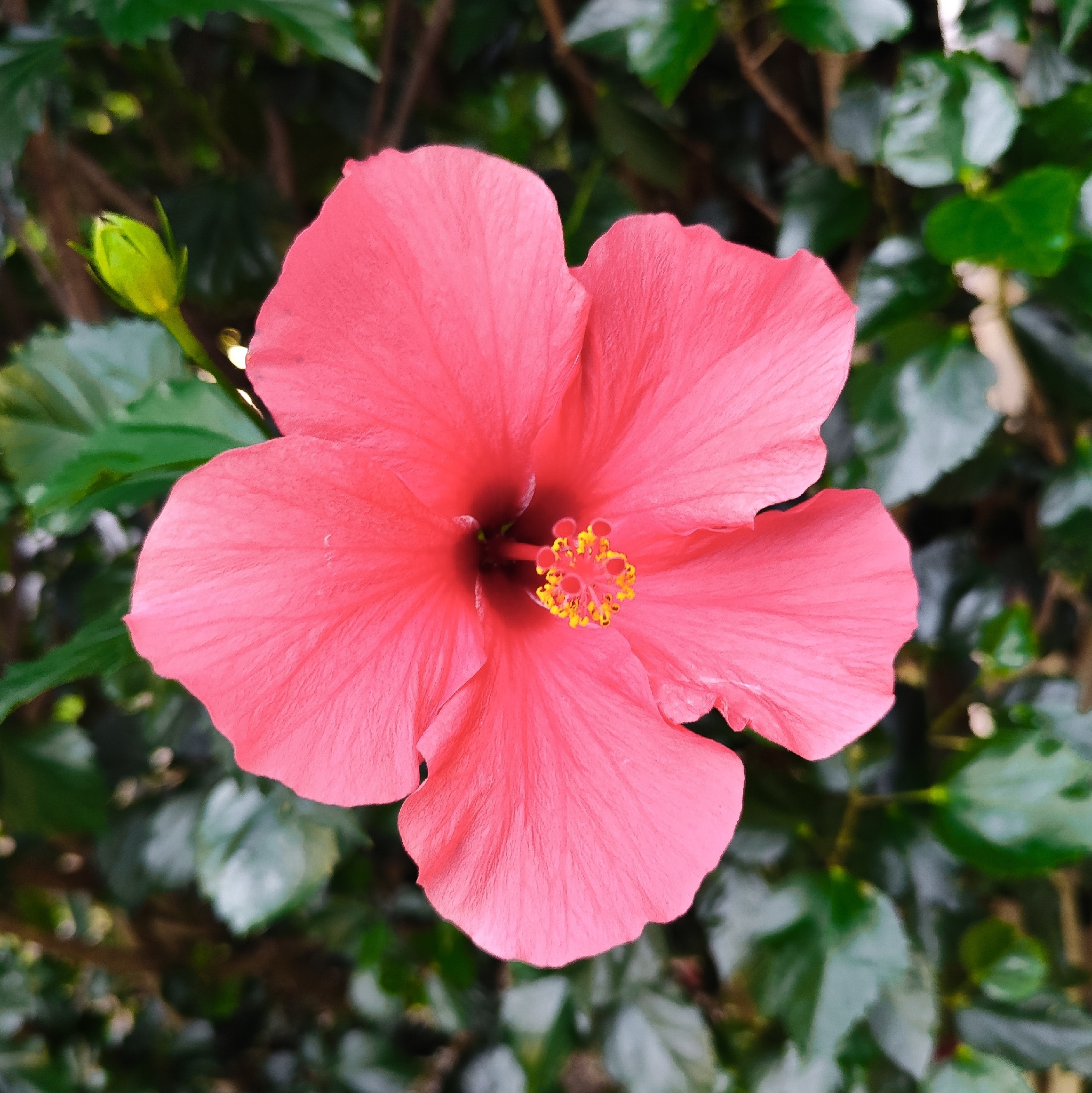
The Chinese hibiscus is a tropical flowering shrub known for its large, showy blooms. It's a popular choice for adding a splash of vibrant color to gardens and patios in warmer climates. This plant thrives in sunny locations and brings a tropical feel wherever it's grown.
En un coup d'œil
- Care level
- Moderate
- Plant type
- Flowering shrub
- Light
- Full sun to partial shade
- Indoor light
- bright-indirect
- Water
- Every 2 to 7 days
- Mature size
- 6 to 10 feet tall and 3 to 6 feet wide
- Growth rate
- fast
- Hardiness
- USDA 9 to 12
- Bloom time
- Spring through fall
Entretien
Provide plenty of sunlight and consistent moisture, but avoid waterlogged soil. Watch for common pests like aphids and spider mites, and prune to maintain shape and encourage blooming. Fertilize regularly during the growing season for best flower production.
- Watering
- Water thoroughly when the top inch of soil feels dry, reducing frequency in cooler weather.
- Feeding
- Use a balanced liquid fertilizer every two weeks during the growing season.
- Pruning
- Prune in late winter or early spring to shape the plant and remove dead or overgrown branches.
- Repotting
- Repot every 1 to 2 years in spring when the plant becomes root-bound.
- Soil
- Well-draining, fertile loam
- Soil pH
- Slightly acidic to neutral (6.0 to 7.0)
- Temperature
- 18 to 30°C
- Humidity
- 50 to 70%
- Drought tolerance
- moderate
- Lifespan
- Perennial, can live for many years with proper care.
- Deer and rabbits
- low
Signes qu'il faut rempoter
- Roots growing out of the drainage holes.
- Water drains very slowly or not at all.
- Plant dries out much faster than usual.
- Visible salt or mineral buildup on the soil surface.
Sécurité
- People
- This plant is generally considered non-toxic to humans, though consuming large quantities may cause mild gastrointestinal distress.
- Pets
- Non-toxic to cats and dogs.
- Children
- No specific safety concerns for children beyond general caution with plants.
- Contact allergens
- No significant contact allergens are typically associated with this plant.
- Airborne allergens
- Pollen may cause mild respiratory irritation in sensitive individuals.
- Edibility
- The flowers are technically edible, but they are not typically consumed and may cause mild stomach upset in some individuals.
Comment l'identifier
- Large, trumpet-shaped flowers
- Five or more petals
- Glossy, dark green leaves
- Toothed leaf margins
- Shrub or small tree form
- Height
- 1.8 to 3m
- Spread
- 0.9 to 1.8m
- Leaves
- dark green, evergreen
- Flowers
- red, pink, orange, yellow, white, 10 to 15cm
Problèmes courants
- Aphids — Small, pear-shaped insects that feed on plant sap, causing yellowing and distorted growth.
- Spider Mites — Tiny arachnids that create fine webbing and cause stippling on leaves due to their feeding.
- Yellowing Leaves — Can be caused by overwatering, underwatering, nutrient deficiencies, or poor drainage.
- Bud Drop — Flower buds may fall off due to environmental stress like sudden temperature changes or inconsistent watering.
La cultiver
- Propagation
- cuttings, seed
- When to plant
- spring, summer
- Overwintering
- In cooler climates, bring potted plants indoors before the first frost. Place in a bright location, reduce watering, and stop fertilizing. Check regularly for pests. Gradually reintroduce to outdoor conditions in spring after all danger of frost has passed.
- In containers
- Grows very well in containers, needing at least a 10-gallon pot for mature plants to encourage good root development and flowering.
Stem Cuttings
- Take 6-8 inch cuttings from healthy, non-flowering stems in spring or summer.
- Remove lower leaves, leaving only the top few.
- Dip the cut end in rooting hormone.
- Insert the cutting into a moist, well-draining potting mix.
- Keep humid and warm, and roots should form in 4-8 weeks.
Seed
- Sow seeds indoors in early spring, about 6-8 weeks before the last frost.
- Use a sterile seed-starting mix and sow seeds about 1/4 inch deep.
- Keep the soil consistently moist and warm (70-75°F).
- Germination can be slow and erratic, taking 1 to 3 months.
- Transplant seedlings into pots once they have several true leaves.
Plant hibiscus with other sun-loving tropicals that have similar water needs for a cohesive and thriving display.
Bonnes associations
- Lantana — Lantana shares similar sun and heat requirements and can provide a colorful contrast.
- Bougainvillea — Bougainvillea also loves full sun and heat, and its vibrant bracts complement hibiscus blooms.
- Plumbago — Plumbago offers a lovely blue contrast and thrives in similar warm, sunny conditions.
À éloigner de
- Mealybugs — Mealybugs can infest hibiscus, sucking sap and weakening the plant, and are difficult to eradicate.
- Whiteflies — These tiny pests can swarm hibiscus, causing yellowing leaves and sticky honeydew buildup.
Espèces similaires
- Confederate Rose — This species also has large, showy flowers that change color, but it is more cold-hardy and blooms in fall.
- Rose of Sharon — A much hardier hibiscus species, it offers similar large flowers but is deciduous and tolerates cooler climates.
Science
- Family
- Malvaceae
- Genus
- Hibiscus
- Order
- Malvales
- Class
- Magnoliopsida
- Native range
- Southeast Asia and Pacific Islands.
- Conservation
- Not of conservation concern.
In its native tropical and subtropical habitats, it grows as an understory shrub in forests and along stream banks, benefiting from consistent moisture and warmth.
- Value to wildlife
- nectar source
- Pollinators
- hummingbirds, butterflies, moths
- Uses
- Ornamental, Cut flowers, Hedges
Au fil des saisons
Repères écologiques
- Salinity
- 2/9
- Soil reaction
- 6/9
- Light
- 8/9
- Temperature
- 9/9
- Moisture
- 7/9
- Nutrients
- 7/9
Taxonomie vérifiée avec le GBIF.
Ce qu'on demande souvent
- How much sun does it need?
- Hibiscus rosa-sinensis thrives in full sun, needing at least 6 hours of direct sunlight daily for best flowering.
- What kind of soil is best?
- It prefers well-draining, slightly acidic to neutral soil. Rich, loamy soil is ideal.
- How often should I water it?
- Water regularly, keeping the soil consistently moist but not waterlogged, especially during the growing season.
- Can it survive in cold weather?
- No, it's a tropical plant and cannot tolerate frost. It needs to be brought indoors or protected in cooler climates.
- When should I fertilize?
- Feed with a balanced liquid fertilizer every 2 to 4 weeks during the spring and summer growing season.
D'où vient le nom
The genus name 'Hibiscus' comes from the Greek word 'hibiskos', referring to the mallow family. 'Rosa-sinensis' literally means 'rose of China'.
Bon à savoir
- It's the national flower of Malaysia.
- The flowers can be used to make a natural dye.
- Some varieties have flowers that change color as they age.
- It's a popular plant for bonsai cultivation.
Ton hibiscus a mauvaise mine ?
Cette page est un guide général. Pocket Botanist diagnostique les problèmes directement à partir d'une photo de ta plante, adapte l'arrosage à sa luminosité et te prévient quand il faut t'en occuper.
Ce guide a été généré par IA et vérifié avec la taxonomie du GBIF. Il s'agit d'informations générales, et non de conseils horticoles ou vétérinaires. Découvre comment nous concevons ces guides.