 Pocket Botanist
Guide botanique
Shining Crane's-bill.
Geranium lucidum
Prononciation jeh-RAY-nee-um LOO-sih-dum
Aussi appelée Shining Crane's-bill, Shining geranium


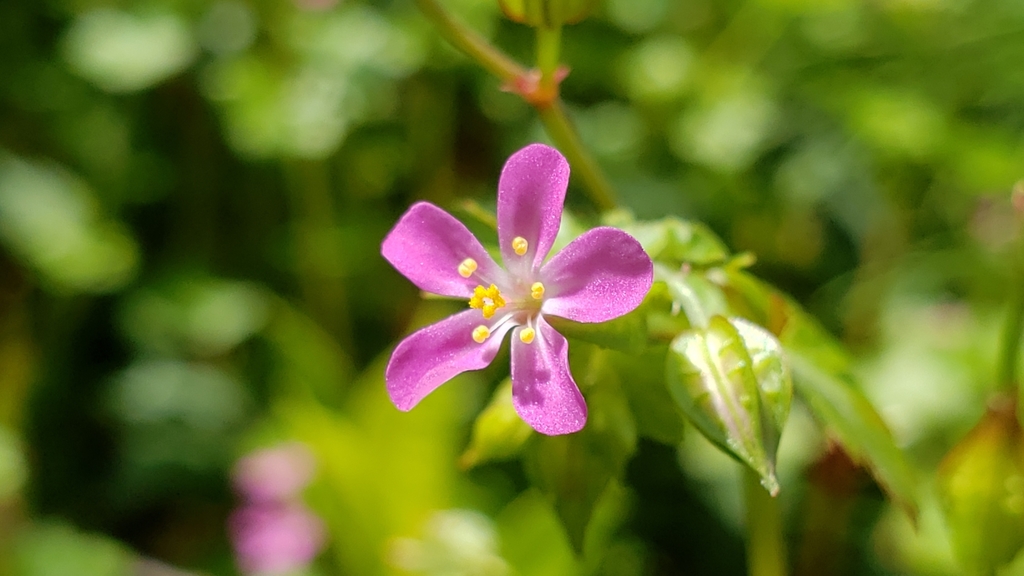
The shining crane's bill is a charming annual that often pops up in woodland areas and rocky spots. It is well known for its glossy, bright green leaves that can turn a lovely shade of red in the sun. It is a great choice if you want a plant that spreads gently and adds a bit of natural texture to your garden.

En un coup d'œil
- Niveau d'entretien
- Facile
- Type de plante
- Annual herb
- Lumière
- Partial shade to full sun
- Lumière en intérieur
- Lumière vive indirecte
- Arrosage
- Tous les 3 à 7 jours
- Taille adulte
- 12 to 18 inches
- Croissance
- Moyenne
- Rusticité
- USDA 6 à 9
- Floraison
- Late spring to mid summer
Entretien
Keep the soil consistently moist but never soggy to mimic its natural woodland home. Watch for wilting if the soil dries out too much, and keep an eye out for overcrowding if it starts to spread too quickly.
- Arrosage
- Water when the top inch of soil feels dry to the touch.
- Engrais
- Use a balanced liquid fertilizer during the active growing season.
- Taille
- Trim back spent flower stems to encourage a tidy appearance.
- Rempotage
- Repot only if the plant becomes root bound in its container.
- Sol
- Well draining, moist soil
- pH du sol
- Neutral to slightly alkaline
- Température
- -10 à 30°C
- Humidité
- 40 à 70%
- Résistance à la sécheresse
- Moyenne
- Durée de vie
- Annual, typically 1 year
- Résistance aux chevreuils et lapins
- Moyenne
Signes qu'il faut rempoter
- Roots growing out of the drainage holes
- Water running straight through the pot
Sécurité
- Humains
- It is generally considered non-toxic but is not meant for consumption.
- Enfants
- Keep away from small children as the plant is not food and may cause minor digestive discomfort.
- Allergènes de contact
- Some individuals may experience mild skin irritation from the glandular hairs.
- Allergènes aéroportés
- There are no notable respiratory allergens associated with this plant.
- Comestibilité
- This plant is not considered edible and may cause stomach upset if ingested.
Comment l'identifier
- Glossy, rounded, palmately lobed leaves
- Small pink, five petaled flowers
- Stems often tinged with red
- Hairy, reddish seed capsules
- Hauteur
- 0,1 à 0,3m
- Envergure
- 0,15 à 0,3m
- Feuilles
- bright green, reddish, deciduous
- Fleurs
- pink, 0,5 à 1cm
- Fruits
- brown, Summer
Problèmes courants
- Powdery mildew — A white fungal growth on leaves often caused by poor air circulation.
La cultiver
- Multiplication
- seed
- Quand planter
- spring, autumn
- Hivernage
- In colder climates, the plant will die back completely. Ensure the soil is well-drained to prevent root rot during wet winter months.
- En pot
- It grows well in containers, provided they have good drainage and are at least 20 cm wide.
Seed
- 1. Collect seeds in late summer when the capsules turn brown.
- 2. Sow seeds directly into prepared soil in autumn.
- 3. Keep the area lightly moist until germination occurs in spring.
Plant in groups with other shade-loving perennials to create a lush, low-maintenance woodland floor.
Bonnes associations
- Bluebell — They share similar woodland habitat requirements.
- Soft shield fern — The contrasting textures look lovely in a shade garden.
Espèces similaires
- Herb Robert — It is a similar annual geranium with a more sprawling habit.
Science
- Famille
- Geraniaceae
- Genre
- Geranium
- Ordre
- Geraniales
- Classe
- Magnoliopsida
- Région d'origine
- Europe, Western Asia, and North Africa.
- Préservation
- It is not of conservation concern and is often considered a weed in some regions.
It thrives in shaded, rocky habitats and woodland edges where it can easily disperse its seeds.
- Intérêt pour la faune
- nectar source
- Pollinisateurs
- abeilles, papillons
- Utilisations
- ground cover, woodland gardens, rock gardens
Au fil des saisons
Repères écologiques
- Salinité
- 1/9
- Réaction du sol
- 6/9
- Lumière
- 5/9
- Température
- 5/9
- Humidité
- 5/9
- Nutriments
- 4/9
Taxonomie vérifiée avec le GBIF.
Ce qu'on demande souvent
- Is this plant invasive?
- It can be quite prolific in its self-seeding, so monitor it in small garden beds.
- Does it need full sun?
- It prefers partial shade but will tolerate full sun if the soil stays moist.
D'où vient le nom
The genus name Geranium comes from the Greek word geranos, meaning crane, referring to the beak-like fruit. The specific epithet lucidum means bright or clear, describing the glossy leaves.
Bon à savoir
- The species name lucidum refers to the shiny appearance of its leaves.
- It is known to self-seed quite freely in favorable conditions.
- The plant often turns a beautiful shade of red in the sun.
Ta plante a mauvaise mine ?
Cette page est un guide général. Pocket Botanist diagnostique les problèmes directement à partir d'une photo de ta plante, adapte l'arrosage à sa luminosité et te prévient quand il faut t'en occuper.
Ce guide a été généré par IA et vérifié avec la taxonomie du GBIF. Il s'agit d'informations générales, et non de conseils horticoles ou vétérinaires. Découvre comment nous concevons ces guides.