 Pocket Botanist
Guide botanique
Ocotillo.
Fouquieria splendens
Prononciation foo-KEE-air-ee-uh SPLEN-denz
Aussi appelée ocotillo, vine-cactus


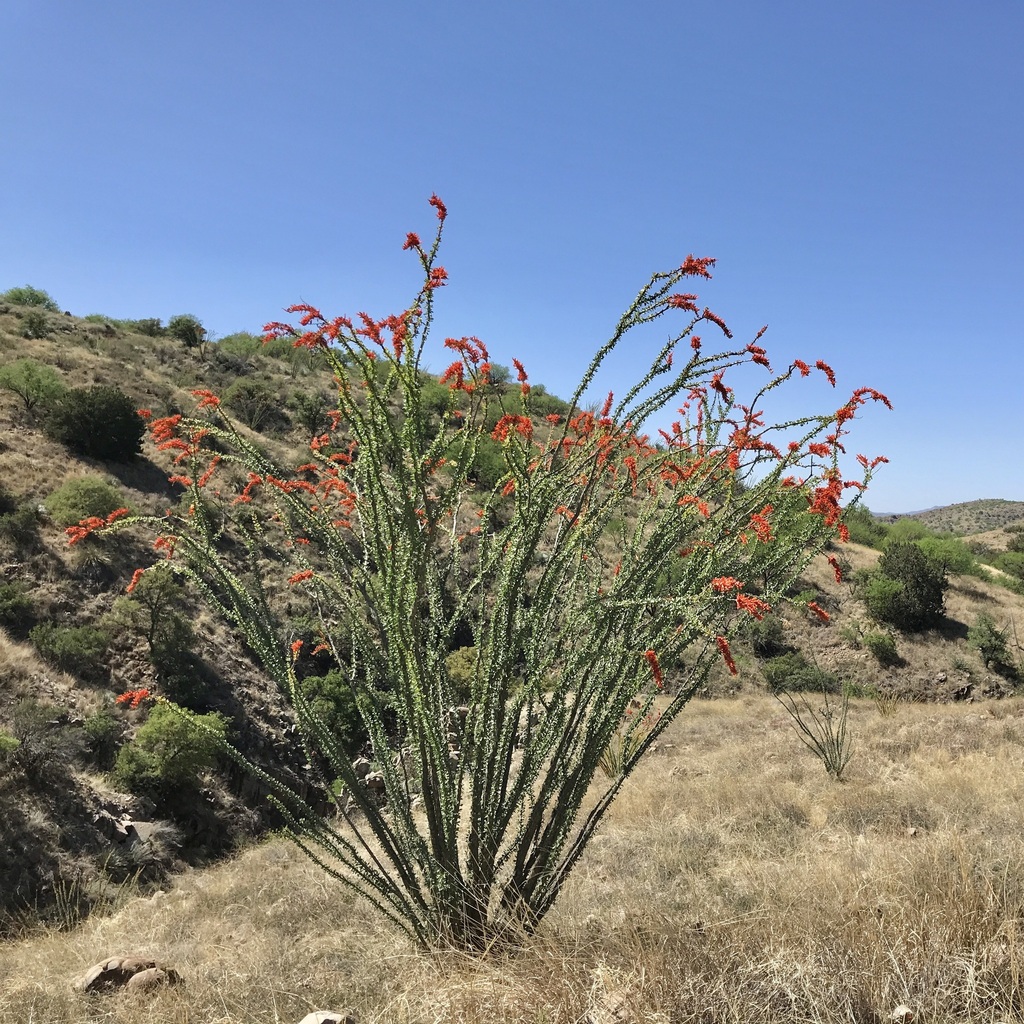
The Ocotillo is a striking desert shrub that looks like a bundle of thorny sticks for most of the year. It quickly sprouts vibrant green leaves after a good rain. You will love its brilliant red flowers that appear at the tips of the stems in spring.
En un coup d'œil
- Niveau d'entretien
- Facile
- Type de plante
- Succulent shrub
- Lumière
- Full sun
- Lumière en intérieur
- Soleil direct
- Arrosage
- Tous les 14 à 30 jours
- Taille adulte
- 20 feet
- Croissance
- Lente
- Rusticité
- USDA 7 à 10
- Floraison
- Spring to early summer
Entretien
Plant this in very well draining soil and keep it in a spot with intense sun. Watch for shriveled stems as a sign it needs a deep soak, but be careful not to overwater during its dormant phase. It is perfectly adapted to harsh, dry conditions.
- Arrosage
- Water deeply only during the active growing season when the soil is completely dry.
- Engrais
- Use a low nitrogen, cactus specific fertilizer sparingly during the spring.
- Taille
- Only remove dead or damaged stems during the late winter before new growth begins.
- Rempotage
- Repot only when the plant has clearly outgrown its container, using a heavy pot to prevent tipping.
- Sol
- Sandy or rocky, fast draining
- pH du sol
- 6.0 to 8.0
- Température
- -10 à 45°C
- Humidité
- 10 à 40%
- Résistance à la sécheresse
- Élevée
- Durée de vie
- Perennial, can live for over 100 years.
- Résistance aux chevreuils et lapins
- Élevée
Signes qu'il faut rempoter
- Roots growing out of the drainage holes.
- Water sitting on the surface for too long.
- Plant becoming top heavy.
Sécurité
- Humains
- The plant is not known to be toxic, but its sharp spines pose a significant physical injury risk.
- Enfants
- Keep children away from the plant due to the extremely sharp and rigid spines that can cause serious injury.
- Allergènes de contact
- The sharp, woody spines can cause deep puncture wounds and skin irritation.
- Allergènes aéroportés
- There are no notable respiratory allergens associated with this plant.
- Comestibilité
- The plant is not considered edible and should not be consumed.
Comment l'identifier
- Long, slender, spiny gray stems
- Small, oval green leaves after rain
- Bright red, tubular terminal flower clusters
- Distinctive candelabra growth habit
- Hauteur
- 2 à 6m
- Envergure
- 1 à 3m
- Feuilles
- green, deciduous
- Fleurs
- red, 1 à 2cm
- Fruits
- brown, Late summer
Problèmes courants
- Root rot — Occurs when the soil remains too wet for too long.
La cultiver
- Multiplication
- cuttings, seed
- Quand planter
- spring, early autumn
- Hivernage
- Keep the plant dry during winter months to prevent rot. Ensure it is protected from extreme, prolonged freezing temperatures.
- En pot
- It can be grown in a large, heavy pot with excellent drainage, but it prefers being in the ground.
Cuttings
- Take a hardwood cutting during the dormant season.
- Allow the cut end to callus for several weeks in a dry, shaded area.
- Insert the callused end into a well draining, sandy potting mix.
- Keep the soil barely moist until roots establish.
Group with other desert natives that require minimal irrigation to prevent accidental overwatering.
Bonnes associations
- Creosote bush — They share the same arid habitat requirements.
- Encelia farinosa — It provides a nice color contrast and thrives in similar conditions.
Espèces similaires
- Arbre de Boojum — It is a related species with a unique, tall, columnar growth habit.
Science
- Famille
- Fouquieriaceae
- Genre
- Fouquieria
- Ordre
- Ericales
- Classe
- Magnoliopsida
- Région d'origine
- Chihuahuan and Sonoran Deserts of the Southwestern United States and Mexico.
- Préservation
- It is not currently endangered, but wild collection is strictly regulated in many areas.
It survives by rapidly producing leaves after rainfall and shedding them quickly during drought.
- Intérêt pour la faune
- nectar source
- Pollinisateurs
- colibris, abeilles
- Utilisations
- ornamental desert landscaping, xeriscaping, wildlife gardens
Au fil des saisons
Repères écologiques
- Salinité
- 2/9
- Réaction du sol
- 7/9
- Lumière
- 9/9
- Température
- 8/9
- Humidité
- 1/9
- Nutriments
- 2/9
Taxonomie vérifiée avec le GBIF.
Ce qu'on demande souvent
- Does it need a lot of water?
- No, it thrives on very little water and requires excellent drainage.
- Why does my plant have no leaves?
- It is likely dormant and will grow leaves quickly after a good rain.
D'où vient le nom
The genus honors Pierre Fouquier, a French physician, while the species name splendens refers to its brilliant red flowers.
Bon à savoir
- It is often called the Ocotillo, which is a Spanish diminutive of the word for pine.
- The stems can remain dormant and leafless for long periods until rain arrives.
- It is a master of water conservation in harsh desert environments.
Aussi dans
Ta plante a mauvaise mine ?
Cette page est un guide général. Pocket Botanist diagnostique les problèmes directement à partir d'une photo de ta plante, adapte l'arrosage à sa luminosité et te prévient quand il faut t'en occuper.
Ce guide a été généré par IA et vérifié avec la taxonomie du GBIF. Il s'agit d'informations générales, et non de conseils horticoles ou vétérinaires. Découvre comment nous concevons ces guides.