 Pocket Botanist
Guía de plantas
Ocotillo.
Fouquieria splendens
Pronunciación foo-KEE-air-ee-uh SPLEN-denz
También se conoce como ocotillo, vine-cactus


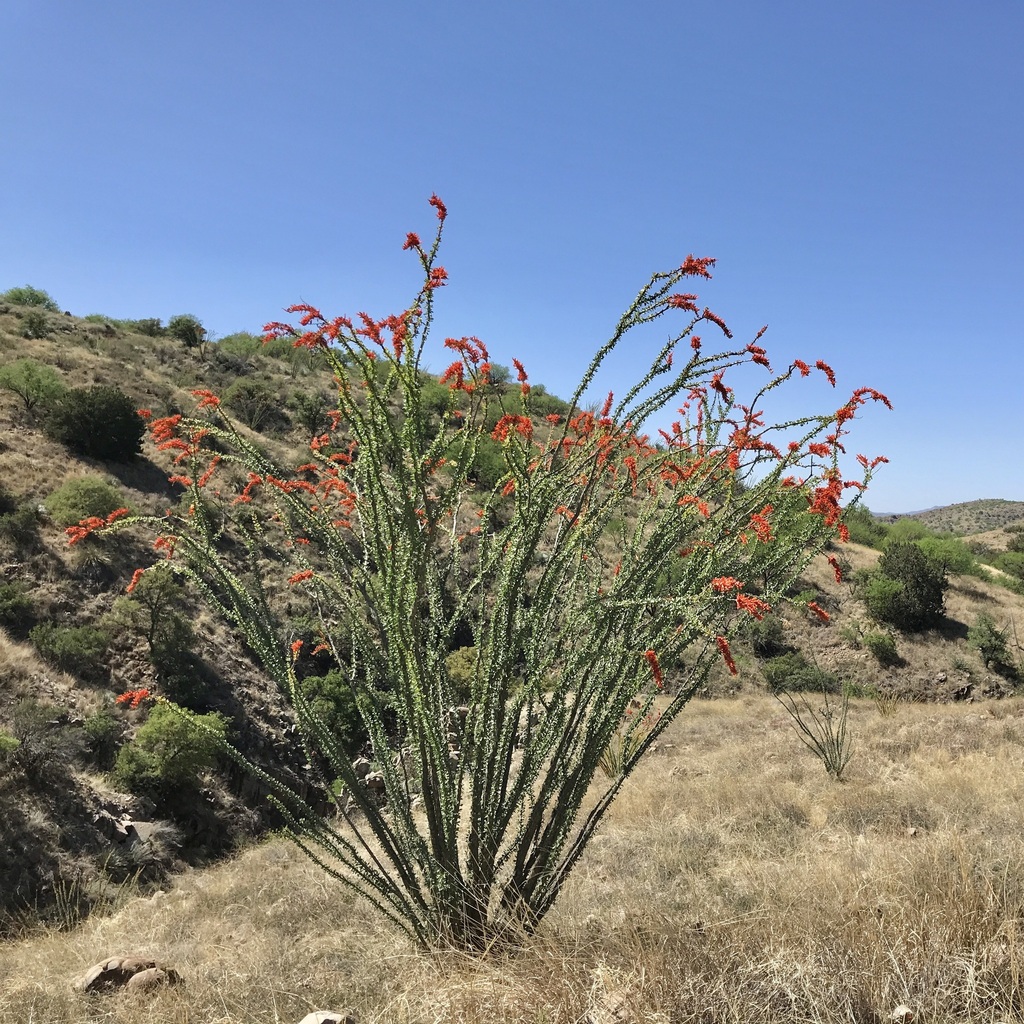
The Ocotillo is a striking desert shrub that looks like a bundle of thorny sticks for most of the year. It quickly sprouts vibrant green leaves after a good rain. You will love its brilliant red flowers that appear at the tips of the stems in spring.
De un vistazo
- Nivel de cuidados
- Fácil
- Tipo de planta
- Succulent shrub
- Luz
- Full sun
- Luz en interior
- Sol directo
- Riego
- Cada 14 a 30 días
- Tamaño adulto
- 20 feet
- Ritmo de crecimiento
- Lento
- Rusticidad
- USDA 7 a 10
- Floración
- Spring to early summer
Cuidados
Plant this in very well draining soil and keep it in a spot with intense sun. Watch for shriveled stems as a sign it needs a deep soak, but be careful not to overwater during its dormant phase. It is perfectly adapted to harsh, dry conditions.
- Riego
- Water deeply only during the active growing season when the soil is completely dry.
- Abonado
- Use a low nitrogen, cactus specific fertilizer sparingly during the spring.
- Poda
- Only remove dead or damaged stems during the late winter before new growth begins.
- Trasplante
- Repot only when the plant has clearly outgrown its container, using a heavy pot to prevent tipping.
- Suelo
- Sandy or rocky, fast draining
- pH del suelo
- 6.0 to 8.0
- Temperatura
- -10 a 45°C
- Humedad
- 10 a 40%
- Tolerancia a la sequía
- Alta
- Longevidad
- Perennial, can live for over 100 years.
- Resistencia a ciervos y conejos
- Alta
Señales de que necesita trasplante
- Roots growing out of the drainage holes.
- Water sitting on the surface for too long.
- Plant becoming top heavy.
Seguridad
- Personas
- The plant is not known to be toxic, but its sharp spines pose a significant physical injury risk.
- Niños
- Keep children away from the plant due to the extremely sharp and rigid spines that can cause serious injury.
- Alérgenos por contacto
- The sharp, woody spines can cause deep puncture wounds and skin irritation.
- Alérgenos en el aire
- There are no notable respiratory allergens associated with this plant.
- Comestibilidad
- The plant is not considered edible and should not be consumed.
Cómo identificarla
- Long, slender, spiny gray stems
- Small, oval green leaves after rain
- Bright red, tubular terminal flower clusters
- Distinctive candelabra growth habit
- Altura
- 2 a 6m
- Anchura
- 1 a 3m
- Hojas
- green, deciduous
- Flores
- red, 1 a 2cm
- Frutos
- brown, Late summer
Problemas frecuentes
- Root rot — Occurs when the soil remains too wet for too long.
Cómo cultivarla
- Propagación
- cuttings, seed
- Cuándo plantar
- spring, early autumn
- Cuidados en invierno
- Keep the plant dry during winter months to prevent rot. Ensure it is protected from extreme, prolonged freezing temperatures.
- En maceta
- It can be grown in a large, heavy pot with excellent drainage, but it prefers being in the ground.
Cuttings
- Take a hardwood cutting during the dormant season.
- Allow the cut end to callus for several weeks in a dry, shaded area.
- Insert the callused end into a well draining, sandy potting mix.
- Keep the soil barely moist until roots establish.
Group with other desert natives that require minimal irrigation to prevent accidental overwatering.
Buenas compañeras
- Creosote bush — They share the same arid habitat requirements.
- Encelia farinosa — It provides a nice color contrast and thrives in similar conditions.
Especies parecidas
- Boojum tree — It is a related species with a unique, tall, columnar growth habit.
Ciencia
- Familia
- Fouquieriaceae
- Género
- Fouquieria
- Orden
- Ericales
- Clase
- Magnoliopsida
- Distribución natural
- Chihuahuan and Sonoran Deserts of the Southwestern United States and Mexico.
- Conservación
- It is not currently endangered, but wild collection is strictly regulated in many areas.
It survives by rapidly producing leaves after rainfall and shedding them quickly during drought.
- Valor para la fauna
- nectar source
- Polinizadores
- colibríes, abejas
- Usos
- ornamental desert landscaping, xeriscaping, wildlife gardens
A lo largo del año
Indicadores ecológicos
- Salinidad
- 2/9
- Reacción del suelo
- 7/9
- Luz
- 9/9
- Temperatura
- 8/9
- Humedad
- 1/9
- Nutrientes
- 2/9
Taxonomía cotejada con GBIF.
Lo que más preguntan
- Does it need a lot of water?
- No, it thrives on very little water and requires excellent drainage.
- Why does my plant have no leaves?
- It is likely dormant and will grow leaves quickly after a good rain.
De dónde viene el nombre
The genus honors Pierre Fouquier, a French physician, while the species name splendens refers to its brilliant red flowers.
Bueno saberlo
- It is often called the Ocotillo, which is a Spanish diminutive of the word for pine.
- The stems can remain dormant and leafless for long periods until rain arrives.
- It is a master of water conservation in harsh desert environments.
También en
¿Tu ocotillo tiene mal aspecto?
Esta página es una guía general. Pocket Botanist diagnostica problemas a partir de una foto de tu propia planta, calcula el riego según tu luz y tus condiciones, y te avisa cuando toca cuidarla.
Esta guía se ha generado con IA y se ha cotejado con la taxonomía de GBIF. Es información general, no asesoramiento botánico ni veterinario. Descubre cómo elaboramos estas guías.