 Pocket Botanist
Guide botanique
Canadian horseweed.
Erigeron canadensis
Prononciation eh-RIJ-er-on kan-ah-DEN-sis
Aussi appelée Butterweed, Canada fleabane, Canada horseweed, Canadian Fleabane, Canadian Fleabane, Canadian Horseweed, Horse Weed, Mare's Tail, Canadian Horseweed, Cronquist, Foxtail


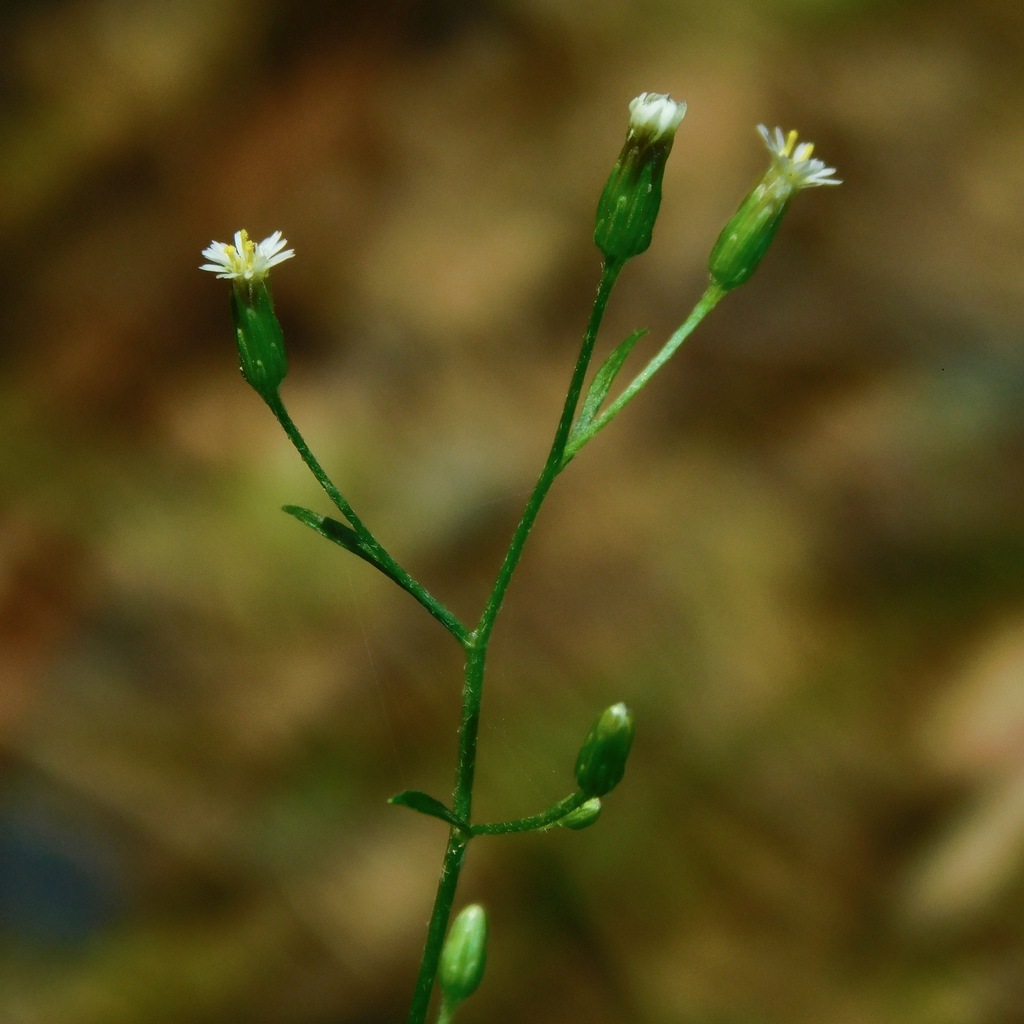
This hardy plant is a common sight in fields and along roadsides. It grows as an annual and is known for its tall, slender stem. You will often see it popping up in disturbed soil.
En un coup d'œil
- Niveau d'entretien
- Facile
- Type de plante
- Annual herb
- Lumière
- Full sun
- Lumière en intérieur
- Soleil direct
- Arrosage
- Tous les 7 à 14 jours
- Taille adulte
- 5 feet
- Croissance
- Rapide
- Rusticité
- USDA 3 à 9
- Floraison
- Mid summer to mid autumn
Entretien
This plant thrives in full sun and well drained soil. Watch for wilting during extreme heat, though it is quite drought tolerant once established. It is a prolific seeder, so pull it before flowers fade if you want to limit its spread.
- Arrosage
- Water only when the top inch of soil feels dry to the touch.
- Engrais
- This plant generally does not require supplemental fertilizer.
- Taille
- Remove spent flower heads to prevent unwanted self seeding.
- Rempotage
- As an annual, this plant is typically not repotted.
- Sol
- Well drained, sandy or loamy
- pH du sol
- 6.0 to 7.5
- Température
- -20 à 35°C
- Humidité
- 30 à 70%
Sécurité
- Humains
- The plant may cause skin irritation in sensitive individuals upon contact.
- Enfants
- Keep away from children as the plant can cause skin irritation if handled.
- Allergènes de contact
- The foliage contains compounds that can cause contact dermatitis.
- Allergènes aéroportés
- The abundant windborne seeds and pollen may trigger respiratory discomfort in sensitive people.
- Comestibilité
- While historically used in herbal medicine, it is not considered a food crop and should be avoided.
Comment l'identifier
- Tall, unbranched hairy stem
- Narrow, lance shaped leaves
- Small white flower heads
- Forms a basal rosette initially
- Hauteur
- 0,3 à 1,5m
- Envergure
- 0,15 à 0,45m
- Feuilles
- green, deciduous
- Fleurs
- white, yellow, 0,5 à 1cm
- Fruits
- tan, Autumn
Problèmes courants
- Powdery mildew — A fungal infection that appears as white dust on leaves during humid weather.
La cultiver
- Multiplication
- seed
- Quand planter
- spring, autumn
Plant in sunny, open areas to mimic its natural meadow habitat.
Bonnes associations
- Asclépiade commune — They share similar habitat requirements in open meadows.
- Verge d'or — Both species provide late season nectar for pollinators.
Espèces similaires
- Erigeron philadelphicus — It has similar flower structures but prefers moister soil.
Science
- Famille
- Asteraceae
- Genre
- Erigeron
- Ordre
- Asterales
- Classe
- Magnoliopsida
- Région d'origine
- North America
- Préservation
- It is considered a common weed in many regions and is not of conservation concern.
It thrives in open, disturbed habitats where it acts as an early successional species.
- Intérêt pour la faune
- nectar source, larval host plant
- Pollinisateurs
- abeilles, papillons, coléoptères
- Utilisations
- pollinator garden, meadow restoration, herbal history
Au fil des saisons
Repères écologiques
- Salinité
- 2/9
- Réaction du sol
- 5/9
- Lumière
- 8/9
- Température
- 5/9
- Humidité
- 4/9
- Nutriments
- 3/9
Taxonomie vérifiée avec le GBIF.
Ce qu'on demande souvent
- Is this plant invasive?
- It is native to North America but can act as an aggressive colonizer in disturbed areas.
- Does it need much water?
- It is quite drought tolerant once established.
D'où vient le nom
The genus name comes from Greek words meaning early and old man, referring to the white, hair-like pappus. The species name indicates its origin in Canada.
Bon à savoir
- It is also known as horseweed.
- The plant was once used to treat various ailments in traditional medicine.
- It is a pioneer species that quickly covers bare soil.
Ta plante a mauvaise mine ?
Cette page est un guide général. Pocket Botanist diagnostique les problèmes directement à partir d'une photo de ta plante, adapte l'arrosage à sa luminosité et te prévient quand il faut t'en occuper.
Ce guide a été généré par IA et vérifié avec la taxonomie du GBIF. Il s'agit d'informations générales, et non de conseils horticoles ou vétérinaires. Découvre comment nous concevons ces guides.