 Pocket Botanist
Pflanzenratgeber
Canadian horseweed.
Erigeron canadensis
Aussprache eh-RIJ-er-on kan-ah-DEN-sis
Auch bekannt als Butterweed, Canada fleabane, Canada horseweed, Canadian Fleabane, Canadian Fleabane, Canadian Horseweed, Horse Weed, Mare's Tail, Canadian Horseweed, Cronquist, Foxtail


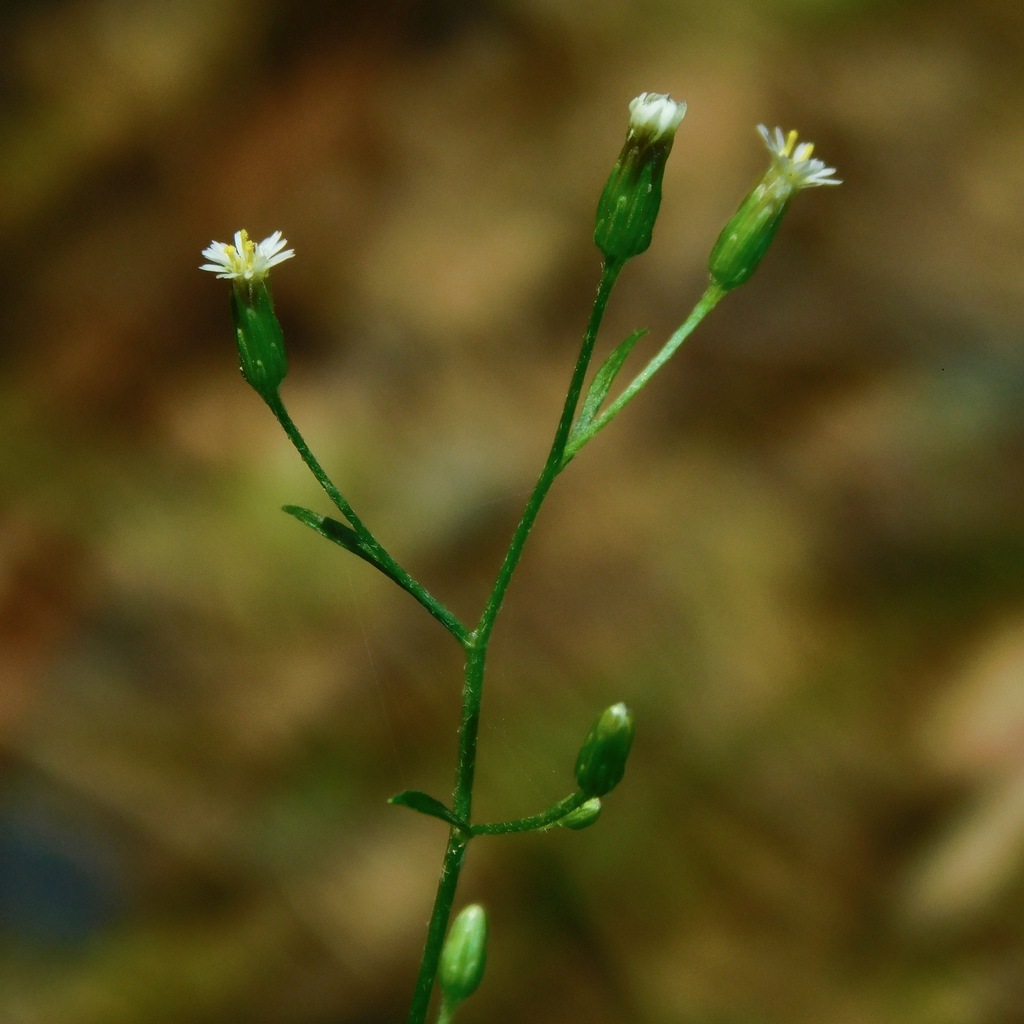
This hardy plant is a common sight in fields and along roadsides. It grows as an annual and is known for its tall, slender stem. You will often see it popping up in disturbed soil.
Auf einen Blick
- Pflegestufe
- Einfach
- Pflanzenart
- Annual herb
- Licht
- Full sun
- Licht im Innenraum
- Direkte Sonne
- Gießen
- Alle 7 bis 14 Tage
- Endgröße
- 5 feet
- Wachstum
- Schnell
- Winterhärte
- USDA 3 bis 9
- Blütezeit
- Mid summer to mid autumn
Pflege
This plant thrives in full sun and well drained soil. Watch for wilting during extreme heat, though it is quite drought tolerant once established. It is a prolific seeder, so pull it before flowers fade if you want to limit its spread.
- Gießen
- Water only when the top inch of soil feels dry to the touch.
- Düngen
- This plant generally does not require supplemental fertilizer.
- Schneiden
- Remove spent flower heads to prevent unwanted self seeding.
- Umtopfen
- As an annual, this plant is typically not repotted.
- Boden
- Well drained, sandy or loamy
- Boden-pH
- 6.0 to 7.5
- Temperatur
- -20 bis 35°C
- Luftfeuchtigkeit
- 30 bis 70%
Sicherheit
- Menschen
- The plant may cause skin irritation in sensitive individuals upon contact.
- Kinder
- Keep away from children as the plant can cause skin irritation if handled.
- Kontaktallergene
- The foliage contains compounds that can cause contact dermatitis.
- Allergene in der Luft
- The abundant windborne seeds and pollen may trigger respiratory discomfort in sensitive people.
- Essbarkeit
- While historically used in herbal medicine, it is not considered a food crop and should be avoided.
So erkennst du die Pflanze
- Tall, unbranched hairy stem
- Narrow, lance shaped leaves
- Small white flower heads
- Forms a basal rosette initially
- Höhe
- 0,3 bis 1,5m
- Breite
- 0,15 bis 0,45m
- Blätter
- green, deciduous
- Blüten
- white, yellow, 0,5 bis 1cm
- Früchte
- tan, Autumn
Häufige Probleme
- Powdery mildew — A fungal infection that appears as white dust on leaves during humid weather.
Standort und Pflege
- Vermehrung
- seed
- Pflanzzeit
- spring, autumn
Plant in sunny, open areas to mimic its natural meadow habitat.
Gute Pflanzpartner
- Gewöhnliche Seidenpflanze — They share similar habitat requirements in open meadows.
- Goldrute — Both species provide late season nectar for pollinators.
Ähnliche Arten
- Erigeron philadelphicus — It has similar flower structures but prefers moister soil.
Botanisches
- Familie
- Asteraceae
- Gattung
- Erigeron
- Ordnung
- Asterales
- Klasse
- Magnoliopsida
- Ursprüngliche Heimat
- North America
- Artenschutz
- It is considered a common weed in many regions and is not of conservation concern.
It thrives in open, disturbed habitats where it acts as an early successional species.
- Nutzen für Wildtiere
- nectar source, larval host plant
- Bestäuber
- Bienen, Schmetterlinge, Käfer
- Verwendung
- pollinator garden, meadow restoration, herbal history
Im Jahresverlauf
Ökologische Zeigerwerte
- Salzgehalt
- 2/9
- Bodenreaktion
- 5/9
- Licht
- 8/9
- Temperatur
- 5/9
- Feuchtigkeit
- 4/9
- Nährstoffe
- 3/9
Taxonomie abgeglichen mit GBIF.
Häufige Fragen
- Is this plant invasive?
- It is native to North America but can act as an aggressive colonizer in disturbed areas.
- Does it need much water?
- It is quite drought tolerant once established.
Woher der Name kommt
The genus name comes from Greek words meaning early and old man, referring to the white, hair-like pappus. The species name indicates its origin in Canada.
Gut zu wissen
- It is also known as horseweed.
- The plant was once used to treat various ailments in traditional medicine.
- It is a pioneer species that quickly covers bare soil.
Probleme mit Canadian horseweed?
Diese Seite bietet allgemeine Infos. Pocket Botanist erkennt Probleme anhand eines Fotos deiner echten Pflanze, passt das Gießen an dein Licht und deinen Standort an und erinnert dich an die Pflege.
Dieser Ratgeber wurde mit KI erstellt und mit der GBIF-Taxonomie abgeglichen. Er dient zur allgemeinen Information und ersetzt keine gärtnerische oder tierärztliche Beratung. Hier erfährst du, wie wir diese Ratgeber erstellen.